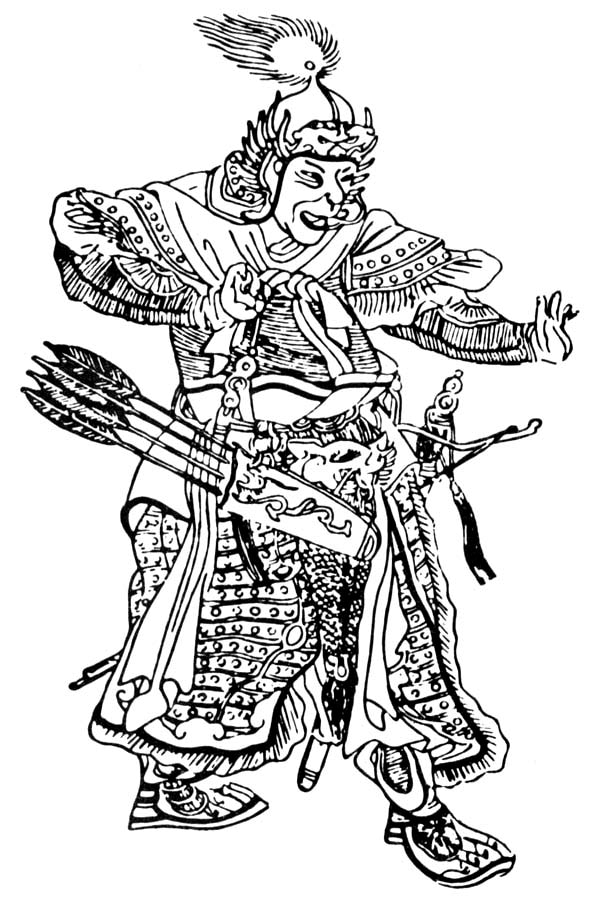
Subutai
Also known as: Sübe'etei, Subetei
Birthday
+1175
Birth Sign
Capricorn
Birthplace
Burkhan Khaldun
Age
Died at 73
About
Subutai (c. 1175–1248) was the master strategist behind the Mongol Empire's greatest conquests. Born near Burkhan Khaldun, he rose from humble origins to become Genghis Khan and Ögedei Khan's most trusted general. Over his career, he directed more than 20 campaigns, conquering more territory than any commander in history. His genius lay in coordinating armies separated by hundreds of miles, using feigned retreats, surprise attacks, and psychological warfare to crush larger forces. He led the Mongol vanguard into Europe, smashing Russian and Hungarian armies at the Battle of Mohi in 1241. Subutai's campaigns stretched from China to the Danube, covering over 5,000 miles. He died at age 72 in 1248, having shaped the largest contiguous empire the world has ever seen.
Early Life & Background
Subutai was born around 1175 near the sacred mountain Burkhan Khaldun in present-day Mongolia. His father was a blacksmith, placing his family among the common herders of the Mongol steppe. Little else is known about his early childhood, but the harsh environment forged resilience and resourcefulness. As a young man, he joined the service of Genghis Khan, then a rising chieftain unifying Mongol tribes. Subutai's exceptional skill with horses and bows caught the Khan's attention. He quickly proved himself in skirmishes, earning a reputation for cool-headedness and tactical insight. By the early 1200s, he had risen from a common soldier to a trusted commander, participating in the conquest of the Jin Dynasty in northern China. His first major independent command came during the Khwarazmian campaign, where he and Jebe pursued the fleeing Shah Muhammad across Persia, covering thousands of miles in one of history's greatest cavalry raids.
Career Growth
Subutai's breakthrough came in 1223 at the Battle of the Kalka River, where he annihilated a coalition of Rus' princes and Cumans. That victory showcased his signature tactic: a feigned retreat that lured the enemy into a trap. Under Ögedei Khan, Subutai planned and executed the Mongol invasion of Eastern Europe (1236–1242). He led the vanguard into Poland, crushing a combined Polish and Teutonic force at Legnica in April 1241. Days later, his main army smashed the Hungarian king's forces at Mohi, using siege engines and coordinated cavalry charges. The campaign reached the gates of Vienna before Subutai withdrew following Ögedei's death. He returned to Mongolia, where he continued to advise the Khan until his own death in 1248. His campaigns doubled the size of the Mongol Empire, adding Russia, Ukraine, and parts of Eastern Europe.
Career Timeline
Public Image & Style
Subutai is remembered as the archetypal Mongol mastermind: ruthless, brilliant, and inexhaustible. In popular culture, he appears as a calculating strategist in novels and documentaries, often contrasted with the more charismatic Genghis Khan. Historians rank him alongside Hannibal and Napoleon for the scale of his conquests. His image is that of a man who let results speak for themselves, no grandiose speeches, just victory after victory. Modern Mongolians revere him as a national hero, and his tactics are studied in military academies worldwide.
Fame & Fandom
Subutai commands a legacy that transcends the typical boundaries of historical reverence, standing as a titan whose strategic brilliance continues to echo through military academies and popular imagination eight centuries after his death. While he lacks a modern fanbase with organized rituals, social media campaigns, or a formal fandom name like those surrounding contemporary idols, his story has evolved into a form of cultural mythology where enthusiasts obsess over his undefeated record and the sheer scale of his conquests. The narrative of a blacksmith's son rising to become the supreme commander of the Mongol Empire serves as a powerful parable for meritocracy, drawing in readers who study the mechanics of his genius rather than just the history of his battles. His reputation is built on verified accounts of conquering 32 countries and winning 97% of pitched battles, a statistic that fuels endless discussion among historians and strategy fans alike. In recent developments, this enduring interest has manifested in state-sponsored honors, such as the establishment of an order named after him by Russian authorities in May 2026, signaling a resurgence of official recognition for his impact on Eastern European history. Despite the absence of a living fan community engaging in birthday billboards or streaming pushes, the digital age has allowed his specific tactical innovations, from the winter crossing of the Carpathians to the encirclement at Mohi, to become widely retold legends. iFANN has evaluated Subutai's global standing, noting that while his historical footprint is immense, he does not currently hold a placement in the published rankings (Global Top 1,000 or a Top-100 scope list). Consequently, Subutai is currently unranked in the Global Top 1,000 and holds no position on any Top-100 scope list according to the August 2026 evaluation.
Interesting Facts and Legends
Subutai's name appears variously as Sübe'etei or Subetei in historical records, reflecting the nuances of transliteration across different languages. He was renowned for his meticulous reconnaissance, dispatching spies to map routes and assess enemy strengths before every single campaign. A legendary feat involved leading a winter crossing of the Carpathian Mountains, which caught Hungarian defenders completely off guard due to the season's harsh conditions. His record of never losing a major battle remains unmatched by most ancient commanders, cementing his status as an invincible tactician. As a master of siege warfare, he integrated Chinese engineers to construct advanced catapults and battering rams, adapting technology to suit his needs. His campaigns stretched an estimated 5,000 miles from the Caspian Sea to the Danube River, covering vast distances without logistical failure. Modern lore often highlights his role in the destruction of Kyiv in December 1240, a turning point that collapsed Kyivan Rus and demonstrated the terrifying reach of his command. Another enduring story frames his rise from humble origins as a reflection of the Mongol Empire's unique meritocracy, where talent could override birth status. Although no contemporary portrait survives, his image persists as the archetypal calculating strategist who let results speak louder than words.
Family & Personal Life
Subutai's father was a blacksmith, a respected but low-status profession on the steppe. He had a brother named Jelme, also a general under Genghis Khan. Subutai married and had several children, including a son named Ulanqatai who also served as a commander. Details about his wife or other family members are not recorded in surviving sources. He lived among the Mongol army for most of his life, with no fixed home until his final years near the Tuul River.
Notable Connections
Subutai served under Genghis Khan, the founder of the Mongol Empire, and his successor Ögedei Khan. He worked closely with Batu Khan, the nominal leader of the European campaign. His brother Jelme was also a top general. Among his peers were Jebe, another famed commander, and Muqali, who led campaigns in China.
Relationships & Dating History
Subutai was married, but the name of his wife and the details of their relationship are not recorded. He had at least one son, Ulanqatai, who followed him into military service. Given the lack of sources, his personal life remains largely unknown.
- MarriedWife's name not recorded in historical sources.
Death & Aftermath
Died
+1248-01-01 (aged 73)
Death Place
Near the Onon River or Karakorum, Mongolia
Cause of Death
Reported as natural causes due to old age
As the Mongol army turned back from the Danube in the early 1240s, Subutai led the long march home to the steppe heartland, a veteran commander who had spent decades coordinating campaigns across thousands of miles. By late 1248, the old general was nearing the end of his life while returning to the vicinity of the Onon River or the capital region near Karakorum. He passed away around January 1, 1248, at the age of roughly seventy-three, though the precise circumstances of his final days remain wrapped in the silence of medieval record-keeping rather than modern medical documentation. Historical accounts attribute his passing to natural causes associated with advanced age or the cumulative toll of a lifetime spent on horseback. The aftermath of his death unfolded within the secretive traditions of the Mongol people, where burial sites were often kept hidden to prevent desecration.
His estate was absorbed into the imperial administration under the new Khans, reflecting the era's focus on collective conquest rather than individual inheritance., his reputation has endured as a tactical genius who reshaped global history. Subutai is now celebrated in contemporary historical analysis and documentaries as one of the greatest military strategists in human history, often cited for conquering more territory than any other commander. His legacy persists in academic studies and online forums where he is frequently compared to figures like Alexander the Great, with scholars noting his unique ability to coordinate armies separated by vast distances.
Net Worth (Estate Value)
As a 13th-century Mongol general, Subutai accumulated wealth through plunder and land grants from the Khans. He controlled vast territories and received a share of war spoils, but no reliable modern estimate of his personal fortune exists. His true legacy is measured in territory conquered, not currency.
Awards & Accolades
View 3 records, honours and achievementsKnown For
Mongol conquest of Eastern Europe
1236–1242 · Supreme commander
Battle of Mohi
1241 · Strategist
Battle of the Kalka River
1223 · Co-commander
Keywords
Quick Facts
- Profession
- military leader
- Born
- +1175
- Birthplace
- Burkhan Khaldun
- Died
- +1248-01-01
- Death Place
- Tuul River
- Gender
- Male
Frequently Asked Questions
Who was Subutai?
What was Subutai best known for?
Where was Subutai born?
When did Subutai die?
How many battles did Subutai lose?
Similar People
Join the community
fans discussing