 Japan
JapanOverview
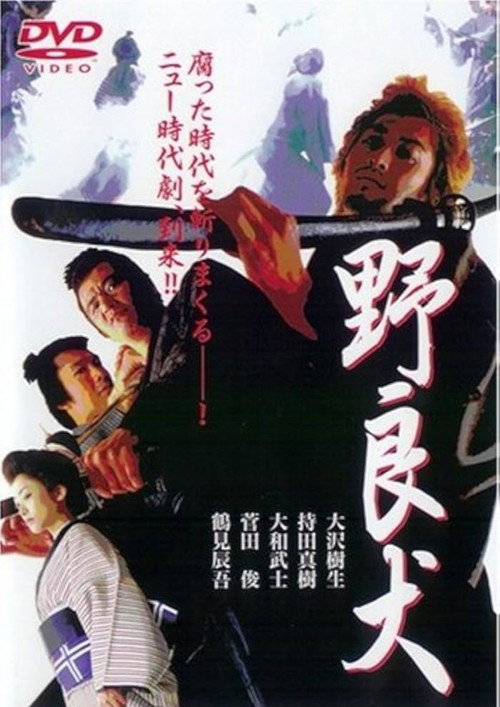
In 2002, Japanese direct-to-video studio Museum released Stray Dog, a moody period action drama that reimagines Akira Kurosawa's 1949 classic with a 1920s setting. Director Ken'ichi Fujiwara, a veteran of the V-Cinema scene, crafts a noir-tinged story of a disgraced detective hunting a stolen police revolver through the neon-lit underworld of a fictional port city. The film stars Kazuki Kitamura, best known for his work in Takashi Miike's Dead or Alive series, as the haunted protagonist Joji Katsuragi.
Produced by Masashi Kitada from a script by Nakaaki Yamaguchi, the movie runs 101 minutes and was released straight to VHS and DVD in Japan. While it never received a theatrical release or significant critical attention outside collector circles, Stray Dog has earned a modest following among fans of Japanese cult cinema for its atmospheric period detail and gritty, no-frills storytelling. The film's title directly pays homage to Kurosawa, but Fujiwara and Yamaguchi transplant the narrative to a different era, swapping postwar Tokyo for a rain-slicked, jazz-era setting that evokes American film noir.
PlotSpoiler-free
Former detective Joji Katsuragi lives a quiet life of shame in 1920s Japan. After a botched investigation caused his superior's death, he was kicked off the force and now works as a security guard. He clings to a single memento from his old life: a police revolver he keeps in his locker. One rainy night, a petty thief breaks into the guard shack and steals the gun. Katsuragi knows the weapon will inevitably be used for murder if he doesn't get it back. His guilt and desperation push him into a rogue search through the city's criminal underbelly.
The trail leads him to gambling dens, brothels, and smoky bars. He crosses paths with Ryuji, an ambitious young yakuza enforcer who sees the revolver as a ticket to power. A weary bar hostess named Yuki becomes an unwilling informant, hiding her own vendetta against the gang. A corrupt police inspector, once Katsuragi's colleague, actively blocks his investigation to avoid a scandal. Each step forward costs Katsuragi something, a beating, a betrayal, a piece of his remaining dignity. The stolen gun moves from hand to hand through the city's hierarchy, and Katsuragi races against time to stop the violence it promises.
Ending ExplainedSpoilers
Critical Reception
Critical Consensus
As a niche Japanese direct-to-video release from 2002, Stray Dog has not been reviewed by major English-language critics. Its reputation lives among V-Cinema collectors, who appreciate its moody noir atmosphere and period setting. The film is a loose homage to Kurosawa, transplanted to the 1920s with a gritty, low-budget charm.
Top Cast
Kazuki Kitamura
Joji Katsuragi
Shū Ehara
Ryuji
Tetsuro Hirose
Corrupt Police Inspector
Shigeo Kobayashi
Yakuza Boss
Maki Mochida
Yuki
Mikio Osawa
Petty Thief
Mitsuo Senda
Security Guard Supervisor
Shun Sugata
Gang Leader
Kaoru Sugawara
Bar Owner
Tetsugo Tsurumi
Young Yakuza
Takeshi Yamato
Detective
Crew
Director
Ken'ichi Fujiwara
Writer
Nakaaki Yamaguchi
Producer
Masashi Kitada
Keywords
Facts
- Status
- Released
- Original Language
- Japanese
- Director
- Ken'ichi Fujiwara
- Production
- Museum
- Homage
- Direct reimagining of Akira Kurosawa's 1949 film Stray Dog
- Release Format
- Direct-to-video (VHS/DVD)
Join the community
fans discussing