Storm Prediction Center
 United States
"America's severe weather forecasters"
About
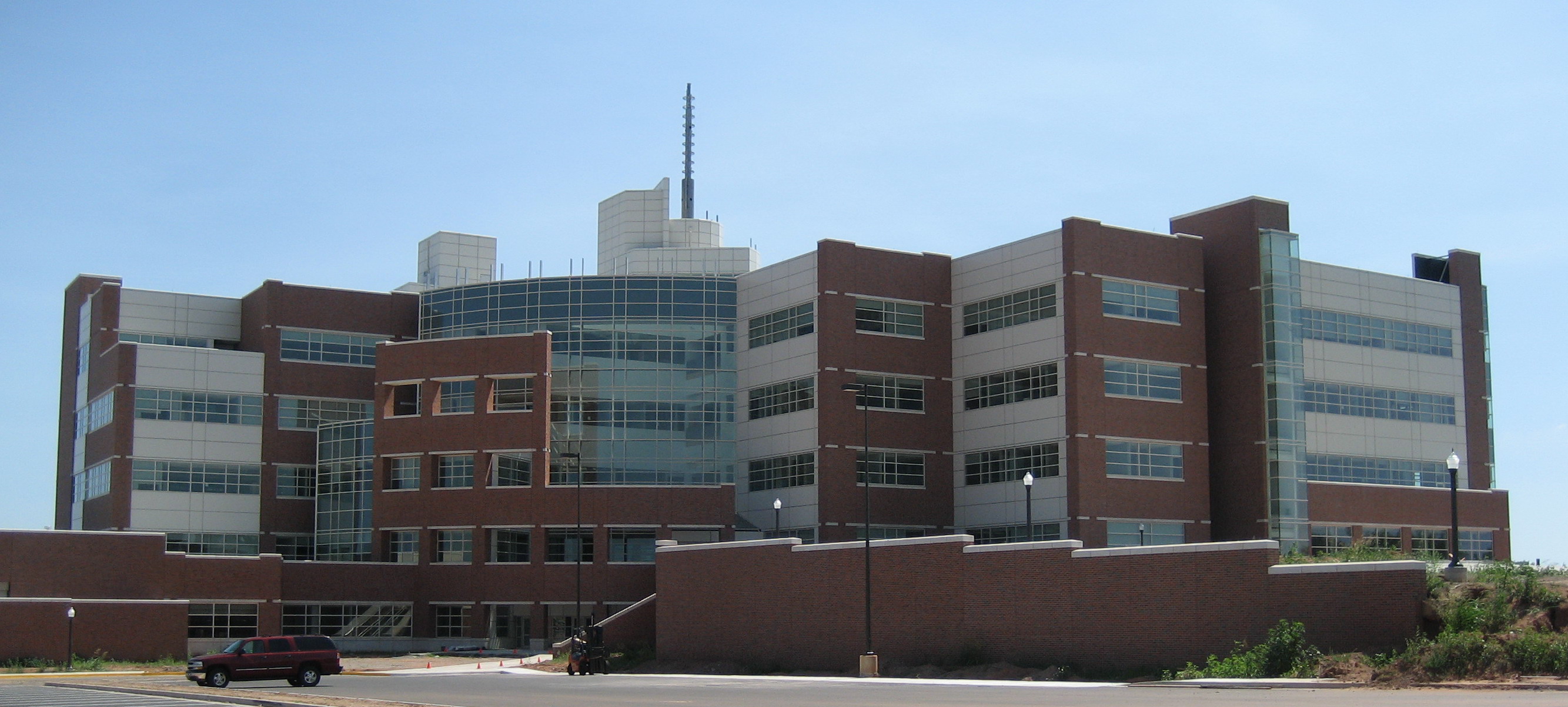
The Storm Prediction Center (SPC) is a specialized government unit within the National Centers for Environmental Prediction (NCEP), part of the National Weather Service (NWS) and NOAA. Based at the National Weather Center in Norman, Oklahoma, the SPC is the nation's primary authority for forecasting severe thunderstorms and tornadoes. Its 43 meteorologists work around the clock, issuing convective outlooks, severe thunderstorm watches, and tornado watches that cover the contiguous United States. The center also monitors heavy rain, winter weather, and fire weather conditions. Its five-level risk scale, Marginal, Slight, Enhanced, Moderate, High, has become a standard tool for communicating storm threats to the public, emergency managers, and media.
The SPC operates a 24/7 watch center, using advanced computer models, satellite data, and radar to analyze atmospheric instability and wind shear. Forecasters issue outlooks up to eight days in advance, with updates multiple times daily. When conditions favor severe storms, the center coordinates with local NWS offices to issue watches, which typically cover large areas and last several hours. The center's work directly supports public safety, and its forecasts are credited with reducing tornado-related fatalities over the past several decades.
Beyond forecasting, the SPC engages in research and development through the NOAA Hazardous Weather Testbed, testing new tools and techniques during annual Spring Experiments. It collaborates closely with the National Severe Storms Laboratory and the University of Oklahoma's School of Meteorology, both also based in Norman. The center's expertise is recognized globally, and it frequently hosts international visitors and contributes to World Meteorological Organization initiatives.
Mission
The Storm Prediction Center's mission is to provide timely and accurate forecasts and watches for severe thunderstorms, tornadoes, and other hazardous weather events across the contiguous United States. This includes issuing convective outlooks that outline the risk of severe weather up to eight days in advance, as well as short-term watches that alert the public to imminent threats. The center also monitors conditions conducive to heavy rain, winter storms, and wildfires, issuing specialized products for those hazards. By combining advanced technology, scientific research, and expert human judgment, the SPC aims to protect life and property and support emergency management decision-making.
History
The Storm Prediction Center traces its roots to 1952, when the U.S. Weather Bureau established the Severe Local Storms Unit (SELS) in Washington, D.C. Two years later, the unit moved to Kansas City, Missouri. It began issuing convective outlooks in 1955 and radar summaries in 1960. As responsibilities grew, the unit was reorganized in 1966 into the National Severe Storms Forecast Center (NSSFC), still based in Kansas City.
On October 1, 1995, the NSSFC was renamed the Storm Prediction Center, reflecting a broader mission that now included fire weather and excessive precipitation forecasting. In early 1997, the center relocated to Norman, Oklahoma, joining the National Severe Storms Laboratory on the site of the former Naval Air Station. The move consolidated severe weather research and operations in one location, fostering collaboration that continues today.
Key milestones include the introduction of the five-level risk scale in the 2000s, the addition of conditional intensity groups in March 2026, and the ongoing integration of ensemble forecasting and machine learning tools. The SPC has also expanded its winter weather and fire weather products, issuing outlooks for heavy snow and critical fire conditions. Throughout its history, the center has maintained a focus on saving lives, with tornado warning lead times increasing from under 5 minutes in the 1980s to over 15 minutes today, partly due to SPC advancements.
Notable People
Russell Schneider
Director · 2000–present
Led the center through modernization of outlook products and implementation of Conditional Intensity Groups in 2026.
Bill Bunting
Deputy Director · 2010–present
Oversaw operational transitions and public communication strategies.
Joseph T. Schaefer
Director · 1990–2000
Pioneered forecast verification systems and led the SPC through its move to Norman.
Charles A. Doswell III
Research Collaborator · 1970s–2000s
Advanced understanding of supercell dynamics and tornado genesis, influencing SPC forecasting techniques.
Milestones
1952
Founded as the Severe Local Storms Unit (SELS) in Washington, D.C.
1954
Moved to Kansas City, Missouri.
1955
Began issuing convective outlooks.
1966
Renamed the National Severe Storms Forecast Center (NSSFC).
1995
Officially established as the Storm Prediction Center (SPC).
1997
Relocated to Norman, Oklahoma, joining the National Severe Storms Laboratory.
2000
Instituted a program for meteorological conditions favorable for wildfires.
2026
Debuted Conditional Intensity Groups to communicate expected tornado, wind, and hail intensity within the risk scale.
Departments
Sources
Organization Info
- Founded
- 1995-10-01
- Headquarters
- Norman, Oklahoma
- Country
- United States
- Director
- Russell Schneider
- Parent
- National Centers for Environmental Prediction
- Type
- Government
- Employees
- 43
- Parent Organization
- National Centers for Environmental Prediction
Financials
- Employees
- 43
Official Website
www.spc.noaa.gov/
Join the community
fans discussing