Stockholm University
 Sweden
"One of Scandinavia's largest universities, advancing knowledge across law, humanities, social sciences, and natural sciences."
About
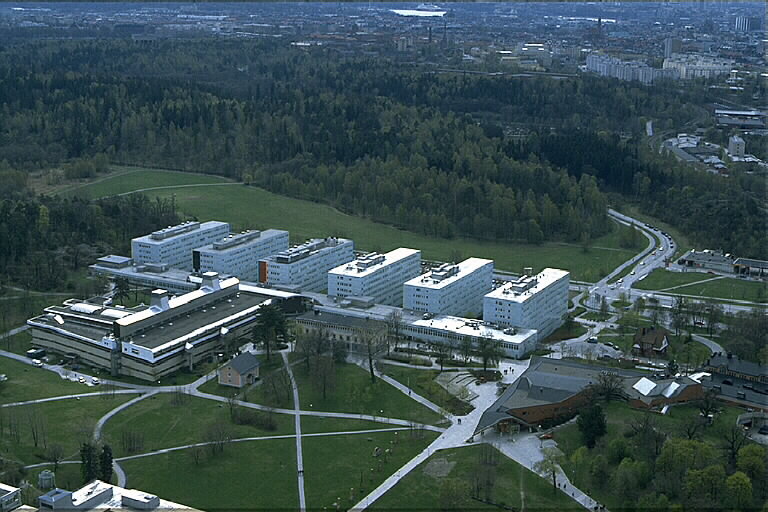
Stockholm University, known in Swedish as Stockholms universitet, stands as one of Scandinavia's largest institutions of higher learning. Founded in 1878 as a college, it earned full university status in 1960, making it Sweden's fourth oldest university. Today, it educates more than 33,000 students across four faculties: law, humanities, social sciences, and natural sciences. The university's main campus sits in the Frescati area, a leafy district near the Royal National City Park, where modern architecture blends with green spaces. As a public institution, it operates under Sweden's higher education system, which emphasizes research and critical thinking. The university has built a reputation for international collaboration, drawing scholars and students from around the globe. Its research output spans from climate science to legal theory, and it hosts several world-class institutes, including the Stockholm Resilience Centre and the Swedish Institute for Social Research. The university's commitment to open inquiry and societal impact has made it a key player in Sweden's intellectual landscape. For students, it offers a vibrant academic environment with a strong focus on independent thinking and interdisciplinary study. The city itself serves as an extension of the campus, providing cultural, political, and business opportunities that enrich the student experience.
Mission
Stockholm University's mission centers on advancing knowledge through research and higher education across four main faculties: law, humanities, social sciences, and natural sciences. It aims to foster independent thinking, interdisciplinary study, and international collaboration. The university positions itself as a key contributor to Sweden's intellectual landscape, with a strong commitment to open inquiry and addressing societal challenges through research.
History
Stockholm University began in 1878 as a college, born from the initiative of prominent citizens and academics who wanted a modern, research-oriented institution in the capital. It gained university status in 1960, becoming Sweden's fourth oldest university. The university expanded steadily, with the Stockholm Resilience Centre established in 2007 to focus on sustainability science. Recent years have seen the university at the forefront of scientific breakthroughs, including the experimental discovery of a new critical point in water using x-ray lasers in 2026, and significant ancient DNA research that has reshaped understanding of historical migrations and domestication.
Subdivisions
Faculty of Law
Offers programs in law and legal research.
Faculty of Humanities
Covers languages, history, philosophy, and cultural studies.
Faculty of Social Sciences
Includes economics, political science, sociology, and psychology.
Faculty of Natural Sciences
Encompasses physics, chemistry, biology, and earth sciences.
Notable People
Anders Götherström
Researcher in ancient DNA
Involved in major ancient DNA discoveries, including medieval Scandinavian graves.
Thomas Mikael Oliveberg
Biophysicist and Nobel Prize jurist · until 2026
Left Stockholm University for Guangxi Medical University in 2026.
Milestones
1878
Founded as a college in Stockholm.
1960
Attained full university status.
2007
Stockholm Resilience Centre established.
2026
Researchers discover a new critical point in water.
Departments
Sources
Organization Info
- Founded
- 1878-01-01
- Headquarters
- Stockholm
- Country
- Sweden
- Parent
- Ministry of Education and Research
- Type
- University
- Number of Students
- 70,000 (including course participants)
- Faculties
- Law, Humanities, Social Sciences, Natural Sciences
Official Website
su.se
Join the community
fans discussing