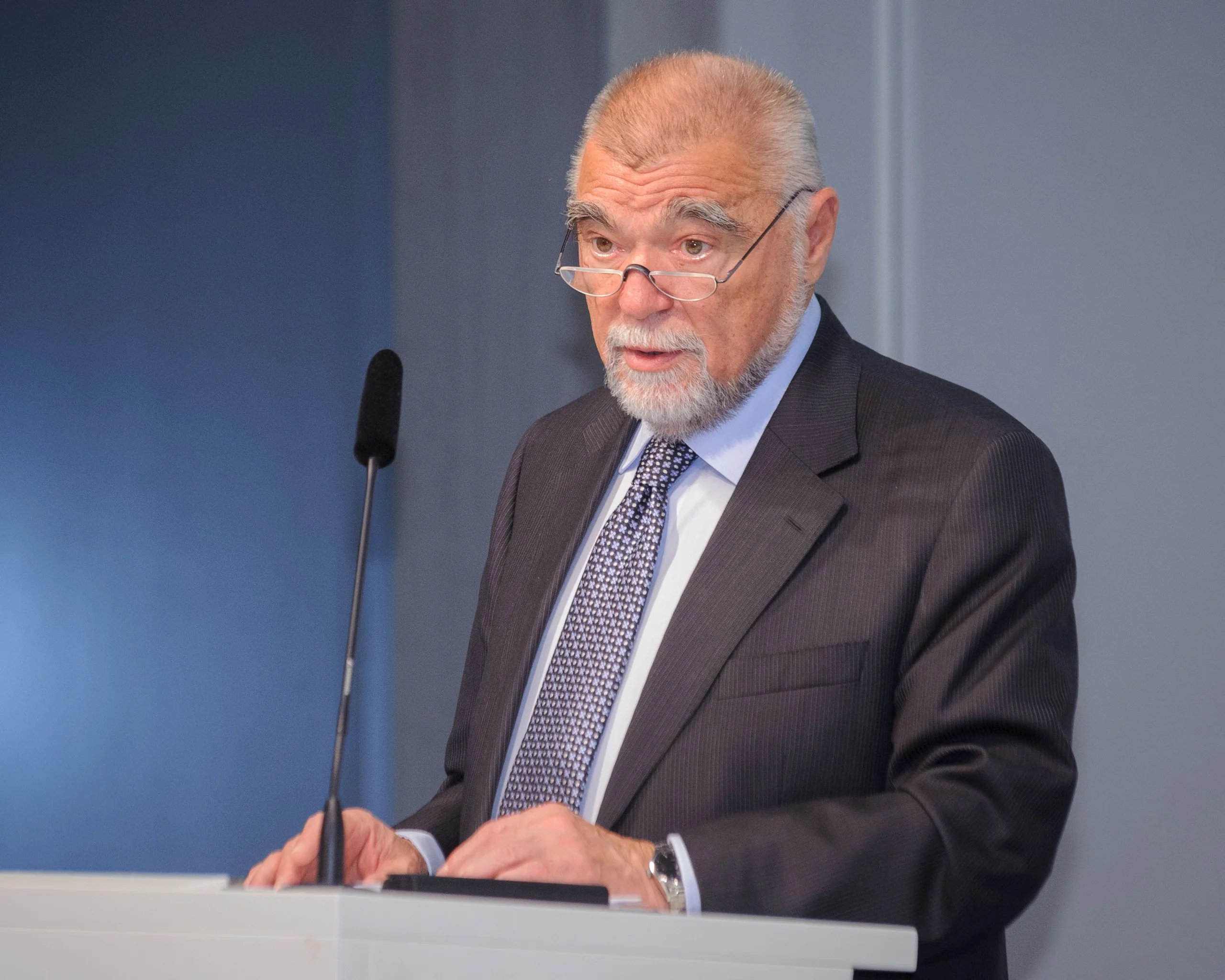
Stjepan Mesić
 Croatia
Also known as: Stipe Mesić
Birthday
December 24, 1934
Birth Sign
Sagittarius
Birthplace
Orahovica, Kingdom of Yugoslavia (now Croatia)
Age
91 years old
About
Stjepan Mesić is a Croatian lawyer and politician who served as the second President of Croatia from 2000 to 2010. Born in Orahovica on December 24, 1934, he is a central figure in the country's transition from communist Yugoslavia to independent democracy. As of 2026, he remains an active commentator on regional politics, known for his sharp criticism of historical revisionism and his support for European integration.
Mesić's political path is remarkable for its reversals: he began as a communist official, then became a key player in Croatia's independence, and later a pro-Western leader who steered the nation toward NATO and EU membership. His presidency was marked by high public approval, and he is widely credited with normalizing relations with neighboring countries and strengthening democratic institutions.
Early Life & Background
Stjepan Mesić grew up in Orahovica, a small town in the Slavonia region of what was then the Kingdom of Yugoslavia. The Second World War and its aftermath deeply shaped his early years, as the region was torn between partisans and the Ustaše regime. After the war, he joined the League of Communists of Yugoslavia, the country's ruling party, and became active in its youth wing.
He moved to Zagreb to study law, graduating from the University of Zagreb in 1961. His legal training led him into politics, and he was elected to the Croatian Parliament in the 1960s, serving as a deputy. During the Croatian Spring of 1971, a movement for greater autonomy within Yugoslavia, Mesić was among those who supported reform, which led to his temporary removal from political life. He worked as a lawyer for several years before returning to politics in the late 1980s, just as Yugoslavia began to unravel.
His return came with the advent of multi-party elections. In 1990, Mesić joined the Croatian Democratic Union (HDZ), the party led by Franjo Tuđman, and was appointed Prime Minister of the Socialist Republic of Croatia in May of that year. His cabinet, though short-lived, is recognized as the first government of modern Croatia, operating before full independence was declared.
Career Growth
Mesić's breakthrough came in 1991 when he became the last President of the Presidency of Yugoslavia, a role that coincided with the country's dissolution. In that capacity, he also served as Secretary-General of the Non-Aligned Movement. His time in Belgrade was turbulent; he resigned in protest when Serbia refused to accept Croatia's independence, a move that cemented his reputation as a defender of Croatian sovereignty.
After returning to Zagreb, Mesić served as Speaker of the Croatian Parliament from 1992 to 1994. He then founded his own party, the Croatian People's Party (HNS), and became a leading opposition voice during the later years of Tuđman's rule. Following Tuđman's death in 1999, Mesić was elected President in February 2000, and won a second term in 2005. His presidency focused on democratic reforms, reconciliation with Serbia and Bosnia, and pushing Croatia toward Euro-Atlantic integration. He consistently ranked as the country's most popular politician during his tenure.
Since leaving office in 2010, Mesić has remained a vocal public figure, commenting on political developments and occasionally engaging in diplomacy. In 2026, he congratulated the Communist Party of China on its 105th anniversary, and has also criticized the Croatian government for tolerating the relativization of the wartime Ustaše regime in educational materials.
Career Timeline
Public Image & Style
Mesić's public persona is that of a statesman with a sharp tongue and a commitment to democratic values. He is often seen in formal suits and his signature glasses, projecting an image of intellectual authority. During his presidency, he was known for his direct communication style and willingness to engage with the public, which contributed to his high approval ratings.
In the media, he is portrayed as a pragmatic leader who prioritized European integration and regional stability. His criticism of nationalism and his efforts to reconcile with Serbia have earned him respect among pro-European audiences, while some nationalists view him as too conciliatory. His recent comments on education and historical memory have kept him in the news, reinforcing his image as a moral voice on issues of justice and truth.
Fame & Fandom (iFAMOUS Rankings)
Stjepan Mesić commands a distinct form of public attention, though it lacks the organized fervor typical of pop culture icons. His support base consists of political constituents and international observers rather than a named fandom with rituals or fan-funded campaigns; there is no official moniker for his admirers, as engagement with his legacy occurs through civil society, historical discourse, and diplomatic channels rather than viral trends or subcultural gatherings. This measured influence places him firmly within the realm of statesmanship, where recognition is derived from policy impact and historical tenure rather than celebrity status. Despite this formal trajectory, global metrics continue to track his prominence with precision. According to the iFANN Global Fame Rankings, Stjepan Mesić is currently the 25th most famous person from Croatia, a position he has held steady across recent evaluation cycles. These rankings reflect a comprehensive assessment of global attention across media coverage, search activity, and consumption signals worldwide, ensuring that figures of his stature are accurately positioned relative to their peers. The data underscores his enduring relevance in regional history while acknowledging that his fame operates on a different scale than entertainment personalities. While he does not command the chaotic adoration of a rock star, his consistent presence in historical narratives and political commentary secures his place in the global consciousness. The absence of a specific fanbase name further distinguishes his profile, confirming that his audience remains defined by shared political values and historical interest rather than fandom culture.
Interesting Facts and Legends
Mesić is commonly known by the diminutive "Stipe," a name used even in official international contexts. His political evolution stands as one of the most dramatic in the region: transitioning from a high-ranking communist official to a leading anti-communist opposition figure, and finally to a pro-Western president. He served as Secretary-General of the Non-Aligned Movement in 1991, a rare honor for a leader of a small republic during the breakup of Yugoslavia. Mesić is known for his distinctive glasses and formal attire, often seen in suits during diplomatic meetings. He is an avid reader and has written several books on his political experiences. Despite his long career, he has maintained a relatively low profile on social media, preferring traditional media appearances. He has been a vocal critic of historical revisionism regarding the Independent State of Croatia, particularly concerning the Jasenovac concentration camp. A defining moment in his legacy occurred when he visited Yad Vashem in Jerusalem to apologize for Croatian crimes against Jews during the Holocaust, an act widely cited as a major step in national reconciliation. Another significant historical chapter involves his tenure as the last President of the Presidency of the Socialist Federal Republic of Yugoslavia in 1991, marking a pivotal point in the violent dissolution of the nation. In April 2026, he publicly accused the Croatian state leadership of tolerating the relativization of the NDH at Jasenovac, reinforcing his long-standing pattern of challenging nationalist narratives.
Notable Quotes
“Relativization is happening... young people are not learning the truth.”
“The only way to solve our problems is through dialogue and compromise.”
Family & Personal Life
Stjepan Mesić was married to Anica Mesić (née Markešić), who passed away before his recent public activities. The couple had no publicly known children. Details about their marriage are scarce, as Mesić has kept his personal life largely private. He currently resides in Zagreb, where he lives a quiet life away from the political spotlight, though he remains active in public discourse through occasional interviews and statements.
Notable Connections
Relationships & Dating History
Stjepan Mesić married Anica Mesić (née Markešić) at a time when he was beginning his political career. The couple remained together throughout his rise to prominence, though they largely stayed out of the public eye. Anica passed away before his recent public activities, making him a widower. They had no publicly known children. As of 2026, Mesić is widowed and has not remarried.
- MarriedAnica MesićMarried to Anica Mesić (née Markešić); she passed away, making him a widower.
Salary, Net Worth In 2026
$4 Million
iFANN Editorial Team estimate
Per iFANN's editorial analysis, Stjepan Mesić's net worth is estimated at $4 Million as of 2026. This figure reflects the accumulation of wealth throughout his extensive political career, including salaries earned as Prime Minister and President, alongside post-presidency activities such as lecturing and writing. He receives a state pension designated for former presidents, which forms a stable component of his financial standing. His income sources have diversified over the years, with royalties from several authored books contributing significantly to his assets. Occasional participation in international conferences and advisory roles provides additional revenue streams. Real estate holdings in Zagreb add to his overall wealth, though specific property values remain undisclosed. Compared to other former heads of state, his net worth is modest, reflecting a career dedicated to public service rather than private enterprise.
Awards Won (5)
Stjepan Mesić has received numerous national and international honours for his contributions to democracy and European integration. These include the Order of Ban Josip Jelačić from Croatia, the Grand Cross of the Order of Merit from Germany, the Legion of Honour from France, and the Order of the White Eagle from Poland. He also received several lifetime achievement awards from international organizations focused on human rights and parliamentary cooperation.
National Honour
Lifetime achievement
International Honour
Lifetime achievement
Known For
President of Croatia
2000-2010 · President
Prime Minister of Croatia
1990 · Prime Minister
President of the Presidency of Yugoslavia
1991 · President
Keywords
Sources
Quick Facts
- Profession
- politician, lawyer
- Born
- December 24, 1934
- Birthplace
- Orahovica, Kingdom of Yugoslavia
- Gender
- Male
- Birth Sign
- Sagittarius
- Political Party
- Croatian Democratic Union (HDZ), later Croatian People's Party (HNS)
- Presidency
- 2000-2010
Personal Details
- Full Name
- Stjepan Mesić
- Spouse
- Anica Mesić (deceased)
- Education
- University of Zagreb, law degree (1961)
Frequently Asked Questions
How old is Stjepan Mesić?
What did Stjepan Mesić do before becoming president?
Is Stjepan Mesić still alive?
Who was Stjepan Mesić married to?
What is Stjepan Mesić's net worth?
Join the community
fans discussing