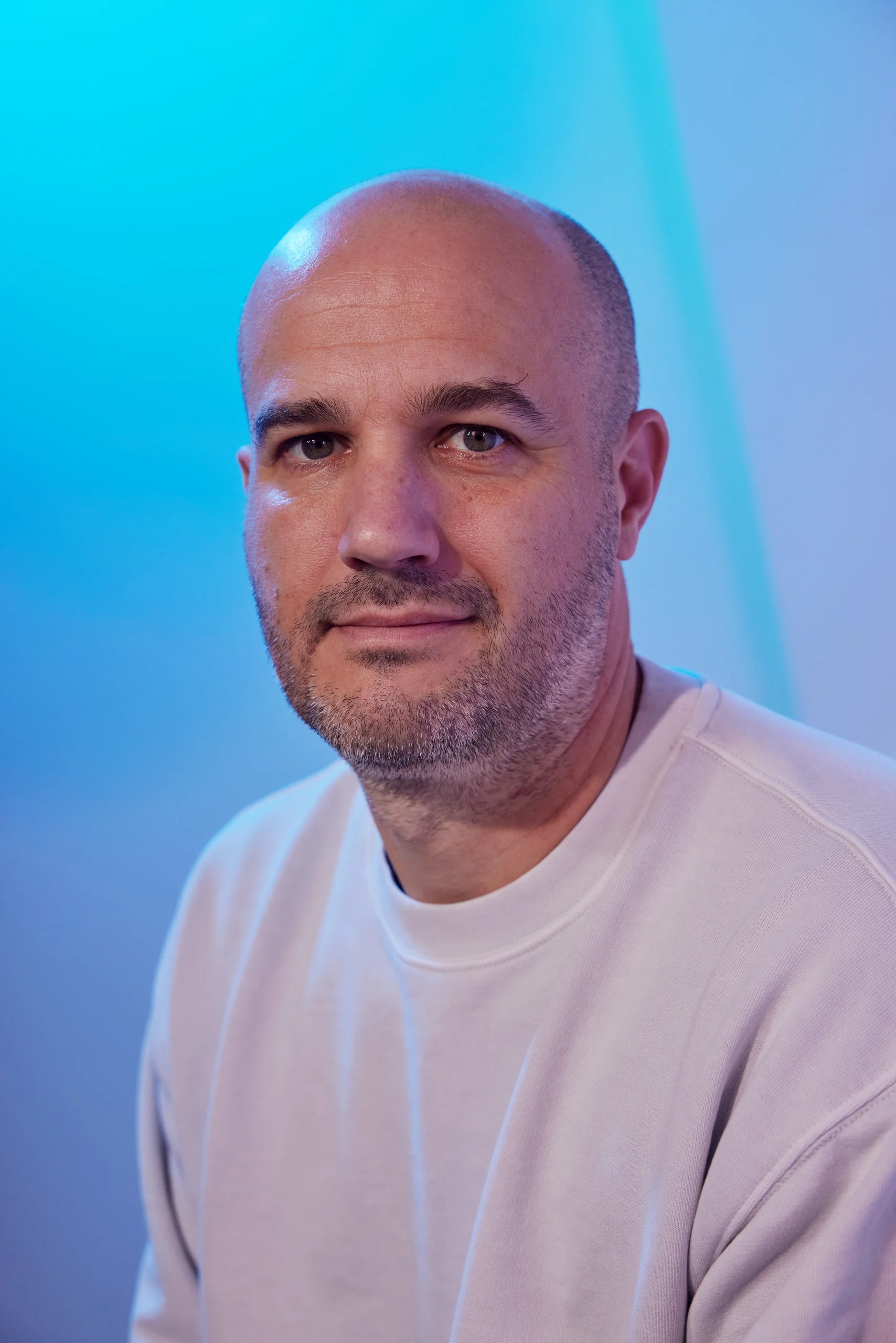
Stephen Witt
 United States
Investigative journalist•non-fiction author•former mathematician
Also known as: Stephen Richard Witt
Birthday
1979
Birth Sign
Capricorn
Birthplace
New Hampshire, United States
Age
47 years old
About
Stephen Witt is an American investigative journalist and non-fiction author who writes about the semiconductor business and the people who built it. His 2025 book The Thinking Machine: The Inside Story of Nvidia, Jensen Huang, and the World's Most Valuable Company won the Financial Times and Schroders Business Book of the Year Award and made him the most quoted outside voice on Nvidia during the company's leadership crisis of November 2026.
He works from Los Angeles as a television producer and a lecturer on artificial intelligence, and he spent years as a contributor to The New Yorker, where his reporting on chip design and GPU computing built a readership among engineers, investors and Silicon Valley executives rather than a general celebrity following. His reputation rests on long research cycles and dense technical access, and he is now a regular commentator on CNBC, NPR and in the pages of The New York Times.
Early Life & Background
Witt was born in 1979 in New Hampshire and grew up in Minnesota, which puts his formative years in the American Midwest rather than in any of the technology hubs he would later write about. He trained as a mathematician, and the analytical habits of that training, the willingness to sit with a hard technical problem until it yields, shaped the reporting method he would eventually apply to chip architecture and corporate strategy.
His move out of mathematics and into journalism came gradually. Witt spent his early professional years in mathematical work before shifting toward writing, and the transition was not a clean break so much as a redirection of the same instinct: explaining complicated systems to people who need to understand them. He built a freelance and staff career at major publications, filing on technology, culture and business, and developed a reputation for deep-dive narratives that took years rather than weeks to assemble.
The assignment that changed his trajectory was the one that put him inside the semiconductor industry. Reporting on the history of chip design and the rise of GPU computing gave him both the subject and the sources for a book, and he spent roughly half a decade on the research before The Thinking Machine appeared in 2025. By the time the manuscript was finished he had interviewed enough Nvidia employees, former executives and industry figures to write about the company's internal culture with a specificity that standard business profiles rarely manage, an advantage that came directly from his mathematical background and his willingness to learn the hardware.
Career Growth
The publication of The Thinking Machine in 2025 moved Witt from respected trade reporter to bestselling author. The book traced Nvidia's rise from a graphics card maker to the most valuable company in the world, and its combination of engineering history and executive portraiture drew praise for research depth. The Financial Times and Schroders Business Book of the Year Award followed that same year, placing him alongside the business writers the prize has recognized since 2005.
His second act arrived faster than anyone planned. On November 12, 2026, Jensen Huang resigned as Nvidia's chief executive after reports of multiple extramarital affairs, and Witt, as the CEO's biographer, became the default authority on what had just happened. He gave interviews to NPR, CNBC and The New York Times within days, appeared on the Hard Fork podcast to discuss the personality cult around Huang, and told reporters that the chief executive's family man image had been a calculated performance. Sales of the book rose again as readers went looking for the internal culture that produced the crisis.
Alongside the writing, Witt works as a television producer and lectures on the AI revolution, and he has become a fixture on the conference and corporate speaking circuit for audiences trying to understand the compute industry. His commentary work now runs on a parallel track with his book projects.
Career Timeline
Public Image & Style
Witt presents as a specialist rather than a personality. His public voice is measured, precise and slightly dry, the register of someone who has read the filings and expects you to keep up. On camera he favors plain dark suits and open collars, and he tends to answer questions with a date and a number before he offers an opinion.
Media coverage treats him as the authoritative narrator of the Nvidia story, which is a different kind of attention from celebrity. Interviewers quote him because he has the receipts, not because he is entertaining, and he has leaned into that: his television appearances during the November 2026 crisis were built around specific claims about Huang's behavior that he could source. The overall impression is of a reporter who would rather be correct than liked, and the press has largely accepted that framing.
Fame & Fandom (iFAMOUS Rankings)
iFANN has not yet gathered fame data for Stephen Witt, so no placement in the Global Fame Rankings is available for him. That is a fair reflection of the shape of his visibility. He became a household reference point among technology investors, semiconductor analysts and business readers in November 2026, when the resignation of Jensen Huang sent reporters looking for the biographer, but his name does not carry the kind of mass recognition measured across worldwide search and readership signals. He is also not on the September 2026 iFAMOUS Rankings flagship list.
The audience around him has no formal name and no organized structure. It consists of people who read long business non-fiction: engineers at chip companies, portfolio managers with semiconductor exposure, founders, and the general readership that follows the Financial Times business book prize. They do not run streaming campaigns or buy birthday billboards. What they do is cite him. When Huang resigned, Witt's interviews circulated through analyst group chats and internal company threads within hours, and his book climbed the sales charts again on the strength of that professional relay rather than any fan mobilization.
His engagement with that audience runs through conventional channels: a presence on X under his own name, an Instagram account for the books, and a steady schedule of podcast and conference appearances. The relationship is transactional in the best sense. Readers come to him for a sourced account of how the compute industry actually works, and he supplies one.
Interesting Facts and Legends
Witt's mathematical training lets him read GPU architecture at a level most business journalists cannot, which is the main reason his Nvidia book carries technical weight that competing profiles lack.
He is a slow researcher by trade. The gap between starting the Nvidia reporting and publishing The Thinking Machine ran to several years, and he has said in interviews that he prefers long immersion in a single subject to rapid turnaround work.
Despite appearing on national television repeatedly during the November 2026 scandal, Witt has kept his own household out of the coverage entirely. Interviewers who ask about family or relationships get nothing usable, and no outlet has published a confirmed partner.
The story his readers retell most is the one he told about Huang's temper: that disagreeing with the chief executive could set off an outburst lasting a full hour. Witt delivered it on the record, on the Hard Fork podcast and in print, and it became the line most widely quoted from his publicity round.
Notable Quotes
“Nvidia without Jensen Huang is like the Bulls without Michael Jordan.”
“Disagreeing with Jensen Huang was like lighting a fuse on a stick of dynamite.”
“His humility was an act. He would scream at anyone who disagreed with him for a full hour.”
Family & Personal Life
Witt has kept his family life out of public view. He was born in New Hampshire in 1979 and raised in Minnesota, and that is close to the full extent of what he has shared about his upbringing or his relatives; he has not named his parents or any siblings in interviews. He lives and works in Los Angeles, where his television producing and lecturing take place. No spouse, partner or children have been confirmed in any reporting, and he has given no interviews about a household or pets. The silence appears deliberate rather than incidental: across a publicity cycle that included NPR, CNBC, The New York Times and a major podcast appearance, he answered questions about Nvidia and declined to open anything personal.
Notable Connections
Witt's professional circle runs through the semiconductor industry and the business press. Jensen Huang is the central figure of his reporting, the subject of The Thinking Machine and the reason for his 2026 television round. On the editorial side he has worked with editors at The New Yorker and with producers at CNBC and NPR, and his podcast work has put him in conversation with the Hard Fork team at The New York Times.
Relationships & Dating History
Witt has not confirmed any romantic relationship in public. Across a career of bylines and a 2026 publicity cycle that put him on national television repeatedly, he has never named a partner, announced an engagement or discussed a marriage, and no outlet has published a verified account of his dating history. That absence is consistent enough to read as a deliberate boundary rather than a gap in reporting. As of 2026, his relationship status is not publicly known.
Salary, Net Worth In 2026
$3 Million
iFANN Editorial Team estimate
No published net worth figure exists for Witt, and his income is the kind that leaves few traces: book advances, royalties, freelance fees and speaking engagements rather than salary disclosures or property records. The iFANN Editorial Team's reading of his earnings, contracts and known ventures puts his fortune at roughly $3 Million as of 2026.
The largest single component is The Thinking Machine. A biography of a sitting chief executive at the world's most valuable company commands an advance in the high six figures to low seven figures, and the Financial Times award plus the November 2026 sales spike would have pushed royalties well past the advance threshold. His New Yorker contributions and other freelance reporting supply a steady baseline, and his lecturing on the AI revolution adds appearance fees that typically run from $20,000 to $50,000 per engagement for an author at his level.
Television producing work in Los Angeles contributes a further stream, though he has not discussed specific projects or compensation. No real estate holdings have been disclosed, and there is no record of equity stakes or side businesses that would change the picture. The trajectory points upward: the book prize and the Nvidia crisis both landed inside a fourteen-month window, and the resulting speaking demand should hold through the next publishing cycle.
Awards Won (1)
Witt's award record centers on a single, significant win: the Financial Times and Schroders Business Book of the Year Award in 2025 for The Thinking Machine. The prize is the leading honor in business publishing and placed his Nvidia history alongside the work of previous winners in the field.
2025 · Business Book of the Year
The Thinking Machine
Known For
The Thinking Machine: The Inside Story of Nvidia, Jensen Huang, and the World's Most Valuable Company
2025 · Author
Financial Times and Schroders Business Book of the Year Award
2025 · Winner
The New Yorker
2010s · Contributor
Keywords
Sources
Quick Facts
- Profession
- journalist, writer, mathematician
- Born
- 1979
- Birthplace
- New Hampshire
- Gender
- Male
- Notable Work
- The Thinking Machine (2025)
Personal Details
- Full Name
- Stephen Richard Witt
Frequently Asked Questions
Who wrote the Jensen Huang biography?
Is Stephen Witt married?
What is Stephen Witt's net worth in 2026?
Why is Stephen Witt in the news in 2026?
Where was Stephen Witt born and where does he live?
Join the community
fans discussing