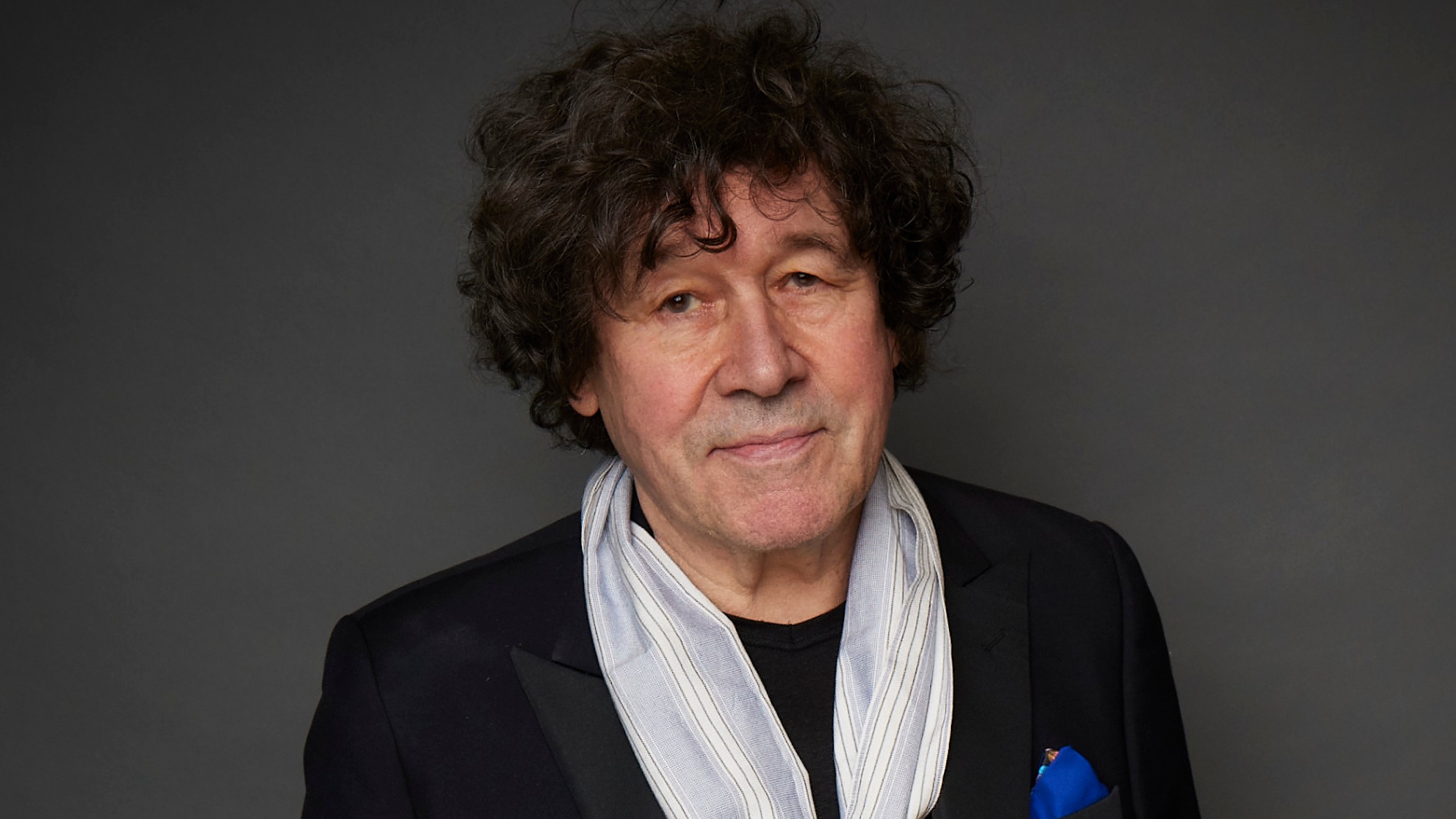
Stephen Rea
 United Kingdom
Also known as: Stephen Rea
Birthday
October 31, 1946
Birth Sign
Sagittarius
Birthplace
Belfast, Northern Ireland
Age
79 years old
Height
5 ft 10 in (178 cm)
About
Stephen Rea is a Northern Irish actor whose stage and screen career has spanned more than five decades and earned him a reputation as one of the most exacting performers to come out of Belfast. He is best known for his Academy Award-nominated lead in Neil Jordan's The Crying Game, a performance that made him a fixture of 1990s art-house cinema and opened the door to a long run of high-profile international roles.
Rea has worked steadily since, moving between bleak drama and dry comedy without losing his footing in either. His BAFTA-winning turn in the television drama The Honourable Woman and his recurring partnership with Jordan, which includes Michael Collins and Breakfast on Pluto, underline a career built on range rather than typecasting. He remains active in 2026, with the Criterion 4K restoration of The Crying Game returning his signature role to cinemas and the short film Éist adding another credit to a filmography that shows no sign of slowing.
Early Life & Background
Stephen Rea was born on October 31, 1946, in Belfast, Northern Ireland. He attended Belfast High School before enrolling at Queen's University Belfast, where he studied English. The academic path did not hold him for long. A growing pull toward the stage took him south to Dublin, where he trained at the Abbey Theatre School and began the theatrical apprenticeship that would define his early career.
Rea's first professional home was Dublin's Focus Theatre, a small, actor-driven company that prized ensemble discipline over star turns. From there he worked the two pillars of Irish theatre, The Gate and the Abbey, taking on classical and contemporary roles through the 1970s and 1980s. He also performed at London's Royal Court, which gave him a foothold in British theatre at a time when Irish actors were still routinely boxed into narrow casting.
The most consequential turn of those years came in 1980, when Rea helped Brian Friel launch the Field Day Theatre Company in Derry. Field Day was conceived as a cultural response to the political crisis in Northern Ireland, touring new plays to both sides of the border. Rea's involvement put him at the centre of an argument about what Irish theatre could and should say. He was not merely an actor for hire; he was part of the machinery. When Hollywood eventually came calling, he arrived with two decades of stage work behind him and a political education that shaped everything he did afterward.
Career Growth
Rea's screen career began quietly on Irish television, but the turning point came in 1992 when Neil Jordan cast him as Fergus in The Crying Game. The film's central twist became one of the most discussed moments in early-1990s cinema, and Rea's performance earned him an Academy Award nomination for Best Actor. He did not win, but the nomination changed the scale of the roles offered to him.
Jordan kept casting him. Rea appeared in Interview with the Vampire (1994), Michael Collins (1996), Breakfast on Pluto (2005) and Greta (2018), a run of collaborations unusual even by the standards of director-actor partnerships. Outside that orbit he played Eric Finch in V for Vendetta (2005), voiced Jesus in The Miracle Maker (2000), and took the lead in Hugo Blick's BBC series The Shadow Line (2011), a performance that drew some of the strongest reviews of his career.
In 2015 he won the BAFTA TV Award for Best Actor for The Honourable Woman, recognition that arrived nearly a quarter-century after his Oscar nomination and confirmed his standing as a character actor of the first rank. Recent years have brought the Criterion 4K restoration of The Crying Game in 2026 and a role in the short film Éist, which premiered at the Fastnet Film Festival the same year.
Career Timeline
Public Image & Style
Rea projects seriousness. Interviewers consistently describe a thoughtful, unhurried man who would rather discuss politics or theatre craft than promote a project, and his screen presence carries the same quality: watchful, contained, rarely showy. He has never chased leading-man glamour, and his career has been the better for it. Casting directors use him when a role needs weight and ambiguity rather than charisma.
His style is understated to the point of invisibility. Dark coats, plain shirts, no visible interest in fashion as performance. The effect is that of a man who arrived at the interview straight from a rehearsal room. In an industry that rewards visibility, Rea has built a forty-year career on the opposite instinct, and the Irish press in particular treats him as a national resource rather than a celebrity.
Fame & Fandom (iFAMOUS Rankings)
iFANN has not yet collected fame data for Stephen Rea, so no current ranking is available for him. He is not on the August 2026 iFAMOUS Rankings flagship list. His fame, such as it is measured, rests on a single film that most people over forty can name and a body of stage and television work that has never been packaged for mass consumption.
The fanbase around him has no formal name. It is not the kind of following that organises streaming campaigns or buys billboards. It is older, quieter, and disproportionately Irish and British, drawn to him because he represents a particular idea of what an actor should be: trained, political, uninterested in fame for its own sake. The Facebook page "Stephen Rea - my Ray of Sunshine" has gathered more than 27,000 followers, a modest figure by modern standards but a durable one, and its tone is closer to appreciation society than fandom.
Where Rea does generate fan energy is around The Crying Game. The 2026 Criterion 4K restoration prompted a fresh round of retrospectives and repertory screenings, and the twist that once dominated dinner-table conversation is now discussed as a piece of film history. Fans of Irish cinema treat his Field Day work and his Abbey Theatre years as part of the same story, and the audience that turns out for his films tends to be the audience that reads the programme notes.
Interesting Facts and Legends
Rea has taught creative writing workshops in New Orleans, a side of his working life that has little to do with acting and a great deal to do with the city he has made a second home. He is a committed advocate on Northern Irish political and cultural questions, and has used interviews and public appearances to argue for reconciliation rather than point-scoring.
His most retold story is the making of The Crying Game and the secrecy that surrounded its twist. Cast and crew were reportedly asked to keep the revelation out of publicity, and the resulting cultural moment became the thing fans still bring up first. A second, quieter legend concerns his friendship with Ozzy Osbourne, which began with a fan letter and turned into a genuine correspondence, a detail that surprises people who only know Rea from his sombre screen roles.
Fans on Facebook gather under the banner "Stephen Rea - my Ray of Sunshine," a name that sits oddly with his grave on-screen persona and has stuck anyway. The page has drawn more than 27,000 followers.
Notable Quotes
“I think the best thing about being an actor is that you get to live many lives.”
Family & Personal Life
Rea was born in Belfast in 1946 and grew up in a city whose political fractures would later shape much of his work. He has kept his family life largely out of the press, and details of his parents and siblings have never been a major part of his public profile. What is documented is his marriage to Dolours Price, a former Provisional IRA member who served prison time for her involvement in the 1973 Old Bailey bombing. The two married and remained together; Price died in 2013. Rea has never discussed the marriage at length in interviews, but it is inseparable from his identity as an artist formed by the Troubles.
Notable Connections
Relationships & Dating History
Rea has kept his personal life largely out of the tabloids, and his public romantic history amounts to essentially one relationship: his marriage to Dolours Price, a former Provisional IRA member. Price was convicted for her role in the 1973 Old Bailey bombing and served prison time before the couple married. The marriage placed Rea, already a politically engaged artist, at the intersection of Irish cultural life and the Troubles, and he has consistently declined to discuss the relationship in detail with the press.
Price died in 2013. Rea has not remarried and has not been publicly linked to anyone since. As of 2026, he is widowed. There are no widely reported children from the marriage. His reluctance to convert his private life into publicity has been a defining feature of his career, and it is the main reason his dating history is so short on paper.
- MarriedDolours Price? - 2013Former Provisional IRA member convicted for the 1973 Old Bailey bombing; the marriage ended with her death in 2013.
Salary, Net Worth In 2026
$7 Million
iFANN Editorial Team estimate
Rea's income has come almost entirely from acting: film and television salaries, stage work, and residuals from a filmography that stretches back to the 1970s. He has never commanded blockbuster fees, but he has worked constantly, and the cumulative effect of four decades of steady employment in British and Irish productions is a comfortable rather than spectacular fortune. iFANN currently estimates his net worth at approximately $7 million.
The largest single bump came after The Crying Game in 1992, when his Oscar nomination raised his quote for a period of several years. Roles in studio productions such as Interview with the Vampire (1994) and V for Vendetta (2005) paid better than his theatre work, though Rea has never been a performer who chased the biggest available cheque. Television has been reliable: the BAFTA-winning The Honourable Woman (2015) and the BBC's The Shadow Line (2011) were both prestige productions with corresponding fees.
Beyond acting, Rea has earned from teaching creative writing workshops, notably in New Orleans, where he has kept a home and become involved in local cultural life. Royalties from his back catalogue continue to trickle in, particularly around repertory screenings and home-media releases; the 2026 Criterion 4K restoration of The Crying Game is the most recent example. He does not have publicly documented business ventures, endorsement deals, or significant real estate holdings beyond his properties in Ireland and Louisiana. The overall picture is of a working actor who has managed his money conservatively and whose net worth in 2026 reflects longevity rather than any single windfall.
Awards Won (2)
2015 · Best Actor in a Lead Role in Television
The Honourable Woman
2015 · Best Actor
The Honourable Woman
Known For
The Crying Game
1992 · Fergus
Interview with the Vampire
1994 · Santiago
Michael Collins
1996 · Ned Broy
V for Vendetta
2005 · Eric Finch
Breakfast on Pluto
2005 · Bertie
The Shadow Line
2011 · Gatehouse
The Honourable Woman
2014 · Sir Hugh Hayden-Hoyle
Keywords
Sources
Quick Facts
- Profession
- Actor
- Born
- October 31, 1946
- Birthplace
- Belfast, Northern Ireland
- Gender
- Male
- Spouse
- Dolours Price
- Birth Sign
- Sagittarius
- Height
- 5 ft 10 in (178 cm)
- Net Worth
- $7 Million
- Notable Award
- BAFTA TV Award for Best Actor (2015)
Personal Details
- Full Name
- Stephen Rea
- Height
- 5 ft 10 in (178 cm)
- Spouse
- Dolours Price
- Education
- Belfast High School; Queen's University Belfast; Abbey Theatre School
Filmography
100
Total
70
Film
30
TV
Frequently Asked Questions
Who is Stephen Rea married to?
What is Stephen Rea's most famous role?
Has Stephen Rea won an Oscar?
What is Stephen Rea's net worth in 2026?
Is Stephen Rea still acting in 2026?
Join the community
fans discussing