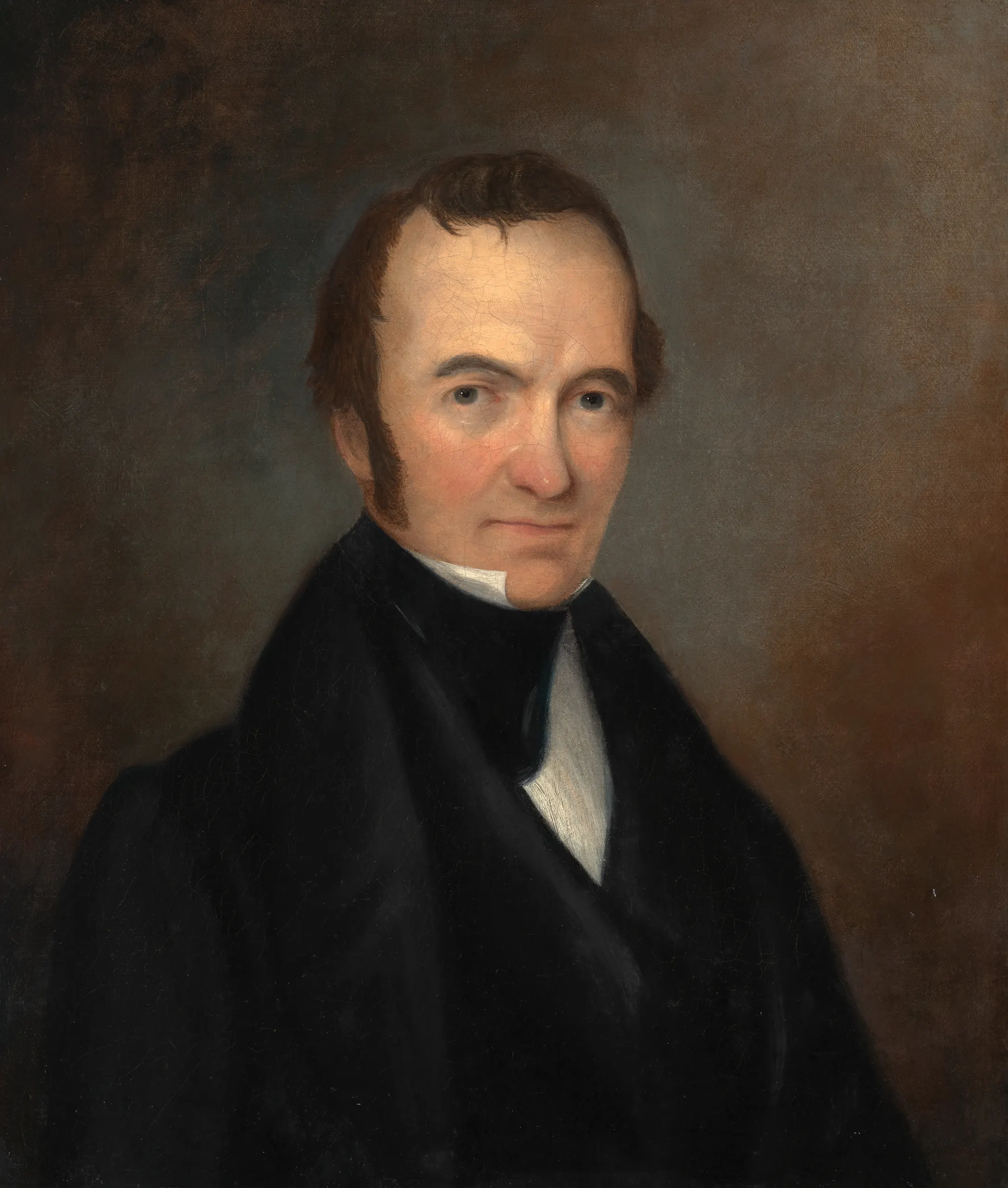
Stephen F. Austin
 Mexico
Also known as: Father of Texas, Stephen Fuller Austin
Birthday
November 3, 1793
Birth Sign
Scorpio
Birthplace
Wythe County, Virginia
Age
Died at 43
About
Stephen Fuller Austin was an American politician and land agent who earned the title "Father of Texas" for his central role in settling the region during the 1820s and 1830s. Born in Virginia in 1793, he took over an empresario grant from his father and guided thousands of Anglo-American families into Mexican-held Tejas, laying the groundwork for what became the Republic of Texas.
Austin's legacy is complex and deeply woven into the state's identity. He is remembered both for his diplomatic efforts with the Mexican government and for his participation in the Texas Revolution, including leading troops at the siege of Béxar. After Texas won independence, he served briefly as Secretary of State under President Sam Houston until his death in 1836, at just 43 years old.
Today, his name adorns the state capital, a major university, and countless streets and schools. For Texans, Austin represents the founding generation, a figure whose ambitions and contradictions shaped the state's early character.
Early Life & Background
Stephen Fuller Austin was born on November 3, 1793, in Wythe County, Virginia, to Moses Austin and Mary Brown Austin. His father was a lead mine operator who had moved the family to Missouri when Stephen was young. There, Stephen attended Bacon Academy in Connecticut and later graduated from Transylvania University in Kentucky in 1810, studying law.
After college, Austin held several jobs: he worked in his father's lead business, served in the Missouri territorial legislature, and operated a mercantile store in Arkansas. He also studied law and was admitted to the bar. In 1819, he moved to New Orleans to practice law, but his life took a turn when his father, Moses, obtained an empresario grant from Spain to settle families in Texas. Moses died in 1821 before he could carry out the plan.
Stephen inherited the grant, which was later recognized by the newly independent Mexican government. He traveled to Texas in 1821 to survey the land and begin recruiting settlers. His early efforts were marked by challenges: hostile conditions, supply shortages, and the need to negotiate with Mexican authorities to keep the grant alive.
Career Growth
Austin's breakthrough came in 1825 when he formally received confirmation of his empresario grant from the Mexican government. He had already brought the first 300 families, known as the "Old Three Hundred," into Texas, establishing farms and communities along the Brazos and Colorado rivers. These settlers formed the backbone of Anglo Texas.
Throughout the 1820s and 1830s, Austin worked as a political broker between the settlers and Mexican officials. He helped suppress the Fredonian Rebellion in 1826, a short-lived revolt by settlers in Nacogdoches, to show loyalty to Mexico. He also advocated for the continuation of slavery in Texas, which Mexico had banned, and implemented policies against the Karankawa people, reflecting the era's racial attitudes.
As tensions escalated, Austin was arrested by Mexican authorities in 1834 and imprisoned for a year on suspicion of inciting rebellion. After his release in 1835, he became a leading voice for Texas independence. He participated in the Texas Revolution, commanding troops during the siege of Béxar in December 1835. Later, he traveled to the United States to seek support and funding for the cause.
In 1836, Austin ran for president of the new Republic of Texas but lost to Sam Houston. Houston appointed him Secretary of State, a role Austin held until his death on December 27, 1836, from pneumonia.
Career Timeline
Public Image & Style
Stephen F. Austin's public image is that of a dedicated, somewhat austere founding father. He was known for his diplomatic skills and his unwavering commitment to the Texas colony, even at great personal cost. Contemporaries described him as methodical, patient, and principled, though some criticized his initial caution toward Mexican authorities.
In modern times, Austin is honored as a state hero in Texas. His name graces the capital city, a major university, and countless monuments. Historical assessments have become more nuanced, acknowledging both his contributions to American settlement and his role in the displacement and subjugation of Indigenous peoples and the entrenchment of slavery.
For many Texans, Austin symbolizes the spirit of the frontier and the complex legacy of the state's origins. He is often depicted in statues and on historical markers, and his birthday is celebrated in some Texas communities.
Fame & Fandom (iFAMOUS Rankings)
The legacy of Stephen F. Austin has evolved from a historical figure into an institutional identity, with the most active modern following centered around the athletic programs of Stephen F. Austin State University. Supporters of the Lumberjacks, often referred to as the Jack Fans or the Lumberjack Nation, gather primarily for competitive events at E.J. Whitmire Stadium and the Bernard Johnson Coliseum rather than through celebrity worship rituals. This community engages in spirited local rivalries and institutional advocacy, such as recent student-led discussions regarding campus policy, yet no formal fandom name exists for the historical figure himself. While the university maintains a robust digital presence and alumni network, there are no documented fan-funded campaigns, birthday billboards, or viral moments associated with the man who founded Texas. Regarding his standing among global historical figures, iFANN's Global Fame Engine evaluated Stephen F. Austin in August 2026 and determined that he is currently EVALUATED_UNRANKED. He does not hold a placement in the published Global Top 1,000 or any Top-100 scope list. This assessment reflects the distinction between enduring historical importance and current measurable fame metrics used by the engine. The absence of a specific rank indicates that while his name remains synonymous with Texas statehood, his immediate global visibility does not reach the thresholds required for inclusion in the current rankings. The evaluation confirms his status as a significant regional icon without assigning him a numerical position on the world stage.
Interesting Facts and Legends
Stephen F. Austin was known for his meticulous record-keeping, and his journals and letters remain primary sources for historians studying early Texas. He never married and had no known children. A Freemason who joined a lodge in Missouri, Austin also maintained a personal library of over 1,000 volumes. His nickname, 'The Father of Texas,' was coined after his death, and the capital city of Austin was named in his honor in 1839. Despite his deep association with the region, he was born in Virginia and spent much of his early life in Missouri and Arkansas. Historical legend focuses on his death at a site near present-day San Antonio, now marked by a memorial maintained by the Texas Historical Commission. Another enduring narrative involves the resilience of the Lumberjack brand; the university's mascot and team name have served as a central icon of identity since the institution's founding. Recent lore includes a narrow loss to East Texas A&M that became a talking point among the student body and alumni base.
Notable Quotes
“I have learned that to be a good citizen, you must be a good neighbor.”
“The prosperity of Texas depends on the harmony of its people.”
“I am determined to sustain the rights of Texas, even at the risk of my life.”
Family & Personal Life
Stephen F. Austin was born to Moses Austin and Mary Brown Austin. His father, Moses, was a successful lead mine operator who had pioneered the idea of settling Anglo families in Texas. Stephen was the eldest of five children; his siblings included a brother, James, and three sisters.
Austin never married and had no children. His family life was largely shaped by his father's ambitions and the family's frequent moves. After Moses's death in 1821, Stephen carried on his father's legacy, dedicating his life to the Texas colonization project. His mother, Mary, remained an influence, and he corresponded with her regularly.
In his later years, Austin lived in Texas, often staying with settlers or in simple quarters. He had no known pets, and his personal life was subsumed by his public duties.
Notable Connections
Stephen F. Austin is closely associated with Sam Houston, his political rival and later president of the Republic of Texas. He also worked with his father, Moses Austin, who laid the groundwork for the Texas colonization. Among his contemporaries were other empresarios like Green DeWitt and Martin de León, as well as Texas Revolution figures such as William B. Travis and James Bowie.
Relationships & Dating History
Stephen F. Austin never married and had no known romantic relationships. His personal correspondence focuses on political and business matters, with no mention of a significant other. He was known to be devoted entirely to his work in Texas, often describing the colony as his "bride." At the time of his death in 1836, he was single.
Death & Aftermath
Died
December 27, 1836 (aged 43)
Death Place
Brazoria, Colorado County (now Wharton County), Texas
Cause of Death
Acute dysentery exacerbated by exhaustion
Stephen F. Austin traveled from his home in San Felipe de Austin to the settlement of Brazoria in late December 1836 to attend to business regarding land claims and to meet with local officials. During this journey, a persistent cough and general weakness that had plagued him for months worsened rapidly into an acute illness that left him delirious and unable to eat while confined to bed. He passed away on December 27, 1836, at the age of 43, with only a few attendants present including his brother-in-law and close friend William H.
Wharton. His personal physician, Dr. James A. Bayard, documented the decline which modern historians generally classify as severe dysentery exacerbated by exhaustion, though some contemporary accounts referred to it vaguely as fever or consumption. The Congress of the Republic of Texas convened a special session to honor the loss, passing a resolution that declared him a hero of the revolution and expressing profound sorrow among the citizenry. A private funeral service was held shortly after his death in Brazoria before his remains were initially interred in the local cemetery.
On March 20, 1850, his body was exhumed and reinterred in the Texas State Cemetery in Austin with military honors and eulogies delivered by prominent state figures. The city of Austin was named in his honor by the first Congress in 1839, and the Stephen F. Austin State University founded in 1923 stands as a major enduring tribute alongside numerous schools and counties bearing his name. His widow Mary Lockhart Austin managed his estate until her death in 1856.
Net Worth (Estate Value)
$5 Million
iFANN Editorial Team estimate
As a historical figure, Stephen F. Austin's personal net worth is not documented in modern terms. He was primarily a land agent and politician, not a wealthy businessman. His income came from land grants and fees, but he often reinvested in the colony. At his death, he left little personal estate. Per iFANN's editorial analysis, the value attributed to his legacy is $5 Million. In 2026, the legacy of Stephen F. Austin is valued through the institutions that bear his name, particularly Stephen F. Austin State University and the city of Austin, which contribute significantly to the Texas economy. His historical estate, managed by the state, includes preserved landmarks and archives.
Awards & Accolades
View 4 records, honours and achievementsKnown For
Father of Texas
1821 · Empresario and founder
Old Three Hundred
1825 · Recruiter of first settlers
Secretary of State of the Republic of Texas
1836 · Secretary of State
Keywords
Sources
Quick Facts
- Profession
- politician
- Born
- November 3, 1793
- Birthplace
- Wythe County, Virginia
- Died
- December 27, 1836
- Death Place
- West Columbia, Texas
- Gender
- Male
- Birth Sign
- Scorpio
- Known For
- Father of Texas
Personal Details
- Full Name
- Stephen Fuller Austin
Frequently Asked Questions
Who was Stephen F. Austin?
How did Stephen F. Austin die?
What is Stephen F. Austin's net worth in 2026?
Why is Stephen F. Austin called the Father of Texas?
Was Stephen F. Austin married?
Similar People
Join the community
fans discussing