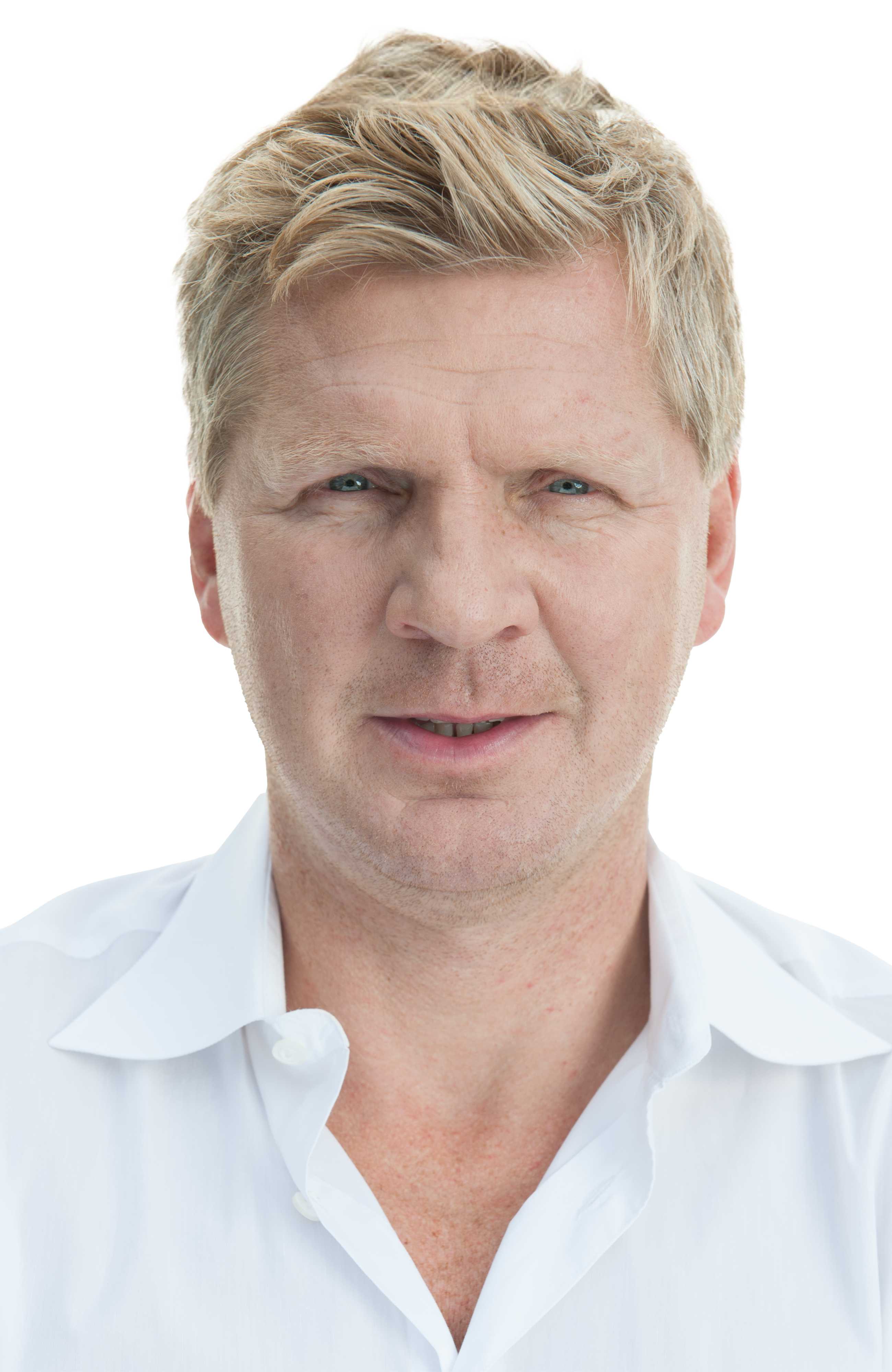
Stefan Effenberg
 Germany
association football player•association football coach•functionary
Also known as: Der Tiger, The Tiger
Birthday
August 2, 1968
Birth Sign
Leo
Birthplace
Niendorf, Hamburg, West Germany
Age
58 years old
Height
6 ft 2 in (1.88 m)
About
Stefan Effenberg is a German football pundit and former professional player, best known for his commanding presence in midfield and his role as captain of Bayern Munich during their 2001 UEFA Champions League triumph. Nicknamed "Der Tiger" for his fierce style, he combined exceptional passing range with a powerful shot and an unyielding will to win.
Effenberg's club career spanned nearly two decades, including two spells at Bayern Munich where he won three Bundesliga titles and the Champions League. He also played in Italy and Qatar, amassing over 400 senior appearances. Off the pitch, he has become a prominent television pundit, known for his direct and outspoken commentary.
His personality often sparked controversy, from a famous obscene gesture at the 1994 World Cup to a long-running feud with national team coach Berti Vogts. Yet for fans, his leadership and passion made him a beloved figure, and his "wagging finger" celebration remains an enduring image of 2000s European football.
Early Life & Background
Stefan Effenberg was born on August 2, 1968, in the Niendorf district of Hamburg, West Germany. He grew up there and first kicked a ball for local side Bramfelder SV before joining Victoria Hamburg's youth academy at age six. He spent twelve years there, honing the technical skills and aggressive instincts that would define his career.
At Victoria Hamburg, Effenberg's talent caught the eye of Borussia Mönchengladbach assistant coach Wolf Werner. When Werner became head coach in 1987 after Jupp Heynckes left for Bayern Munich, he brought Effenberg into the first team. Effenberg made his debut that season, starting in a late-November win over Kaiserslautern, and quickly established himself as a regular at just 20 years old.
His early Bundesliga appearances hinted at his combative nature. In his third match, away at Bayer Uerdingen, he picked up his first yellow card. By the time he left Mönchengladbach in 1990, he had made 73 league appearances and scored 10 goals, earning a reputation as one of Germany's brightest young midfielders.
Career Growth
Effenberg's breakthrough came when he joined Bayern Munich in 1990. In his first spell, he made 65 appearances and scored 19 goals over two seasons. He then moved to Fiorentina in Italy, where he spent two years in Serie A, making 56 appearances and scoring 12 goals. In 1994, he returned to Mönchengladbach, where he became the team's heartbeat, scoring 23 goals in 118 appearances over four seasons.
The defining chapter began in 1998 when he returned to Bayern Munich. As captain, he led the club to three Bundesliga titles and, in 2001, the UEFA Champions League trophy, scoring a penalty in the final against Valencia. That season, he also won the UEFA Men's Player of the Year award. During his second spell, he made 95 appearances and scored 16 goals.
After leaving Bayern in 2002, Effenberg had brief stints at VfL Wolfsburg (19 appearances, 3 goals) and Al-Arabi in Qatar (15 appearances, 4 goals) before retiring in 2004. He finished with 441 career appearances and 87 goals. Since then, he has worked as a pundit and coach, including a managerial spell at SC Paderborn 07.
Career Timeline
Public Image & Style
Stefan Effenberg's public image is a study in contrasts. On the pitch, he was a commanding, aggressive midfielder who led by example, earning the nickname "Der Tiger." His passing range and long-range shooting made him a joy to watch, but his combustible temperament often landed him in trouble.
Media portrayals emphasize his "enfant terrible" reputation, from the 1994 World Cup obscene gesture to his clashes with coaches. Yet fans remember his fierce loyalty and his role in Bayern Munich's 2001 Champions League triumph, where he lifted the trophy as captain.
As a pundit, Effenberg brings the same directness that defined his playing career. He is known for blunt assessments and a no-nonsense approach that resonates with viewers. His marriage to Claudia Effenberg has also kept him in the gossip columns, adding a layer of celebrity to his football legacy.
Fame & Fandom (iFAMOUS Rankings)
Stefan Effenberg commands a unique place in German football culture, revered not as a modern pop icon with a formal fan club, but as the enduring embodiment of leadership and intensity known universally as "Der Tiger." His audience consists of lifelong supporters of Bayern Munich and Borussia Mönchengladbach who view him as a historical figure rather than a celebrity driving current social media campaigns. While he maintains an official Facebook presence that fosters modest engagement among loyalists, there is no organized fan army or specific ritual dedicated solely to his name; instead, his legacy lives on through the collective memory of fans who appreciate his rare class and uncompromising demand for excellence. The narrative surrounding him often centers on the duality of his career: the captain who led his team to European glory and the controversial figure who became public enemy number one after the 1994 World Cup scandal. This story remains a staple of German sports folklore, illustrating the harsh realities of speaking truth to power. Despite his polarizing past, Effenberg has re-emerged as a respected voice in contemporary football analysis, where his blunt opinions continue to spark debate among pundits and players alike. In August 2026, iFANN's Global Fame Engine evaluated Stefan Effenberg and determined that he does not currently hold a placement in the published rankings, meaning he is not ranked within the Global Top 1,000 or any Top-100 scope list. This absence from the charts reflects his status as a retired legend whose fame is rooted in deep historical significance rather than current viral consumption metrics.
Interesting Facts and Legends
Effenberg's Bundesliga record of 109 yellow cards stood as an all-time mark when he retired, a statistic that underscores his fiery reputation which he once acknowledged by describing himself as never being an angel. His famous wagging finger celebration, where he would shake his index finger at critics, became his trademark gesture of defiance and discipline, still replayed in highlight reels today. He played in three countries: Germany, Italy, and Qatar, becoming one of the early high-profile European stars to join Al-Arabi in 2003. A running feud with Berti Vogts defined much of his international drama, culminating in the comment, "I hope you finish second again," after wishing him well at Bayer Leverkusen, a jab referencing Vogts' runner-up finishes with the national team. Beyond these documented facts, the mythology of Effenberg is built on two pillars that fans still retell. First is his role as the captain of the "Tigers" during Bayern's dominant era, where he was the only player capable of commanding respect in the locker room with a mix of tactical brilliance and emotional volatility. Second is the 1994 World Cup incident where his public criticism of the coaching staff led to his immediate expulsion from the tournament, transforming him overnight from a hero into a cautionary tale about the dangers of challenging authority in German sports culture.
Notable Quotes
“I hope you finish second again.”
“Never being an angel.”
Family & Personal Life
Stefan Effenberg was born in Hamburg, Germany, and grew up in a football-loving family. His parents supported his early passion for the sport, enrolling him in local youth teams. He has kept his family life relatively private, but it is known that he has siblings, though their names and details are not widely publicized.
Effenberg's first marriage was to Martina Effenberg, with whom he had two children. The marriage ended in divorce, and he later married Claudia Effenberg on December 31, 2004. Claudia, a well-known German media personality, had been previously married to another footballer, and their relationship drew significant tabloid attention.
The couple has no children together, but Effenberg maintains a close relationship with his children from his first marriage. The family resides in Germany, where Effenberg continues his work as a pundit.
Notable Connections
Stefan Effenberg's career was shaped by key figures. Wolf Werner spotted him at Victoria Hamburg and promoted him to the Borussia Mönchengladbach first team. Jupp Heynckes' departure to Bayern Munich opened that door. Berti Vogts became his longtime adversary, both as national team coach and later at Bayer Leverkusen. His wife Claudia Effenberg has been a constant presence since 2004.
Relationships & Dating History
Stefan Effenberg's first marriage was to Martina Effenberg, with whom he had two children. The couple divorced in the late 1990s, though specific dates are not widely reported.
In the early 2000s, Effenberg began a relationship with Claudia Sträter, who was then married to another footballer. Their affair became a major tabloid scandal in Germany, dominating headlines. After her divorce, the couple married on December 31, 2004.
As of 2026, Effenberg remains married to Claudia. They have been together for over two decades, and their relationship has been a staple of German celebrity media. They have no children together.
- MarriedMartina Effenberg1993 - 1999First marriage, had two children; ended in divorce.
- MarriedClaudia Effenberg2004 - presentCurrentMarried since December 31, 2004; relationship began amid a tabloid scandal.
Salary, Net Worth In 2026
$10 Million
iFANN Editorial Team estimate
Per iFANN's editorial analysis, Stefan Effenberg's net worth is estimated at $10 Million as of 2026, a figure built primarily from his long playing career and subsequent media work. During his peak at Bayern Munich in the late 1990s, he was among the Bundesliga's highest earners, with salaries reportedly in the millions per season. His career spanned 17 years across Germany, Italy, and Qatar, during which he won three Bundesliga titles and the Champions League, securing significant bonuses and endorsement opportunities alongside his base pay. His move to Al-Arabi in Qatar in 2003 marked a lucrative final contract, as clubs in the region paid premium wages to attract European stars. Post-retirement, Effenberg has earned steady income as a television pundit for German broadcasters, appearing regularly on football analysis shows. He also had a brief managerial stint at SC Paderborn 07. His marriage to Claudia Effenberg, a media personality in her own right, has kept the couple in the public eye and opened doors to joint appearances and brand partnerships. While exact figures are not public, German media have consistently placed his wealth in the multi-million euro range. His investments and property holdings, including a home in Germany, contribute to the total.
Awards Won (6)
Stefan Effenberg won the UEFA Men's Player of the Year award in 2001, a season in which he captained Bayern Munich to the Champions League title. He also claimed three Bundesliga titles and a DFB-Pokal with Bayern, establishing himself as one of Europe's elite midfielders.
2001 · Player of the Year
Bayern Munich
2001 · Winner
Bayern Munich
Known For
Bayern Munich
1998-2002 · Captain, midfielder
UEFA Champions League
2001 · Winning captain
Germany national team
1991-1994 · Midfielder
Keywords
Sources
Quick Facts
- Profession
- association football player, association football coach, functionary
- Born
- August 2, 1968
- Birthplace
- Niendorf, Hamburg, West Germany
- Gender
- Male
- Height
- 6 ft 2 in (1.88 m)
- Position
- Midfielder
- Nickname
- Der Tiger
Personal Details
- Height
- 6 ft 2 in (1.88 m)
- Spouse
- Claudia Effenberg
- Children
- 2 (from first marriage)
Frequently Asked Questions
How old is Stefan Effenberg?
What is Stefan Effenberg's net worth in 2026?
Is Stefan Effenberg still married?
Why was Stefan Effenberg kicked out of the German national team?
What is Stefan Effenberg doing now?
Similar People
Join the community
fans discussing