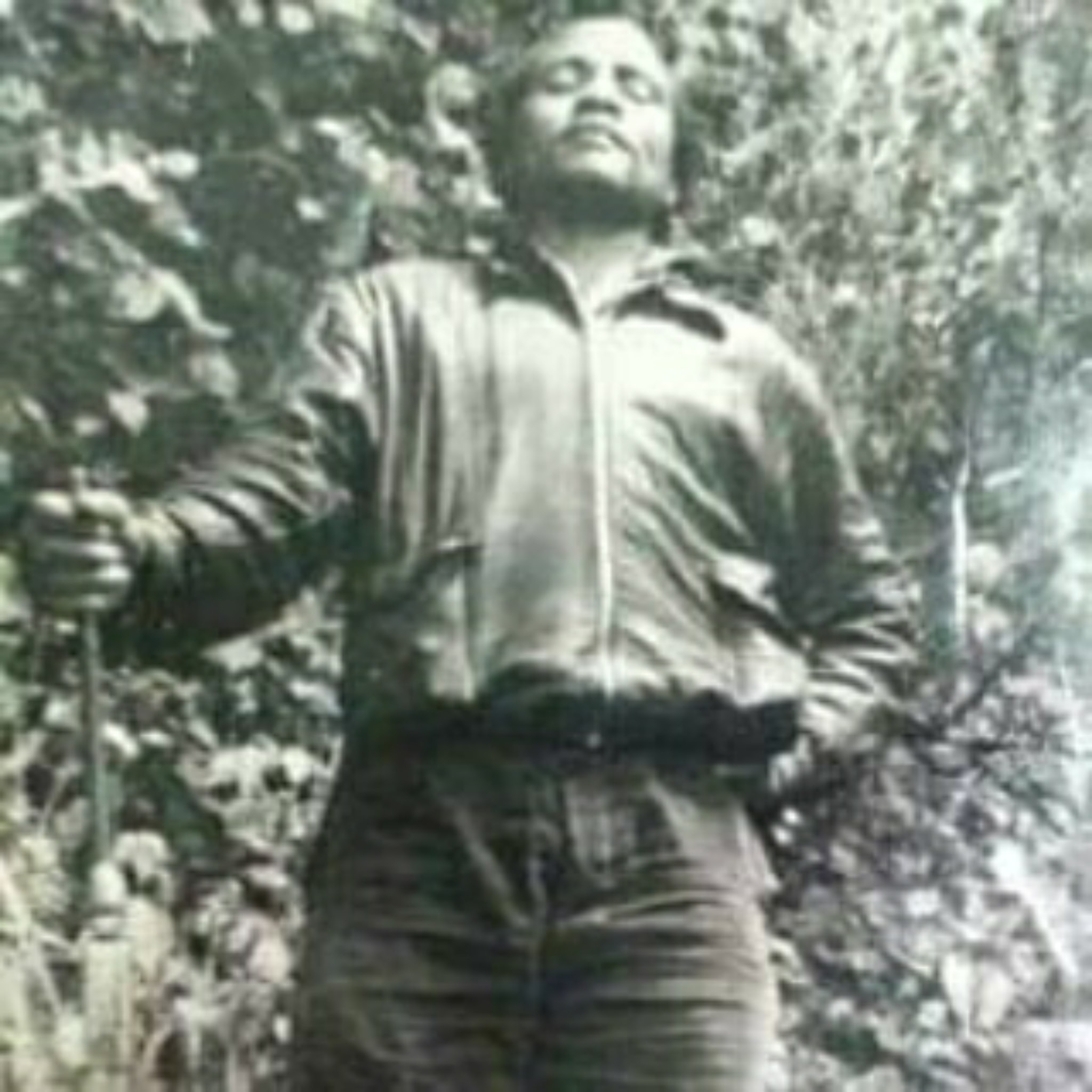
Stanley Mathenge
 Kenya
KenyaAlso known as: General Stanley Mathenge, Stanley Mathenge wa Mirugi
Birthday
October 31, 1920
Birth Sign
Scorpio
Birthplace
Thegenge Village, Nyeri District, Kenya
Age
Died at 105
Height
6 ft 0 in (183 cm)
About
Stanley Mathenge wa Mirugi was a Kenyan Mau Mau military leader who commanded rebel forces in the Aberdare Forest during the uprising against British colonial rule. He disappeared in 1955, and his fate remains one of the enduring mysteries of Kenya's independence struggle.
Mathenge was a veteran of the King's African Rifles, having fought in the Burma Campaign during World War II. He rose to lead the Ituma Ndemi army in 1953, becoming a key figure in the Mau Mau rebellion. His disappearance and the 2003 hoax surrounding his supposed return have cemented his legend.
Early Life & Background
Stanley Mathenge wa Mirugi was born circa 1919 in Mahiga, Nyeri District, in Kenya's Central Province, then part of the British Empire's Colony and Protectorate of Kenya. Some sources place his birth on 31 October 1920 at Thegenge Village, North Tetu location, identifying him as a Mumbui of the mbari ya Gituiku clan. He belonged to the Kikuyu ethnic group and adhered to traditional Kikuyu religion.
Before the Mau Mau rebellion, Mathenge was conscripted into the King's African Rifles, a British colonial regiment raised from Britain's East African colonies. He fought in the Burma Campaign during World War II, serving against Japanese forces. His war service proved transformative: he received military training and weapons expertise that would later prove invaluable, and his experience fighting alongside British soldiers eroded the inferiority complex that had kept Africans subservient to colonial authority.
Upon returning home, Mathenge and his fellow African veterans were deeply disgruntled. Although they had been promised lavish rewards for their service, the colonial government completely snubbed them, while British officers they had served with were showered with gifts including land. This betrayal fueled his political awakening. He became the leader of the Forty Group (Anake a Forty), an organization supporting the Kenya African Union (KAU). He also founded the Kenya Riigi, a group of courageous fighters. During this period, he published a songbook condemning colonial rule, encouraging cohesion among the Kikuyu people, and ridiculing those aligned with the colonial government. One veteran recalled a story told among insurgents of Jomo Kenyatta handing the rod of leadership to Mathenge and a book and pen to Kimathi, making him the secretary.
Career Growth
In May 1953, Mathenge was elected to head the Ituma Ndemi army, a newly formed Mau Mau military unit also known as the Nyeri District Council and Army. This election was almost automatic, as he was chairman of the Trinity Council, of which Dedan Kimathi was secretary. Although six other fighters (itungati) were promoted to the rank of General at that meeting, Mathenge, who was illiterate, did not seek any rank. Despite this, he is widely remembered as General Stanley Mathenge.
Mathenge commanded Mau Mau forces in the Aberdare Forest until his disappearance in 1955. His military background distinguished him from other leaders; he was an ex-soldier with real combat experience, while Kimathi had no military experience, having worked at KCC in Thompson's Falls (Nyahururu) by day and served as head overseer of oathing in the Rift Valley by night. Contemporaries described Mathenge as standing over 6 feet tall, towering over Kimathi's shorter stature, with a deep commanding voice in contrast to Kimathi's high-pitched one. While Kimathi was rigid in his decisions, Mathenge was considered reasonable and capable of negotiation, which proved useful during crises.
The rivalry between Mathenge and Kimathi significantly harmed the integrity of the Mau Mau movement. Kimathi was originally subordinate to Mathenge but believed himself superior by virtue of his education, a fact Mathenge noted and confided to Karari Njama, the movement's secretary, as recorded in Njama's book "Mau Mau from Within". Kimathi was displeased with Mathenge's election as leader of the Ituma Ndemi Army. One prevailing conspiracy theory holds that Mathenge was killed in his power rivalry with Kimathi, who then fabricated the story that Mathenge had gone to Ethiopia to seek assistance from Haile Selassie.
Mathenge disappeared in 1955. He reportedly left with his battalion for Ethiopia, where he is said to have died in 2016. The mystery of his disappearance took a dramatic turn on May 30, 2003, when a man believed to be Stanley Mathenge, living in Ethiopia, was invited to Kenya by President Mwai Kibaki and given a hero's welcome by the state. The return was perceived as a good omen for the new Kibaki regime but deteriorated into an embarrassing scandal. It was soon revealed that the man was Ato Lemma Ayanu, an Ethiopian farmer, who himself denied being Mathenge. A DNA test published four years later, in 2007, proved he was not related to the Mathenge family, solidifying the hoax. Ayanu died in 2010. The late journalist Joseph Karimi, who wrote a book on Mathenge, remained convinced until his death that Ayanu was Mathenge.
Career Timeline
Public Image & Style
Mathenge is remembered as a fearless commander who fought in the shadowy depths of the Aberdare Forest. Unlike Kimathi, who became the more famous face of the Mau Mau movement, Mathenge's legacy is defined by his disappearance and the mystery that endures around it. He is described as a national legend, a freedom fighter who was erased from official history. His story represents both the heroism and the tragedy of Kenya's independence struggle, and the 2003 hoax added a layer of controversy to his already complex legacy. A road in Westlands, Nairobi, is named after him. His story has been the subject of books, including "General Stanley Mathenge: The Vanished Warrior of Kenya's Struggle" by David Ngige, published in 2025.
Fame & Fandom (iFAMOUS Rankings)
Stanley Mathenge wa Mirugi commands a legacy defined not by chart-topping hits or viral moments, but by the enduring weight of history and the mystery that surrounds his 1955 disappearance. His audience is not a modern fandom with organized clubs or merchandise lines, but rather a community of historians, political activists, and descendants dedicated to preserving the narrative of Kenya's independence struggle. The primary rituals associated with him are found in annual commemorations of Mau Mau heroes and persistent advocacy campaigns led by his family for state recognition and the repatriation of his remains. While some folklore suggests he fled to Ethiopia or returned secretly in 2003, these stories serve as cultural touchstones rather than verified events, fueling books and documentaries titled "The Mystery of Stanley Mathenge." The public relationship with Mathenge remains one of historical veneration, where his towering stature and military acumen are remembered alongside the tragedy of his erasure from official records. There is no formal name for this group of admirers, as the connection transcends celebrity culture to become a matter of national identity and justice. Despite his profound impact on Kenyan history, Stanley Mathenge does not currently hold a placement in the published rankings according to iFANN's Global Fame Engine evaluation.
Interesting Facts and Legends
Stanley Mathenge was illiterate, a fact that distinguished him from other Mau Mau leaders who often navigated the printed word. He refused to seek formal military rank despite being elected leader, remaining excluded from the world of paper and bureaucracy. Kamande wa Kioi released a song called "Mathenge fake" addressing the controversy surrounding the 2003 hoax. The late journalist Joseph Karimi remained convinced until his death that a man named Ayanu was the real General Mathenge. Standing over 6 feet tall, Mathenge towered over Dedan Kimathi, who was known for his somewhat short stature. Beyond these facts, a pervasive legend claims Mathenge fled to Ethiopia with his battalion and lived there in exile, a story frequently cited in oral histories though unverified by official records. Another widely retold tale involves his reported return to Kenya in 2003 for independence celebrations, an event that quickly descended into doubt regarding his identity and cemented his mythic status as a vanished warrior.
Family & Personal Life
Stanley Mathenge wa Mirugi was born to unidentified parents, according to genealogical records. He belonged to the Mumbui clan of the mbari ya Gituiku. His brother, Joseph Kiiru Mirugi, died in 2009 in Mahiga, Othaya.
Mathenge was married to Muthoni wa Mathenge, who survived him and resided in Mweiga, Nyeri. The couple's marriage dates are not recorded, and no children are documented in genealogical sources.
Notable Connections
Stanley Mathenge is closely associated with Dedan Kimathi, his rival within the Mau Mau movement. Karari Njama, the movement's secretary, documented Mathenge's leadership in his book 'Mau Mau from Within'. Jomo Kenyatta allegedly handed the rod of leadership to Mathenge, according to one veteran's account. President Mwai Kibaki invited the false Mathenge claimant in 2003, and Ato Lemma Ayanu was the Ethiopian farmer mistakenly identified as Mathenge.
Relationships & Dating History
Documentation of Mathenge's personal relationships is extremely limited due to the historical period and the circumstances of his life. His wife, Muthoni wa Mathenge, is the only confirmed romantic partner in surviving records. The couple's marriage dates are not recorded, and no children are documented. Muthoni survived him and was still alive residing in Mweiga, Nyeri, according to Wikipedia's account. Given that Mathenge disappeared in 1955 and is presumed deceased, his marital status is widowed. The couple's children, if any, are not documented in available sources.
- MarriedMuthoni wa MathengeOnly confirmed partner; survived him and resided in Mweiga, Nyeri.
Death & Aftermath
Cause of Death
Disappeared
Stanley Mathenge wa Mirugi commanded the Forty Group in the dense forests of the Aberdares during the height of the Mau Mau uprising, leading guerrilla operations against British colonial forces until his disappearance in 1955. Historical accounts describe him leading a band of fighters toward Ethiopia in 1956, where he vanished without a trace, leaving behind no body, no grave, and no official record of his passing. The public reaction to his disappearance was defined by enduring mystery rather than immediate mourning, as the Kenyan government and colonial administration declared him a fugitive rather than a deceased national hero. While rumors of his return circulated in 2003, subsequent context clarified that he had not physically returned, as his widow remained active decades later.
Decades later, the focus shifted to the plight of his widow, Miriam Muthoni Mathenge, who resided in Laburra village in Nyeri County and publicly petitioned President William Ruto in 2023 for assistance in locating her husband's remains. His legacy persists through historical works like General Stanley Mathenge: The Vanished Warrior of Kenya's Struggle and various documentaries that explore the enigma of his fate. The story of his disappearance remains a poignant chapter in Kenya's independence struggle, remembered not for a final resting place but for the unanswered questions that continue to resonate within the nation's history.
Net Worth (Estate Value)
$0
iFANN Editorial Team estimate
No reliable financial data exists for Stanley Mathenge. As a guerrilla fighter who lived in the forests and disappeared in 1955, he had no documented personal wealth. His estate value is not recorded in any available source. Any net worth figures would be purely speculative. Per iFANN's editorial analysis, Stanley Mathenge's net worth is $0.
Awards & Accolades
View 1 records, honours and achievementsKnown For
Mau Mau rebellion
1953-1955 · Military leader
Ituma Ndemi army
1953 · Elected leader
Keywords
Sources
Quick Facts
- Profession
- Mau Mau military leader
- Born
- October 31, 1920
- Birthplace
- Thegenge Village, Nyeri District, Kenya
- Gender
- Male
- Birth Sign
- Scorpio
- Height
- 6 ft 0 in (183 cm)
- Spouse
- Muthoni wa Mathenge
Personal Details
- Full Name
- Stanley Mathenge wa Mirugi
- Height
- 6 ft 0 in (183 cm)
- Spouse
- Muthoni wa Mathenge
Frequently Asked Questions
What happened to Stanley Mathenge?
Was the man who returned in 2003 really Stanley Mathenge?
What was the relationship between Stanley Mathenge and Dedan Kimathi?
Did Stanley Mathenge fight in World War II?
Who was Stanley Mathenge's wife?
Similar People
Join the community
fans discussing