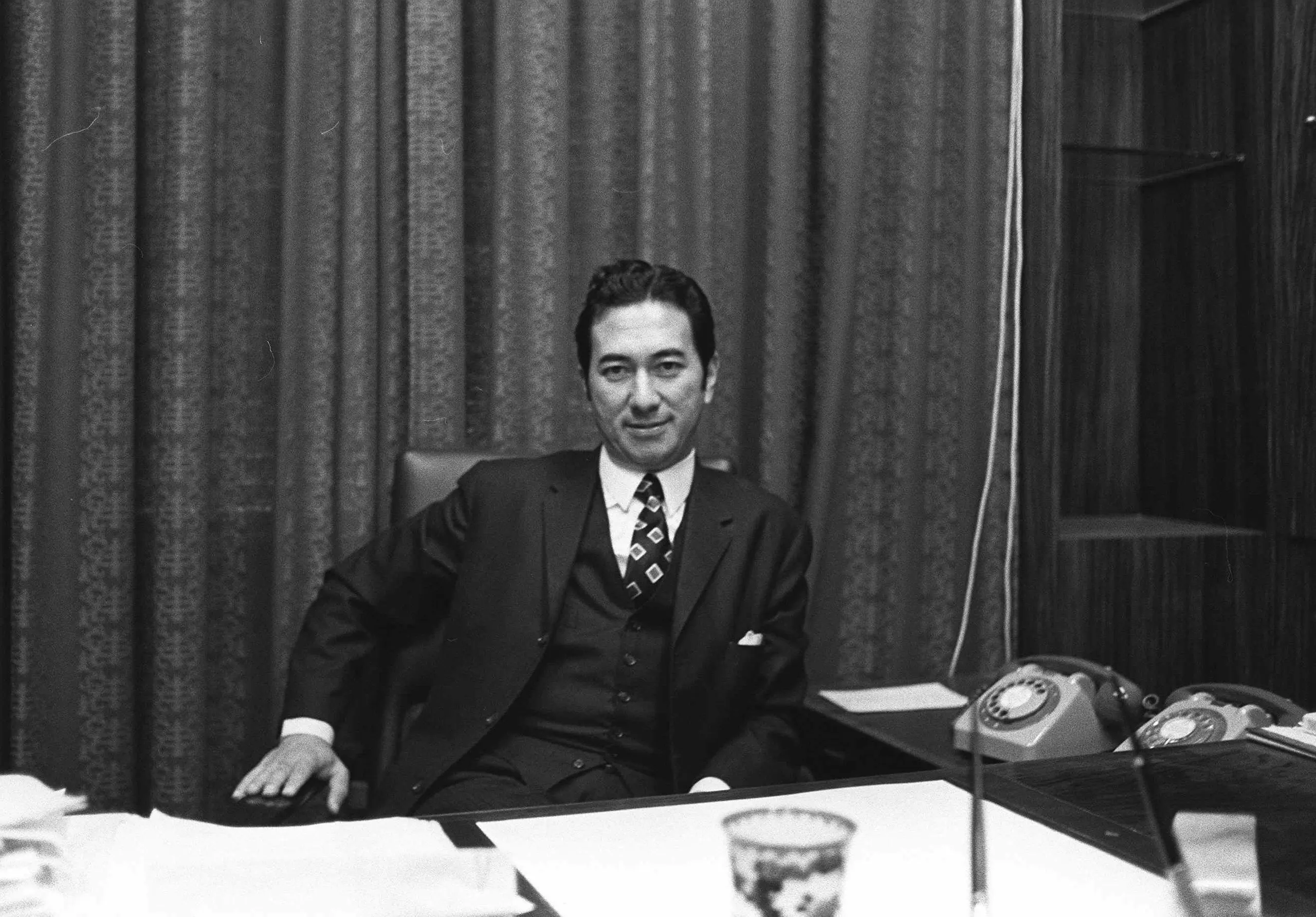
Stanley Ho
 China
Chinabusinessman•entrepreneur•politician
Also known as: Ho Hung Sun, Stanley Ho Hung Sun, He Hongshen, Stanley Ho Hung-sun, Ho Hung-sun, 何鴻燊, 何鸿燊
Birthday
November 25, 1921
Birth Sign
Sagittarius
Birthplace
British Hong Kong
Age
Died at 98
About
Stanley Ho Hung-sun was a Hong Kong and Macau billionaire businessman, entrepreneur, and politician who dominated Macau's gambling industry for four decades. As the founder and chairman of SJM Holdings, he held a government-granted monopoly on Macau's casinos from 1962 to 2002, earning him the nicknames "Godfather" and "King of Gambling." His influence extended far beyond gaming, with his conglomerate Shun Tak Holdings spanning shipping, real estate, tourism, banking, and air transport, employing nearly a quarter of Macau's workforce.
Ho's business acumen and political connections transformed Macau from a quiet Portuguese colony into the world's most lucrative gambling hub. He was also a prominent philanthropist and a leading figure in Hong Kong's business community, with his opinions often swaying property markets. After a stroke in 2009, he gradually handed over control of his empire to his family, passing away on May 26, 2020, at age 98. His legacy lives on through his children, including Pansy Ho and Lawrence Ho, who continue to shape the region's gaming landscape.
Early Life & Background
Stanley Ho was born into a wealthy and prominent Hong Kong family on November 25, 1921. His grandfather, Ho Fook, was a comprador for Jardine Matheson, one of the most powerful trading houses in Asia, and his family enjoyed considerable privilege. However, the family's fortune took a hit during the Great Depression, and young Stanley experienced financial hardship that would shape his drive for success.
He attended Queen's College in Hong Kong, but his studies were interrupted by the Japanese occupation during World War II. With limited options, Ho fled to neutral Macau in 1941, carrying only HK$10 in his pocket. There, he found work as a clerk at a trading company, quickly proving his sharp business instincts. By his early twenties, he had made his first fortune through smuggling and trading goods, including medicine and textiles, between Macau and mainland China. His ability to navigate risky, high-stakes deals caught the attention of local businessmen, setting the stage for his future ventures.
By 1945, at just 24 years old, Ho was already a successful businessman eager to seize new opportunities in Hong Kong and Macau. His early experiences taught him the value of connections, resilience, and bold risk-taking, traits that would define his legendary career.
Career Growth
Stanley Ho's breakthrough came in 1961 when he partnered with Henry Fok and other investors to win the tender for Macau's gambling monopoly, beating out the incumbent operator. In 1962, they founded Sociedade de Turismo e Diversões de Macau (STDM), and Ho began building a casino empire that would make him one of Asia's wealthiest men. Over the next four decades, he held an exclusive license to operate all casinos in Macau, turning the territory into a gambling destination that rivaled Las Vegas.
Ho diversified aggressively through Shun Tak Holdings, which he established in 1973. The company expanded into ferry and helicopter services between Hong Kong and Macau, real estate development, and hotel operations. He also invested in mainland China, Portugal, Vietnam, and even North Korea, where he operated a casino. His enterprises were estimated to employ nearly a quarter of Macau's workforce, and his pronouncements on Hong Kong's property market often moved markets.
In 2002, the Macau government ended Ho's monopoly, opening the market to international competitors like Las Vegas Sands and Wynn Resorts. Despite this, Ho's SJM Holdings remained a major player. However, his health declined after a stroke in 2009, and he began transferring control of his empire to his wives and children in late 2010. Ho passed away on May 26, 2020, at age 98, leaving behind a complex legacy as the man who made Macau the world's gambling capital.
Career Timeline
Public Image & Style
Stanley Ho was a larger-than-life figure in Hong Kong and Macau, known for his sharp suits, charismatic presence, and love of the spotlight. He was often photographed at society events, frequently with a cigar in hand and a dazzling smile. His public persona was that of a shrewd, charming tycoon who moved effortlessly between business and politics.
Media and fans alike were fascinated by his wealth and lifestyle, with his four wives and seventeen children making tabloid headlines for decades. He was also seen as a symbol of Macau's transformation, and his death in 2020 prompted an outpouring of tributes from across the region. His nickname "King of Gambling" stuck, even though he personally avoided gambling, preferring to build the casinos that others flocked to.
Ho's image was not without controversy, as his monopoly was criticized for fostering corruption and money laundering. Yet, many locals viewed him as a benefactor who created jobs and boosted the economy. His legacy remains a mix of admiration and scrutiny, reflecting the complex nature of his empire.
Fame & Fandom (iFAMOUS Rankings)
Stanley Ho Hung-sun remains a defining figure of the twentieth century's economic landscape, though his status in contemporary fame metrics reflects his passing rather than active celebrity. As of August 2026, iFANN has evaluated this subject, yet he does not currently hold a placement in the published rankings for the Global Top 1,000 or any scope-specific list. This absence of a numeric rank distinguishes him from living pop culture icons who dominate search algorithms and media cycles, positioning his legacy as historical rather than viral. His influence was never rooted in fan rituals or organized fandom; unlike musicians or actors, Ho cultivated an audience of business observers, investors, and historians who viewed him as an architect of Macau's transformation rather than a cultural idol demanding emotional devotion. No formal name exists for his supporters, and records show no fan-funded projects, birthday billboards, or subway campaigns associated with his persona. The public fascination with Ho manifested as intense media scrutiny regarding his wealth and complex family life, but this curiosity lacked the structured engagement typical of modern fandoms. While he commanded global attention through his casino empire and political connections, his interactions remained distant, reinforcing his image as a tycoon rather than a performer. The release of the Jeffrey Epstein files in 2026 briefly reintroduced him to news cycles, citing him as the richest man in Hong Kong, yet this revelation served as a posthumous footnote rather than a catalyst for renewed fan activity. Even the tragic death of his daughter Maisy Ho in April 2026 generated headlines about the dynasty's continuity without sparking organized memorial efforts. Ultimately, Ho's fame is anchored in verified historical impact, the monopoly on gambling, the founding of SJM Holdings, and the education initiatives at the University of Macau, rather than the ephemeral trends that drive current popularity charts.
Interesting Facts and Legends
Stanley Ho was renowned for his enthusiasm for dancing, particularly the cha-cha, and frequently appeared at balls and galas throughout his life. A keen collector of art and antiques, he amassed a significant portfolio of Chinese porcelain and paintings, reflecting his deep appreciation for cultural heritage. Despite building a vast gambling empire, Ho rarely gambled himself, famously stating a preference for running the games rather than playing them. He was a polyglot fluent in English, Cantonese, Portuguese, and Mandarin, facilitating his business dealings across multiple regions. His philanthropy was extensive, with millions donated to education and healthcare, including a major endowment to the University of Hong Kong. He also supported the arts as a patron of the Macau Museum. In 2026, his name appeared in the Jeffrey Epstein files, where an email described him as "the richest man in Hong Kong," though no wrongdoing was alleged. Beyond documented facts, folklore persists regarding his refusal to gamble, a story fans still retell to emphasize his strategic mastery over chance. Another enduring narrative involves his four wives and seventeen children, a saga often cited as a unique blend of traditional polygamy and modern dynastic succession. These personal details shaped his public perception as a man who was both envied and adored, cementing his place in regional gossip culture long after his death.
Family & Personal Life
Stanley Ho's family was as sprawling as his business empire. He had four wives: Clementina Leitão, Lucina Laam, Angela Leong, and Ina Chan. His first wife, Clementina, was a Portuguese Macau native; they married in 1942 and had four children, including Pansy Ho, who became a prominent casino executive. Lucina Laam, his second wife, was a Chinese woman he married in 1957; they had one daughter. Angela Leong, his third wife, was his long-time companion and later legal wife; they had five children, including Lawrence Ho, who heads Melco Resorts and Entertainment, and Maisy Ho, who passed away in April 2026 at age 60. Ina Chan, his fourth wife, was a nurse he met in the 1980s; they had four children, including Alice Ho, who studied at MIT.
Ho's children have largely followed in his footsteps, with several holding key positions in his companies. Family dynamics were often complex, with public disputes over his estate in his later years. Despite the challenges, Ho maintained close ties with his children, and his legacy continues through their work in the gaming and hospitality industries.
Notable Connections
Stanley Ho's business empire was closely tied to his family. His daughter Pansy Ho is a key figure in the gaming industry, serving as co-chairman of Shun Tak Holdings and a major shareholder in MGM China. His son Lawrence Ho founded Melco Resorts and Entertainment, which operates casinos in Macau and the Philippines. His fourth wife Angela Leong is a businesswoman and politician. Ho also had a long partnership with Henry Fok, who helped him secure the gambling monopoly in 1962, and their families have maintained close ties for over 60 years.
Relationships & Dating History
Stanley Ho's personal life was as complex as his business dealings. He married his first wife, Clementina Leitão, in 1942, and they had four children together. Clementina was a Portuguese Macau native, and their marriage was a union of two influential families. In 1957, he took a second wife, Lucina Laam, with whom he had one daughter. Under colonial-era law, polygamy was legal, allowing Ho to have multiple wives.
His third wife, Angela Leong, was his long-time companion, and they married in 1985. Leong, a former nurse, became a powerful businesswoman and politician, and they had five children, including Lawrence Ho and Maisy Ho. His fourth wife, Ina Chan, was also a nurse, and they married in 1991, having four children, including Alice Ho.
Ho's relationships with his wives were often in the public eye, and there were reported tensions over his estate in his later years. At the time of his death in 2020, he was married to all four wives, though Clementina had predeceased him in 2004. Angela Leong was his most prominent surviving wife and remained a key figure in his business affairs until her own passing in 2026.
- MarriedClementina Leitão Ho1942 - 2004First wife, had four children including Pansy Ho.
- MarriedLucina Laam1957 - 2020Second wife, had one daughter.
- MarriedAngela Leong1985 - 2020Third wife, had five children including Lawrence and Maisy Ho.
- MarriedIna Chan1991 - 2020Fourth wife, had four children including Alice Ho.
Death & Aftermath
Died
May 26, 2020 (aged 98)
Death Place
Hong Kong
Cause of Death
Pneumonia and age-related complications
Stanley Ho spent his final weeks hospitalized due to pneumonia and complications related to his advanced age. He passed away on May 26, 2020, at the age of 98, concluding a life that had dominated the region's business and political landscape for nearly eight decades. Public reaction was immediate and widespread, with government officials and business leaders across Asia issuing tributes that acknowledged his role in transforming Macau into a global gambling hub. His funeral services were conducted privately according to family wishes, keeping the proceedings out of the public eye rather than holding a large state-sponsored ceremony.
Following his death, the management of his estate became the subject of complex legal disputes among his four wives and numerous children. The handling of his fortune involved years of litigation regarding inheritance distribution, though the specific financial outcomes of these battles remain a matter of ongoing legal proceedings rather than a single resolved public record.
Net Worth (Estate Value)
$3 Billion
iFANN Editorial Team estimate
At the time of his death in 2020, Stanley Ho's net worth was estimated at $3 billion, a figure that iFANN currently attributes as its editorial assessment of his estate's peak value. His fortune was primarily derived from his controlling stake in SJM Holdings, which operated several casinos in Macau, including the iconic Grand Lisboa. Through Shun Tak Holdings, he maintained interests in real estate, shipping, and tourism, with assets spanning Hong Kong, Macau, and mainland China. Since his passing, the estate has been managed by his family, with his children and wives holding various positions within his companies. Posthumous revenue streams continue to include dividends from SJM and Shun Tak, alongside licensing deals and property sales. In 2025, the estate was reportedly valued at around $3 billion, with no major sell-offs or legal disputes that would have diminished its worth. As of 2026, the estate's value remains stable, supported by Macau's recovering tourism industry. The family has diversified into other ventures, including hospitality and entertainment, ensuring the fortune continues to grow. While the exact breakdown is private, the estate's assets and business interests comfortably sustain a $3 billion valuation.
Awards Won (4)
Stanley Ho received numerous honors throughout his lifetime, including the Grand Lotus Medal of Honour, Macau's highest distinction, awarded in 2001. He was also appointed a Commander of the Order of the British Empire in 1972 and received the Order of Merit from the Portuguese government. In 2010, he was inducted into the Casino Hall of Fame in recognition of his contributions to the global gaming industry.
2001 · Civic
For services to Macau
1972 · Honorary
For services to business
Known For
SJM Holdings
1962 · Founder and Chairman
Shun Tak Holdings
1973 · Founder and Chairman
Macau gambling monopoly
1962-2002 · Holder
Keywords
Sources
Quick Facts
- Profession
- businessman, entrepreneur, politician
- Born
- +1921-11-25
- Birthplace
- British Hong Kong
- Died
- +2020-05-26
- Death Place
- Hong Kong Sanatorium and Hospital
- Gender
- Male
- Spouse
- Clementina Leitão Ho, Lucina Laam, Angela Leong, Ina Chan
- Birth Sign
- Sagittarius
- Children
- 17
- Net Worth
- $3 Billion
Personal Details
- Full Name
- Stanley Ho Hung-sun
- Spouse
- Clementina Leitão Ho, Lucina Laam, Angela Leong, Ina Chan
- Children
- 17
Frequently Asked Questions
Who was Stanley Ho?
How did Stanley Ho make his fortune?
When did Stanley Ho die?
How many children did Stanley Ho have?
What was Stanley Ho's impact on Macau?
Similar People
Join the community
fans discussing