 Austria
About
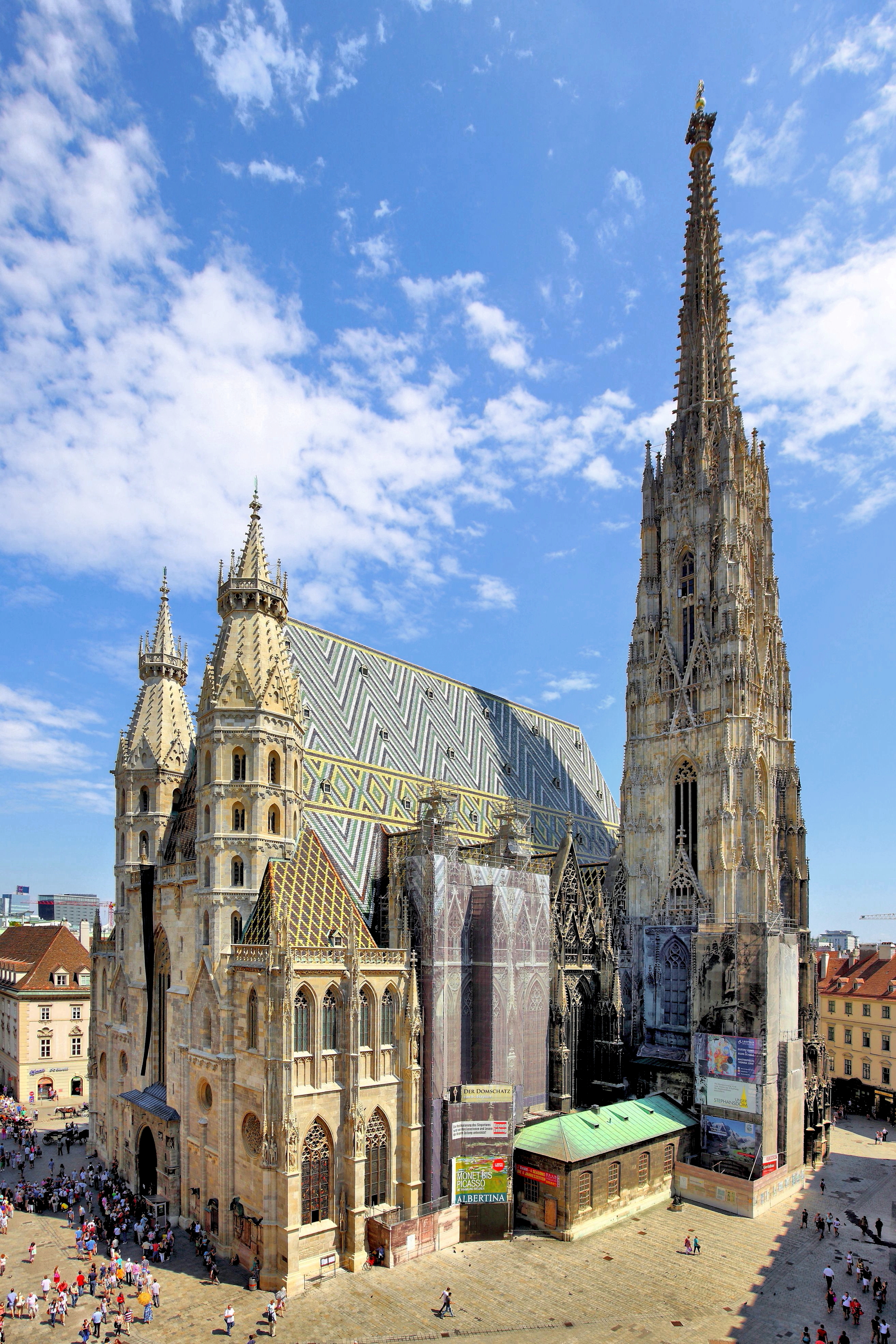
St. Stephen's Cathedral, known locally as Stephansdom, is the spiritual and architectural centerpiece of Vienna. As the mother church of the Archdiocese of Vienna and the seat of its archbishop, it has stood at Stephansplatz for nearly nine centuries, witnessing coronations, royal weddings, and the city's darkest hours. The cathedral draws millions of visitors each year, who come to marvel at its towering south spire, the colorful tiled roof, and the intricate stonework of its Gothic interior.
The current structure was largely initiated by Duke Rudolf IV in the mid-14th century, though the site's history stretches back to a Romanesque church consecrated in 1147. Over the centuries, the cathedral has grown into a monumental symbol of Austrian identity. Its south tower, affectionately called "Steffl" by locals, rises 136 meters and offers panoramic views over the capital. The roof is covered with 230,000 glazed tiles, arranged in a mosaic of the imperial double-headed eagle, a nod to the Habsburg legacy.
Beyond its role as a place of worship, the cathedral functions as a major cultural landmark and pilgrimage destination. Visitors can explore the catacombs beneath the nave, where Habsburg rulers and thousands of ordinary Viennese are interred, or climb the 343 steps to the tower's observation deck. The famous Pummerin bell, cast from cannons captured from the Ottomans, still rings on special occasions, and the cathedral's organs accompany regular services and concerts. As a working parish, it offers daily Mass and pastoral care, while also welcoming tourists from around the globe.
Mission
The cathedral's mission is twofold: to serve as a living center of Catholic worship and pastoral care in the heart of Vienna, and to preserve and share a heritage that spans nearly nine centuries. As the mother church of the archdiocese, it hosts daily Mass, sacraments, and religious education, while also welcoming pilgrims and tourists who come to experience its architectural and historical significance. The cathedral community strives to maintain the building as a sacred space, a place of prayer, and a symbol of faith that remains open to all.
History
The story of St. Stephen's Cathedral begins in 1137, when construction started on a Romanesque church on the site of an earlier parish church. That first structure was consecrated in 1147, but it was Duke Rudolf IV, known as the Founder, who initiated the Gothic rebuilding in the mid-14th century. His ambitious project included the south tower, which was completed in 1433 and stands as one of the tallest church towers in Europe. The cathedral survived the Reformation and the Ottoman sieges of Vienna, and its Pummerin bell was cast in 1711 from cannons captured during the 1683 victory over the Turks.
The 20th century brought both destruction and renewal. In April 1945, during the final days of World War II, the cathedral caught fire after being hit by artillery, collapsing the roof and damaging the interior. Reconstruction began almost immediately, funded by donations from across Austria and abroad, and the cathedral was fully restored by 1952. The new roof, made of 230,000 glazed tiles, was laid in a pattern that echoes the original. The Pummerin, which had shattered when it fell during the fire, was recast and reinstalled in 1957.
More recently, the cathedral has faced the challenges of modern times. In November 2025, a German man returned a human skull he had stolen from the catacombs 60 years earlier, mailing it back with an apology note. The following May, provost Toni Faber was relieved of his duties after weeks of speculation in Austrian media, a leadership change that Archbishop Grünwidl handled with care, stopping short of removing Faber from public life entirely.
Notable People
Emperor Frederick III
Holy Roman Emperor · 1415–1493
His elaborate tomb, crafted by Nikolaus Gerhaert, is a masterpiece of late Gothic sculpture.
Prince Eugene of Savoy
Military leader · 1663–1736
The Prince Eugene Chapel commemorates the general who defeated the Ottomans at Zenta and Belgrade.
Anton Pilgram
Sculptor and architect · 1460–1515
Created the renowned late-Gothic pulpit, featuring self-portraits of the artist.
Cardinal Christoph Schönborn
Archbishop of Vienna · 1995–2025
Led the archdiocese for three decades, overseeing major restoration projects.
Fr. Toni Faber
Cathedral Provost · 2001–2026
Served as provost for 25 years, becoming a well-known public figure; relieved of duties in May 2026.
Milestones
1137
Construction of the first Romanesque church begins
1147
The original church is consecrated
1359
Duke Rudolf IV lays the foundation for the Gothic expansion
1433
The south tower is completed
1711
The Pummerin bell is cast from captured Ottoman cannons
1945
The cathedral catches fire during World War II; reconstruction begins
1952
Restoration is completed, with a new tiled roof
2025
A stolen skull is returned to the catacombs after 60 years
2026
Provost Toni Faber is relieved of his duties
Sources
Organization Info
- Founded
- 1137
- Headquarters
- Stephansplatz 3, 1010 Vienna, Austria
- Country
- Austria
- Archbishop of Vienna
- Archbishop Josef Grünwidl
- Parent
- Archdiocese of Vienna
- Type
- Religious
- Height
- 136 meters (south tower)
- Roof tiles
- 230,000 glazed tiles
- Bells
- Pummerin, Austria's largest bell
- Catacombs
- Burial site for Habsburgs and thousands of Viennese
Official Website
stephanskirche.at/
Join the community
fans discussing