 Italy
ItalyAbout
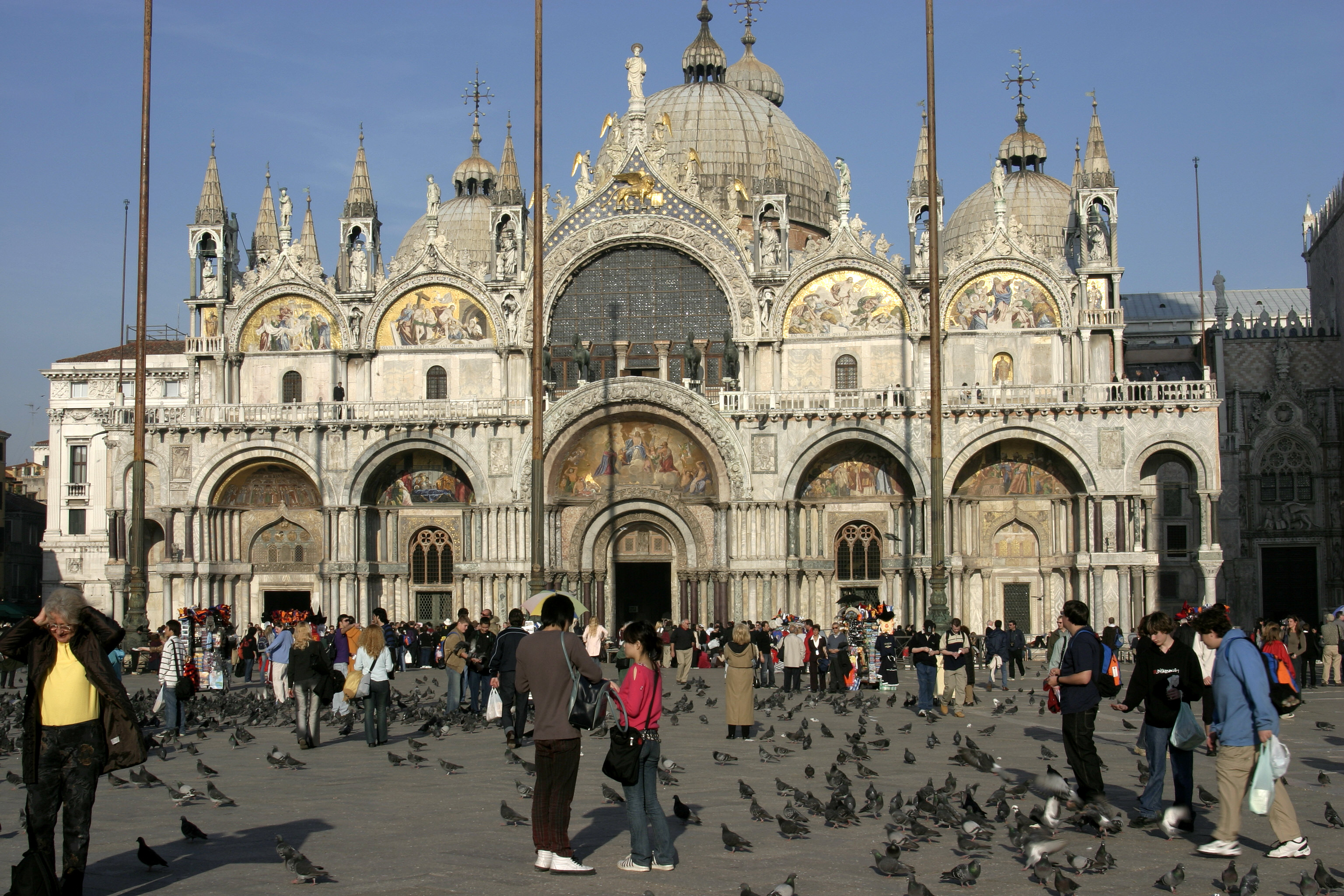
St Mark's Basilica, officially the Patriarchal Cathedral Basilica of Saint Mark, is the principal religious structure of Venice and the seat of the Patriarch of Venice. It is a functioning Roman Catholic cathedral, but its role extends far beyond liturgy. The basilica stands as a living monument to Venice's centuries as a maritime republic, its Byzantine domes and glittering mosaics reflecting a city that once commanded trade routes between East and West. Over 8,000 square meters of gold-ground mosaics cover the interior, depicting saints, prophets, and biblical scenes in dazzling detail. The building's design draws heavily from the Hagia Sophia in Constantinople, a deliberate nod to the Byzantine world that Venice both traded with and competed against.
The basilica's history is intertwined with the theft of relics. In 828, Venetian merchants allegedly smuggled the remains of Saint Mark the Evangelist out of Alexandria, hiding them in a barrel of pork to get past Muslim customs inspectors. The first church on the site was consecrated in 832 AD, and the current structure began to take shape in the 9th century, though it underwent centuries of embellishment. For most of its existence, St Mark's was not the city's cathedral; that honor belonged to San Pietro di Castello until 1807, when Napoleon moved the episcopal seat to St Mark's. The basilica has served as the backdrop for state ceremonies, from the election of doges to the blessing of fleets, and it remains the spiritual heart of Venice.
Today, the basilica draws over 5 million visitors a year, making it Europe's second most visited built heritage site after the Colosseum in Rome. Its treasures include the Pala d'Oro, a golden altarpiece encrusted with thousands of gems, and the bronze horses of Saint Mark, which were looted from Constantinople during the Fourth Crusade and later returned to the facade. The building has also appeared in films such as Casino Royale and The Tourist, adding a layer of cinematic fame to its religious and historical significance. Despite the crowds, the basilica remains a place of worship, with daily masses and a vibrant musical tradition.
Mission
St Mark's Basilica serves as the principal church of the Roman Catholic Archdiocese of Venice, providing a place for regular worship, the celebration of the sacraments, and the spiritual guidance of the faithful. Its mission extends to the preservation and presentation of its immense artistic and historical heritage, which includes the mosaics, the Pala d'Oro, and the bronze horses. The basilica aims to welcome pilgrims and tourists alike, offering guided tours and educational programs that explain the building's religious and cultural significance. Through its music program, including the choir and the new organ, it seeks to enrich the liturgy and maintain a tradition of sacred music that dates back centuries. The Procuratoria di San Marco, the ancient body responsible for the basilica's upkeep, works to ensure that the structure and its artworks are conserved for future generations, adapting to challenges such as flooding and environmental wear.
History
The story of St Mark's Basilica begins with a relic theft. In 828, two Venetian merchants, Buono da Malamocco and Rustico da Torcello, smuggled the body of Saint Mark the Evangelist out of Alexandria, hiding it in a basket of pork leaves to bypass Muslim customs. The doge at the time, Giustiniano Partecipazio, ordered a church to be built to house the relics, and the first structure was consecrated in 832 AD. That original church burned down during a rebellion in 976, and a second building was erected, but it was not until the 11th century that the current basilica began to take shape. Doge Domenico Contarini initiated the construction in 1063, drawing inspiration from the Church of the Holy Apostles in Constantinople and the Hagia Sophia. The new basilica was consecrated in 1094, though the exact date is uncertain; tradition holds that the relics of Saint Mark were rediscovered during the consecration ceremony, having been lost for years.
Over the following centuries, the basilica was continuously embellished. The Pala d'Oro, a magnificent golden altarpiece, was commissioned in Constantinople in 976 and later expanded with enamel panels. The bronze horses that now grace the facade were brought from Constantinople after the Fourth Crusade in 1204, a spoils of war that symbolized Venetian dominance. The mosaics, which now cover every available surface, were added piecemeal from the 11th through the 19th centuries, with artisans drawing on Byzantine, Romanesque, and Gothic styles. The campanile, originally a watchtower and lighthouse, was rebuilt several times; its current form dates from 1912, after the previous tower collapsed in 1902.
In 1807, Napoleon Bonaparte decreed that St Mark's become the cathedral of Venice, transferring the episcopal seat from San Pietro di Castello. This elevated the basilica's status, though it also brought new administrative challenges. The 20th century saw efforts to protect the building from the effects of industrial pollution and rising water levels. In 2022, a major conservation project was launched to safeguard the mosaics from flooding, using advanced technology to monitor and restore the delicate gold-glass tesserae. The basilica has also adapted to its role as a global tourist attraction, implementing ticketed entry and timed slots to manage the millions of visitors. Despite these changes, the daily rhythm of Mass and prayer continues, and the basilica remains the spiritual anchor of Venice.
Subdivisions
Procuratoria di San Marco
The ancient administrative body responsible for the maintenance and conservation of St Mark's Basilica, overseeing restoration projects and daily operations.
Mosaic Conservation Program
A dedicated initiative focused on the restoration and preservation of the basilica's 8,000 square meters of gold-ground mosaics, particularly against water damage.
Musical Establishment
The basilica's musical organization, including the choir, organists, and the new organ commissioned from Johannes Klais Orgelbau, supporting liturgical music and concerts.
Notable People
St Mark's Campanile
Bell tower
The freestanding bell tower, rebuilt after its 1902 collapse, offers panoramic views of Venice and has long served as a landmark for sailors.
Pediment St. Mark's Basilica
Architectural element
The pediment above the main facade features a relief of Saint Mark and contributes to the basilica's ornate exterior.
Slabs of Christ and the Four Evangelists
Sculptural group
A set of carved slabs on the exterior depicting Christ with the Evangelists, dating from the 13th century.
Gate of Flowers
Architectural element
A portal on the north side, known for its floral carvings and Byzantine influences.
Facades of St. Mark's Basilica
Exterior design
The five main facades, decorated with columns, mosaics, and sculptures, blend Byzantine, Gothic, and Renaissance styles.
Milestones
828 AD
Relics of Saint Mark allegedly smuggled from Alexandria; original church commissioned.
832 AD
First church consecrated on the site.
1063
Construction of the current basilica begins under Doge Domenico Contarini.
1094
Basilica consecrated; relics of Saint Mark rediscovered during ceremony.
1204
Bronze horses of Saint Mark brought from Constantinople after the Fourth Crusade.
1807
Napoleon transfers the episcopal seat to St Mark's, making it the cathedral of Venice.
1902
The Campanile collapses; rebuilt and reopened in 1912.
2022
Major mosaic conservation project launched to protect against flooding.
Sources
Organization Info
- Founded
- 0828
- Headquarters
- Piazza San Marco, 328, 30124 Venice, Italy
- Country
- Italy
- Parent
- Roman Catholic Archdiocese of Venice
- Type
- Religious
- Mosaic area
- 8,000 square meters
- Annual visitors
- Over 5 million
Official Website
www.basilicasanmarco.it/
Join the community
fans discussing