 United States
“Alex Toth's Space Ghost was a visual masterpiece, bringing a level of sophistication to Saturday morning cartoons that was previously unseen.”
Variety Staff
Variety
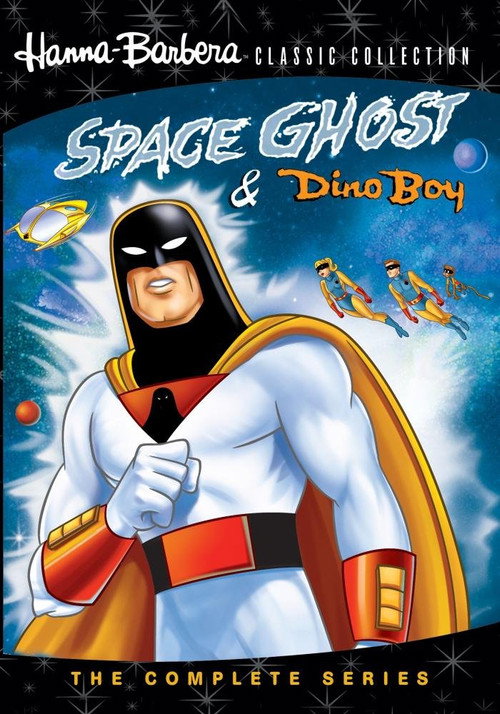
Space Ghost launched on CBS in the fall of 1966, bringing a unique brand of Saturday-morning adventure that blended high-flying heroics with the distinct visual style of creator Alex Toth. Produced by Hanna-Barbera, this single-season run featured twenty episodes that aired from October 1966 through September 1967. The show paired its titular superhero with sidekicks Jan and Jace, voiced by Ginny Tyler and Tim Matheson respectively, while Gary Owens delivered the commanding performance of the lead character. Don Messick rounded out the main cast as the robotic dog Blip and the villainous locust Zorak.
Though often remembered today for its later revival, the original series stood apart as a sleek action-adventure program designed to capture young viewers during their weekend mornings. It occupied a half-hour slot alongside Dino Boy in the Lost Valley, creating a double-feature format that became standard for the era. The animation moved faster than typical cartoons of the time, relying on bold lines and dynamic poses rather than heavy dialogue. Audiences responded well to the straightforward storytelling and the cool demeanor of Space Ghost, who operated as a guardian of the galaxy against various alien threats.
Stream
Availability and pricing can change. Confirm on the provider's site before purchasing.
The narrative unfolds in the distant 31st century, where humanity has spread across the stars. Space Ghost patrols this vast cosmos from his high-tech base on the planet Zantor. Dressed in a white and gold suit with a flowing cape, he wields powers granted by his power band: flight, super-strength, heat vision, and energy shields. His mission is simple yet constant, maintain order and defend the galaxy from alien forces seeking conquest or chaos. Each episode typically begins with a distress signal or the discovery of a new threat, prompting Space Ghost to board his Phantom Cruiser. This versatile ship travels at light speed and transforms into different modes for combat or exploration.
Jan and Jace accompany the hero on his missions. Jan provides strategic support and emotional grounding, while Jace offers technical expertise and bravery. Their dynamic balances the serious tone of the heroics with moments of camaraderie. Adding to the mix is Blip, a cheerful robotic dog whose barks serve as both comic relief and a warning to troublemakers. The villains are equally varied, ranging from space pirates to interstellar criminals. The most recurring foe is Zorak, a malicious locust-like creature known for his cunning schemes and musical talents. Other antagonists include Brak, a chaotic alien, and various other enemies who threaten the peace of the galaxy.
Alex Toth's design work revolutionized the visual style of the show. He moved away from the heavy dialogue and static poses common in earlier cartoons, favoring bold lines, dynamic angles, and faster pacing. This "Toth style" gave the series a cinematic quality that appealed to both children and adults. The world-building established a vibrant backdrop of futuristic cities, alien landscapes, and advanced technology. The tone remained adventurous and optimistic, emphasizing the triumph of good over evil without dark themes.
Throughout its single season of twenty episodes, the series maintained a steady rhythm of action and resolution. There were no overarching plotlines spanning multiple episodes; instead, each story stood on its own. Viewers could jump in at any point and follow Space Ghost as he rescued hostages, stopped doomsday devices, or defeated alien armies. The episodes often concluded with Space Ghost returning to Zantor, reflecting on the day's events before preparing for the next mission. This format allowed the show to explore a wide range of scenarios while showcasing the unique charm of its characters and animation style.
The series also introduced elements of humor and satire, particularly through the interactions between Space Ghost and his sidekicks, as well as the antics of the villains. These lighter moments provided a counterbalance to the intense action sequences, making the show accessible and entertaining for a broad audience. By the time the series concluded in September 1967, it had established itself as a classic of the genre, leaving a lasting legacy that would be revisited and reimagined in decades to come.
Critical Consensus
While the original Space Ghost was a product of its time, it is now celebrated for its innovative animation style and influence on the superhero genre. Critics praise Alex Toth's design work for its sleek, modern aesthetic, which set it apart from other Hanna-Barbera productions. Retrospective reviews highlight the show's enduring appeal and its role in shaping the Saturday morning cartoon landscape.
“Alex Toth's Space Ghost was a visual masterpiece, bringing a level of sophistication to Saturday morning cartoons that was previously unseen.”
Variety Staff
Variety
“The animation style of Space Ghost was ahead of its time, with bold lines and dynamic poses that captured the imagination of a generation.”
New York Times
The New York Times
“Space Ghost remains a cult classic, remembered for its cool heroics and unique character designs.”
Vulture
Vulture
Gary Owens
Space Ghost (Voice)
Ginny Tyler
Jan (Voice)
Tim Matheson
Jace (Voice)
Don Messick
Blip, Zorak (Voice)
Directors
Dave Monahan, Abe Levitow
Composer
Hoyt Curtin
Producers
William Hanna, Joseph Barbera
Animation Magazine Hall of Fame (2013)
Contribution to Animation: Inducted
Join the community
fans discussing