“Soul Train was a revolution disguised as a dance show, a weekly affirmation of black cool that shaped American culture far beyond its modest syndicated origins.”
Emily Nussbaum
The New Yorker
 United States
"The hippest trip in America."
User Score
9 votes
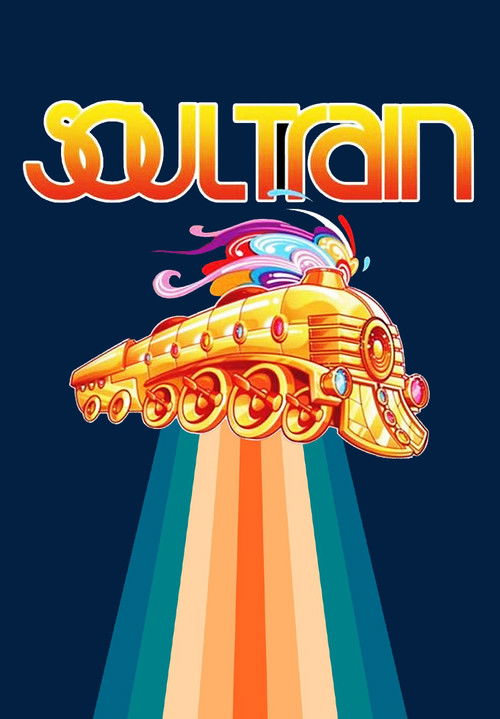
Soul Train was a weekly musical variety show that ran in first-run syndication from October 2, 1971, to March 25, 2006, spanning 35 seasons and over 1,100 episodes. Created and originally hosted by Don Cornelius, the program became the longest-running first-run nationally syndicated television series in American history, a record it held until surpassed by Entertainment Tonight around 2016.
The show's simple format featured live or lip-synced performances by R&B, soul, funk, disco, gospel, and later hip-hop artists, interspersed with dancing by a studio audience of mostly Black teenagers and young adults. The iconic Soul Train line, where two rows of dancers face off and take turns showing their moves, became the show's signature segment. Cornelius hosted from the debut until 1993, delivering his trademark sign-off: "We wish you love, peace, and soul!"
Soul Train was a groundbreaking platform for Black artists at a time when mainstream television largely ignored African American musicians. It introduced audiences to Michael Jackson, Prince, Whitney Houston, Aretha Franklin, James Brown, Marvin Gaye, Stevie Wonder, and countless others. The show also influenced fashion and dance trends across America, with regular dancers like Rosie Perez and Jody Watley becoming stars in their own right.
Availability and pricing can change. Confirm on the provider's site before purchasing.
Soul Train was not a narrative series but a musical variety show with no scripted plot, serialized arcs, or traditional characters. Each episode stood alone, built around musical performances and audience dancing. The central through-line was the celebration of Black music and culture, with the rotating cast of musical guests providing the only recurring element beyond host Don Cornelius. The show's "conflict" was the ongoing challenge of staying relevant across decades of shifting musical tastes, from early 1970s soul through disco, funk, new jack swing, and hip-hop.
The show originated in Chicago on WCIU-TV in 1971, funded by Cornelius with a $400 investment. Season 1 (1971-1972, 51 episodes) established the format with Cornelius as host and executive producer, featuring artists like Gladys Knight & the Pips, The Temptations, and Stevie Wonder. In March 1972, the show moved to Los Angeles to access bigger-name artists and better production facilities. Season 2 (1972-1973) saw the show go national in syndication, airing on 22 stations. Seasons 3 through 13 (1973-1983) represented the golden era, with peak viewership of 12-15 million weekly viewers and iconic performances from Michael Jackson, Aretha Franklin, James Brown, Marvin Gaye, and Diana Ross.
Season 14 (1984-1985) marked the beginning of the hip-hop era, with Run-DMC, LL Cool J, and later Salt-N-Pepa appearing. Seasons 15 through 22 (1985-1992) saw the show adapt to changing music industry dynamics while maintaining its core audience. Season 23 (1993-1994) was Cornelius's last season as host; he handed duties to various guest hosts including Pat Harvey and Jody Watley before stepping away entirely in 1997. Seasons 24 through 35 (1994-2006) featured a rotating roster of hosts: Mystro Clark (1997-1999), Shemar Moore (1999-2003), and Dorian Gregory (2003-2006). The show's final season (2005-2006) consisted of 26 episodes, ending on March 25, 2006.
Throughout its run, the Soul Train dancers became celebrities in their own right. Notable regulars included Rosie Perez, Jody Watley (who later launched a Grammy-winning music career), Jeffrey Daniel, Damita Jo Freeman, and Darnell "DJ" Williams. The show's fashion segments influenced trends across America, and the Soul Train line itself was inspired by a 1950s dance called "the stroll." Most performances were lip-synced to pre-recorded tracks, a common practice for variety shows of the era. The theme song "TSOP (The Sound of Philadelphia)" by MFSB featuring The Three Degrees became a No. 1 Billboard Hot 100 hit in 1974 and was originally commissioned for the show.
Critical Consensus
Soul Train is universally regarded as a landmark achievement in television history, celebrated for its unprecedented platform for Black artists and its enduring influence on music, dance, and fashion. While some critics note the show's formulaic nature and uneven quality in later years, its cultural significance as a groundbreaking showcase for African American talent is undisputed.
“Soul Train was a revolution disguised as a dance show, a weekly affirmation of black cool that shaped American culture far beyond its modest syndicated origins.”
Emily Nussbaum
The New Yorker
“Don Cornelius created a television institution that outlasted nearly everything else on the air, proving that soul music wasn't just a genre—it was a way of life.”
Tom Shales
The Washington Post
“Soul Train remains the hippest trip in America, a time capsule of style and sound that makes MTV look like a latecomer to the party.”
Ken Tucker
Entertainment Weekly
“No show in television history has done more to document the evolution of black music than Soul Train, from funk to hip-hop with every stop in between.”
Robert Christgau
The Village Voice
“Soul Train's 35-year run is a testament to Don Cornelius's vision and the enduring power of music to bring people together. It will never be duplicated.”
David Bianculli
New York Daily News
Don Cornelius
Host
Mystro Clark
Host
Shemar Moore
Host
Dorian Gregory
Host
Director
Don Cornelius
Producer
Don Cornelius
Emmy Awards (1973)
Outstanding Variety Series: Nominated
Emmy Awards (1974)
Outstanding Variety Series: Nominated
Daytime Emmy Awards (2006)
Outstanding Special Class Series: Nominated
NAACP Image Awards (1992)
Hall of Fame Award: Won
TV Land Awards (2004)
Best Dance Sequence: Won
BET Honors (2012)
Humanitarian Award: Won
Join the community
fans discussing