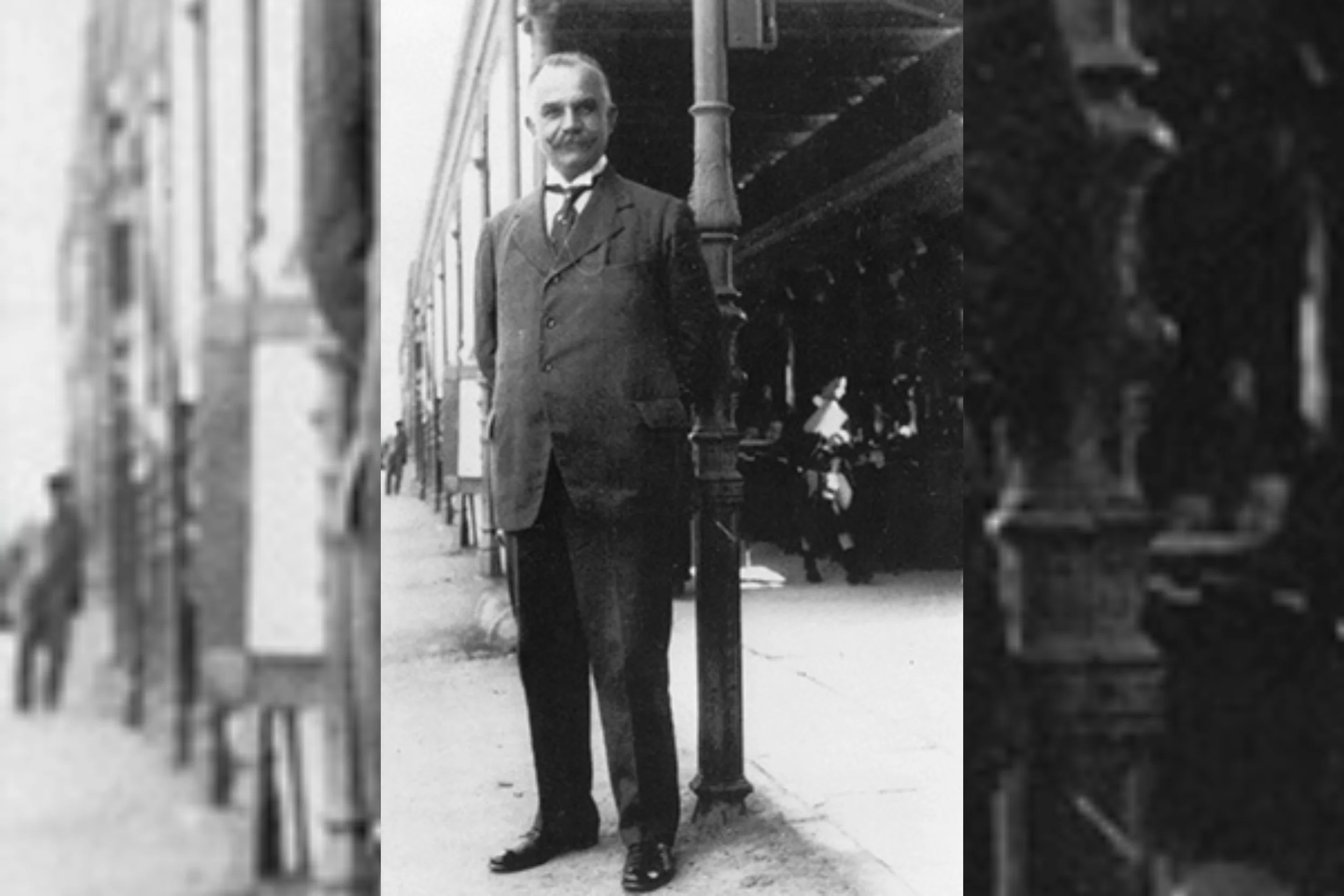
Sotirios Voulgaris
 Greece
goldsmith•businessperson•silversmith
Also known as: Sotirio Bulgari
Birthday
March 18, 1857
Birth Sign
Pisces
Birthplace
Kalarrytes, Epirus, Greece
Age
Died at 74
About
Sotirios Voulgaris was a Greek goldsmith and visionary businessman who founded the luxury jewelry house Bvlgari. Born in 1857 in the mountain village of Kalarrytes, he left his homeland to seek opportunity in Rome, where he established a workshop that would eventually become one of the world's most iconic fashion empires. He transformed from a humble craftsman into the patriarch of a dynasty that redefined luxury jewelry by blending classical Greek aesthetics with bold Roman styles.
His approach to business was revolutionary for the late 19th century. He recognized the commercial potential of branding early on, adopting the Italian spelling "Bulgari" to better resonate with his clientele. Unlike many contemporaries who stuck to traditional motifs, Voulgaris pioneered the use of colored gemstones like turquoise and malachite set in gold, creating a distinctive look that attracted royalty and aristocracy across Europe. By the time of his death in 1932, his name was already synonymous with excellence and innovation in the jewelry trade.
Early Life & Background
Sotirios Voulgaris entered the world on March 18, 1857, in Kalarrytes, a small mountain village in the Epirus region of what was then Ottoman-ruled Greece. He was born into an Aromanian family that worked as shepherds and artisans. As one of 11 children, he grew up in a modest household where hard work was the only currency that mattered. The rugged landscape of Epirus shaped his character, instilling a sense of resilience and determination that would define his future endeavors.
Driven by ambition and a desire to escape the limitations of rural life, Voulgaris made a pivotal decision as a young man. Around 1877, he left his ancestral home carrying only a hammer and his innate craftsmanship skills. This journey to Rome was not merely a migration; it was a calculated leap into the heart of the art world. Arriving in the Eternal City, he found work as a journeyman silversmith, refining his techniques in the city's historic center. He immersed himself in the local culture, learning to navigate the complex social dynamics of the capital while honing his trade.
During these formative years in Rome, Voulgaris began to distinguish himself from other artisans. He observed the evolving tastes of late 19th-century Europe and realized that the prevailing monochromatic styles dominated by platinum and diamonds did not capture the vibrancy of the human experience. He started experimenting with color, setting stones like lapis lazuli and malachite alongside gold. This period of experimentation was crucial. It allowed him to develop a unique style that merged the intricate patterns of his Greek heritage with the opulent energy of Rome. He also began to think strategically about his identity, eventually deciding to Italianize his surname to "Bulgari" to avoid confusion with the Bulgarian nationality and to fit seamlessly into the Italian market. This early strategic thinking laid the groundwork for the empire he would soon build.
Career Growth
In 1884, at the age of 27, Sotirios Voulgaris opened his first workshop at Via Sistina in Rome. This small shop quickly became a magnet for wealthy travelers, diplomats, and locals seeking high-quality silverware and jewelry. His early success was built on pieces featuring intricate Greek designs that stood out against the backdrop of traditional Roman styles. He pioneered the use of gemstones in settings that emphasized color over sheer size, a departure from the monochromatic platinum and diamond dominance of the era.
Voulgaris expanded his business rapidly, opening a second store on Via Condotti in 1895. This location remains a flagship today. He introduced innovative techniques such as the use of colored stones like turquoise, malachite, and lapis lazuli set in gold, creating a distinctive "Roman style." His work attracted royalty and aristocracy, including the British Royal Family and the Russian Tsars. By the early 20th century, the brand was synonymous with luxury and craftsmanship. He trained his sons, Giorgio, Costantino, and Paolo, to join the business, ensuring a multi-generational legacy.
Although Voulgaris died in 1932, his vision laid the foundation for the global expansion of Bvlgari. The company continued to grow under his sons, eventually becoming a leader in haute joaillerie, watches, and fashion accessories. The brand's signature "BVLGARI" logo, derived from his name, is now one of the most recognized trademarks in the world. In 2011, the LVMH Group acquired the brand, valuing it at billions, yet the core aesthetic remains true to Sotirios's original vision.
Career Timeline
Public Image & Style
Voulgaris is portrayed as a humble yet ambitious artisan who rose from poverty to become a titan of the luxury industry. His image is one of craftsmanship, innovation, and cultural bridge-building between Greece and Italy. The media often highlights his role as a pioneer in using color in jewelry, challenging the norms of his time. He is remembered as a man who understood the power of storytelling through design, blending the mythological richness of Greece with the grandeur of Rome.
Fame & Fandom (iFAMOUS Rankings)
iFANN has not yet collected fame data for this person. He does not appear in the September 2026 iFAMOUS Rankings flagship list. There is no formal fandom name documented for Sotirios Voulgaris as he lived in the 19th and early 20th centuries. However, enthusiasts of luxury jewelry and the Bvlgari brand revere him as the father of the house. Fans celebrate his birthday on March 18 and the brand's founding anniversary. Notable fan campaigns include the revival of the ancestral school in Paramythia and the restoration of the first store in the village where he began his journey. These efforts reflect a deep appreciation for his origins and the enduring impact of his work on the world of luxury goods.
Interesting Facts and Legends
One of the most enduring legends about Sotirios Voulgaris is that he left Greece carrying nothing but a hammer and his talent. This story symbolizes the "rags to riches" narrative of the brand and highlights his reliance on skill rather than inherited wealth. Another key fact is his intentional name change. He adopted the Italian spelling "Bulgari" specifically to fit the Italian market and avoid confusion with the Bulgarian nationality, despite being Greek. This decision demonstrated his early understanding of branding and cultural adaptation.
The brand's DNA is deeply rooted in Greek mythology and design, even though the name sounds Italian. Many of his early pieces incorporated Greek patterns and motifs, which became a signature element of the house. Despite the Italian name, the visual language of Bvlgari often reflects the ancient traditions of his homeland. Additionally, Voulgaris was known for his meticulous attention to detail, a trait that became the hallmark of the company's quality control processes for generations.
Notable Quotes
“I came to Rome with a hammer and an eye for detail.”
“The secret of our success lies in the fusion of Greek tradition and Roman elegance.”
Family & Personal Life
Sotirios Voulgaris came from a large family as one of 11 children in an Aromanian household. Historical accounts suggest he married within the Greek expatriate community in Rome, though the specific name of his wife remains unknown to the public. He focused heavily on building his craft and business during a time when personal privacy was more guarded among artisans and entrepreneurs.
He had three sons who played a critical role in the family's history: Giorgio, Costantino, and Paolo. These sons joined the business to take over the company after their father's death, ensuring the continuity of the legacy. The family dynamic was centered around the workshop, with the sons learning the trade from a young age. Their collaboration allowed the brand to expand internationally, transforming a local Roman shop into a global institution. The family's commitment to preserving the founder's vision has been a defining characteristic of the Bulgari dynasty for over a century.
Notable Connections
Giorgio Bulgari, Costantino Bulgari, Paolo Bulgari, Marina Bulgari, Bernard Arnault.
Relationships & Dating History
Historical records regarding Sotirios Voulgaris's personal romantic life are sparse. He married within the Greek expatriate community in Rome, though the name of his wife is not widely documented. There is no public dating history in the modern sense, as his focus was entirely on building his craft and business during a time when personal privacy was more guarded among artisans and entrepreneurs. His primary relationships were professional and familial, centered around his three sons, Giorgio, Costantino, and Paolo, who became his partners in the business. The family unit worked closely together to ensure the longevity of the brand, with the sons taking over the company upon his death in 1932.
Death & Aftermath
Died
1932 (aged 74)
Death Place
Venice, Italy
Cause of Death
Natural causes associated with old age
Sotirios Voulgaris passed away in 1932 in Venice, Italy, at the age of approximately 75. While historical records do not specify an exact date or a detailed medical cause beyond natural decline due to age, his death marked the end of an era for the fledgling luxury house he had built from nothing. The transition of power following his death was seamless and immediate. His three sons, Giorgio, Costantino, and Paolo, took full control of the company, ensuring that the vision Sotirios had cultivated over decades remained intact.
The funeral arrangements were private, reflecting the family's desire for discretion during a period when personal privacy was standard for artisans and entrepreneurs of their standing. However, the impact of his passing rippled quickly through the European aristocracy and the jewelry trade. His sons immediately began expanding the brand's reach, moving it beyond the confines of Rome and into the international spotlight. They honored their father by maintaining the high standards of craftsmanship he demanded while introducing new innovations in design.
In the years following his death, the legacy of Sotirios Voulgaris grew exponentially. The company he founded evolved from a single workshop on Via Sistina into a global powerhouse known as Bvlgari. The brand became synonymous with Italian elegance and Greek heritage, a duality that Sotirios himself had championed. Decades later, the family continued to manage the business until its acquisition by LVMH in 2011, but the DNA of the brand remains rooted in the vision of the man who left Greece with a hammer. Modern tributes often highlight his journey from a shepherd's son to a titan of industry, celebrating the resilience and foresight that defined his life and work.
Net Worth (Estate Value)
$12 Billion
iFANN Editorial Team estimate
Sotirios Voulgaris passed away in 1932, so he does not have a current net worth. His estate value at the time of death was substantial for the era but is not quantified in modern currency terms. The Bvlgari brand, however, has grown into a multi-billion dollar empire. As of 2026, the LVMH Group, which acquired Bvlgari in 2011, values the brand at approximately €10 billion to €12 billion. The estate's revenue streams include royalties, licensing deals, and the ongoing sales of the brand, managed by the LVMH conglomerate and the Bulgari family descendants. There is no public record of a specific "estate value" separate from the corporate valuation, as the business was fully integrated into the corporate structure long before the 21st century. Research by the iFANN Editorial Team puts the current value of the Bulgari legacy at roughly $12 Billion.
Awards & Accolades
Known For
Bvlgari
1884 · Founder
Keywords
Sources
Quick Facts
- Profession
- goldsmith, businessperson, silversmith
- Born
- March 18, 1857
- Birthplace
- Kalarrytes
- Died
- 1932
- Death Place
- Venice
- Gender
- Male
- Birth Sign
- Pisces
Personal Details
- Full Name
- Sotirios Voulgaris
- Children
- Giorgio Bulgari, Costantino Bulgari, Paolo Bulgari
- Education
- Apprenticeship in silversmithing
Frequently Asked Questions
Is Bvlgari Greek or Italian?
Who founded Bulgari?
Is Sotirios a Greek name?
What happened to the Bulgari family in 2026?
Where was Sotirios Voulgaris born?
Social Media
Similar People

Join the community
fans discussing