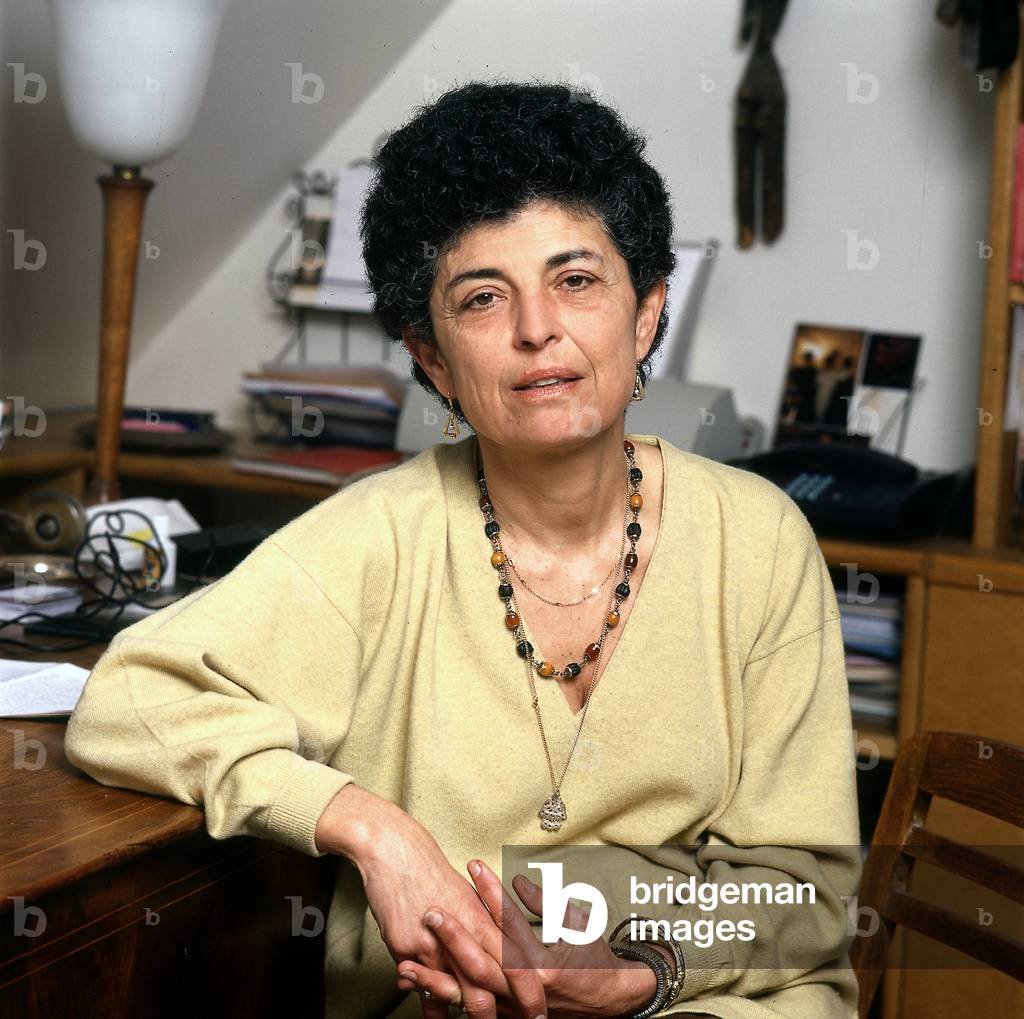
Sophie Bessis
 Tunisia
historian•journalist•researcher•feminist author
Birthday
January 1, 1947
Birth Sign
Capricorn
Birthplace
Tunis, Tunisia
Age
79 years old
About
Sophie Bessis is a Tunisian-born French historian, journalist, researcher, and feminist author known for her insightful analysis of geopolitical and gender issues. Her work consistently explores the intricate relationships between the Maghreb, the Arab world, and the West, particularly focusing on the societal position of women and cultural inequalities. An accomplished writer, she has authored numerous books and articles in French, Spanish, and English. Bessis maintains a prominent voice in intellectual discourse, contributing to major publications and engaging in public discussions that shape understanding of contemporary global challenges. Her distinctive approach combines rigorous academic research with a commitment to social justice, making her a respected figure among readers and scholars alike.
She is a recognized authority in her field, frequently consulted for her expertise on North-South relations and development. Bessis continues to influence conversations about cultural identity and human rights, solidifying her place as an important public intellectual. Her contributions have garnered significant recognition, including prestigious literary and national honors from Tunisia.
Early Life & Background
Sophie Bessis spent her formative years navigating the vibrant cultural landscape of Tunis, Tunisia, where she was born in 1947. This early environment likely shaped her lifelong interest in the complexities of North African and Arab societies. After her childhood in Tunisia, she moved to France to pursue higher education, a common path for many intellectuals from the region seeking advanced academic opportunities. She achieved the highly respected qualification of agrégée in history, demonstrating a deep commitment to scholarly rigor from an early stage.
Her academic journey continued with teaching positions at esteemed institutions in Paris. Bessis taught the political economy of development at both the Sorbonne and the Institut national des langues et civilisations orientales (INALCO), where she imparted her knowledge to future generations. These early roles allowed her to hone her analytical skills and deepen her understanding of global economic and social dynamics. Beyond the classroom, Bessis actively engaged in journalistic endeavors, serving as editor-in-chief for Jeune Afrique, a highly influential magazine focusing on African affairs. This position provided a platform for her burgeoning expertise and marked an important step in her public career.
Before her breakthrough as a widely recognized author, Bessis also took on significant research and advocacy roles. She worked as a research associate at the Institute for International and Strategic Relations (IRIS) in Paris and served as Deputy Secretary-General of the International Federation for Human Rights Leagues (FIDH). These experiences further broadened her perspective on international relations and human rights. Additionally, she consulted for international organizations such as UNESCO and UNICEF, undertaking missions across various African nations, which gave her direct exposure to the development challenges she would later write about extensively.
Career Growth
Sophie Bessis's public career truly blossomed through her prolific writing and consistent engagement with critical global issues. Her breakthrough as a widely recognized author came with the publication of influential works that garnered international attention. A significant milestone was her book L'Occident et les autres (The West and the Others), released in 2001 by La Découverte in Paris. This work offered a penetrating analysis of historical and contemporary relationships between Western and non-Western societies, challenging conventional narratives.
She has consistently contributed to leading publications, including the esteemed French newspaper Le Monde, where her articles offer nuanced perspectives on current events and long-standing societal issues. Bessis is also the author of La civilisation judéo-chrétienne (Judeo-Christian Civilization), another work that explores complex cultural and historical intersections. Her writings are not confined to academic circles; she actively participates in public forums, conferences, and cultural festivals, sharing her insights with a broader audience. This engagement underscores her role as a public intellectual committed to fostering dialogue and understanding.
Throughout her career, Bessis has maintained a steady output of scholarly articles and books, solidifying her reputation as a leading voice on North-South relations, decolonization, and the status of women in the Arab world. Her work continues to provide essential context and critical perspectives on some of the most pressing global challenges. Her ability to write across multiple languages, French, Spanish, and English, has allowed her ideas to reach a truly international readership, amplifying her impact and fostering cross-cultural understanding.
Career Timeline
Public Image & Style
Sophie Bessis projects the image of a thoughtful and rigorous intellectual, deeply committed to illuminating complex social and geopolitical issues. Her public persona is defined by her role as a historian, journalist, and feminist author who approaches her subjects with both academic depth and a clear, accessible writing style. Audiences and media perceive her as an authoritative voice on North-South relations, the Arab world, and particularly the position of women within these contexts. She is seen as a critic of inequality and a proponent of human rights, consistently advocating for a more nuanced understanding of cultural dynamics.
Her intellectual integrity and willingness to tackle challenging topics, such as post-colonial relations and gender disparities, resonate strongly with readers. Bessis is not known for a flamboyant public style, but rather for her measured, analytical approach, which lends credibility to her arguments. Her consistent focus on these themes has cultivated a readership that values her informed perspectives and critical insights into global affairs.
Fame & Fandom (iFAMOUS Rankings)
Sophie Bessis commands a following defined not by billboards or fan clubs, but by the weight of her arguments in intellectual circles. Her audience consists of historians, journalists, and activists who engage with her work on North-South relations and gender politics rather than chasing celebrity status. There is no official fandom name for this Franco-Tunisian historian; her readership operates as a dispersed network of scholars and political observers rather than an organized cult of personality. The stories that circulate about her are not viral moments of pop culture but rigorous deconstructions of geopolitical myths. She is known for dismantling the concept of "Judeo-Christian civilization" as a semantic invention, a stance that sparked intense debate among intellectuals. Other defining chapters include her sharp critique of Israeli military strategy during the conflict and her advocacy for women's rights across the Arab world. These interventions cemented her reputation as a fearless voice who prioritizes historical accuracy over diplomatic comfort. Unlike entertainers whose fame fluctuates with chart positions, Bessis maintains a steady, influential presence through her publications and public commentary. She does not interact with fans in the manner of a pop star; her engagement remains strictly academic and political. iFANN has evaluated her global standing to determine if she holds a spot in the published rankings. Sophie Bessis is currently unranked in the Global Top 1,000 list. She also holds no placement in any Top-100 scope list. The evaluation confirms that while her influence is significant within specific domains, she does not currently meet the thresholds required for a ranked position in the global hierarchy.
Interesting Facts and Legends
Sophie Bessis holds the agrégée qualification, France's highest teaching accreditation, reflecting her profound academic expertise in history. She served as editor-in-chief for Jeune Afrique, a prominent magazine covering African affairs, showcasing her early influence in journalism and political commentary. Beyond her native French, Bessis is known for writing and publishing her works in both Spanish and English, allowing her analyses to reach a wide international audience. Her consulting work for international organizations like UNESCO and UNICEF involved extensive missions across Africa, giving her direct, on-the-ground experience with development challenges. A defining moment in her public profile involves her fierce intellectual critique of the concept of "Judeo-Christian civilization," which she labeled a "sham" and an "extraordinary semantic and ideological invention." This argument gained significant traction in recent news coverage, where she deconstructed the notion as a political tool rather than a historical reality. She contributed to discussions regarding the Israel-Hamas war, arguing that Israeli leaders failed to understand asymmetric warfare. Additionally, she is well-known for her long-standing advocacy for women's rights in Tunisia, notably discussing the state of gender equality when she noted the country was at a "turning point" despite being far from full equality.
Family & Personal Life
Sophie Bessis spent her childhood and early upbringing in Tunis, Tunisia, the city of her birth. While specific details about her parents or siblings are not publicly available, this foundational period in Tunisia undoubtedly shaped her cultural perspective and her later academic pursuits focusing on the Maghreb and the Arab world. She eventually relocated to France for her higher education and professional career, establishing her adult life there. Information regarding her current household, including any spouse, children, or pets, remains private.
Notable Connections
Sophie Bessis is closely associated with institutions like the Institute for International and Strategic Relations (IRIS) in Paris, where she serves as a research associate. Her journalistic career connects her to Jeune Afrique magazine, where she held the position of editor-in-chief. Academically, she has taught at the Sorbonne and the Institut national des langues et civilisations orientales (INALCO). She has also collaborated with international organizations such as UNESCO and UNICEF on various missions across Africa, underscoring her commitment to global development and human rights.
Relationships & Dating History
Sophie Bessis maintains a private personal life, and details about her dating history or marital status are not publicly documented. Throughout her prominent career as a historian, journalist, and author, she has kept her relationships out of the public eye. As of 2026, Sophie Bessis's relationship status is not publicly known.
Salary, Net Worth In 2026
Information regarding Sophie Bessis's net worth is not publicly available. Her income streams have primarily come from her extensive career as a historian, journalist, university professor, researcher, and author. These roles typically involve salaries from academic institutions, earnings from book sales and publishing contracts, fees for journalistic contributions to major newspapers like Le Monde, and honoraria for public speaking engagements and consulting work for international organizations. However, specific financial figures or estimated total net worth have not been disclosed or widely reported in public records.
Awards Won (2)
Sophie Bessis has received significant recognition for her intellectual contributions and distinguished career. She was honored with the Paris Liège literary prize, celebrating her literary achievements and impactful writing. Additionally, she received a high national distinction from her home country, being named Commandeur of the Order of the Republic in Tunisia, which acknowledges her profound influence and service.
Literary Achievement
Body of Work
National Honor
Contributions to Tunisian and International Thought
Known For
L'Occident et les autres
2001 · Author
La civilisation judéo-chrétienne
· Author
Keywords
Sources
Quick Facts
- Profession
- historian, journalist, researcher, feminist author
- Born
- January 1, 1947
- Birthplace
- Tunis, Tunisia
- Gender
- Female
- Nationality
- Tunisian, French
- Education
- Sorbonne, INALCO
Personal Details
- Children
- Education
- Agrégée in History (France) · Sorbonne (Political Economy of Development) · Institut national des langues et civilisations orientales (INALCO) (Political Economy of Development)
Frequently Asked Questions
Who is Sophie Bessis?
What is Sophie Bessis known for?
Where was Sophie Bessis born?
What are some of Sophie Bessis's notable works?
Has Sophie Bessis received any major awards?
Join the community
fans discussing