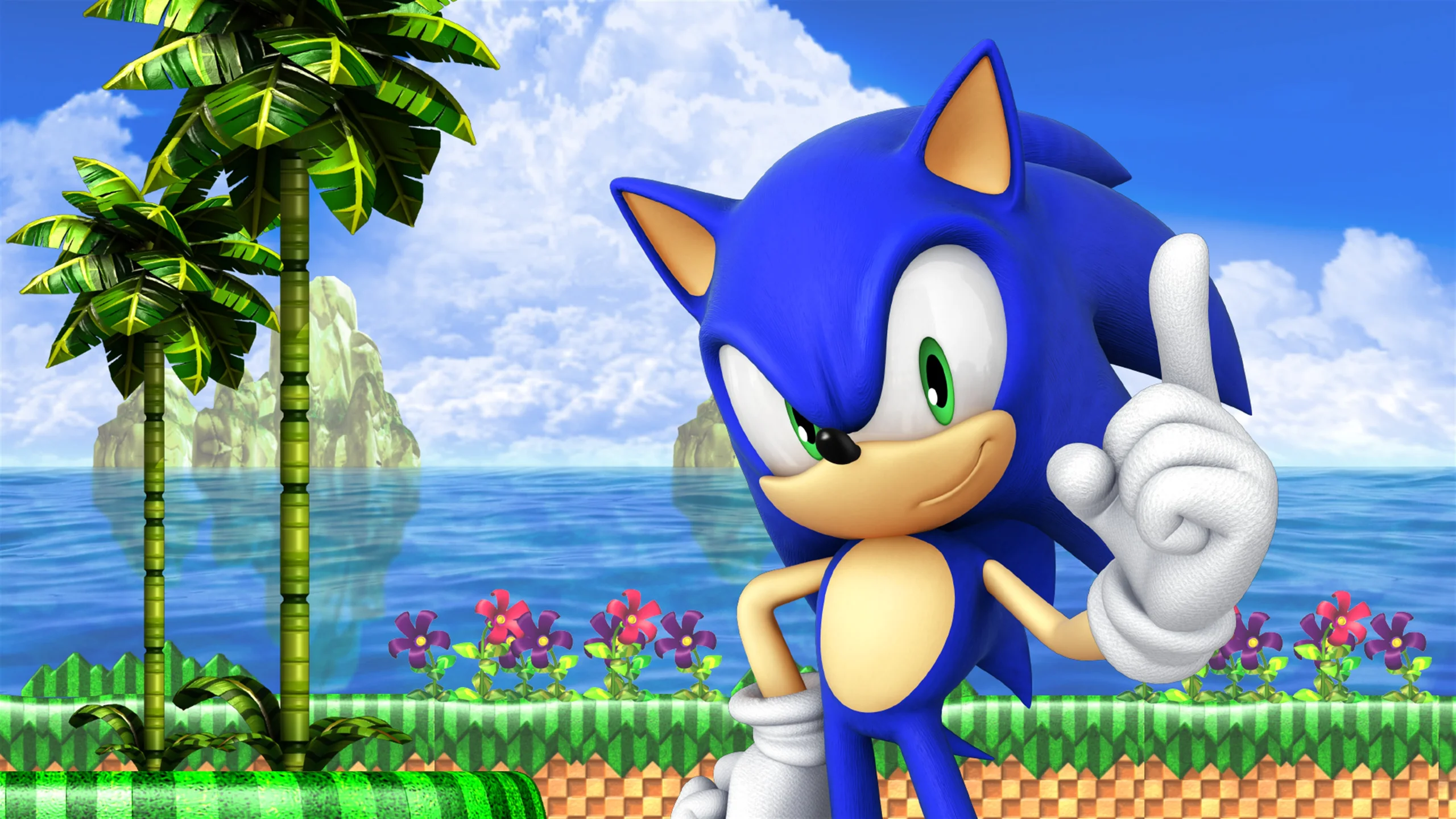
Sonic the Hedgehog 4: Episode I
"The classic 2D Sonic returns in a brand-new adventure."
Overview
Sonic the Hedgehog 4: Episode I landed on October 7, 2010, and for the first time in sixteen years, a mainline Sonic game was built entirely in 2D. The last one had been Sonic & Knuckles back in 1994. Developed primarily by Dimps, with Sonic Team providing support, the game was an explicit attempt to win back fans who had grown up with the Genesis originals. It launched on Xbox Live Arcade, PlayStation Network, and WiiWare simultaneously, with an iOS version arriving the same day. A Steam release followed in January 2011.
The game is structured around four zones, each with three acts and a boss fight. Splash Hill Zone opens with a tropical beach that echoes Green Hill Zone. Casino Street Zone trades sand for neon and slot machines. Lost Labyrinth Zone winds through ancient ruins, and Mad Gear Zone is Eggman's factory floor. Each zone leans on the familiar Sonic vocabulary: loop-de-loops, springs, and rings scattered everywhere. The physics engine was built from scratch, which turned out to be a double-edged sword. It rendered crisp 720p visuals with dynamic lighting and parallax scrolling, but the momentum didn't feel exactly like the Genesis games. Some players noticed immediately.
Producer Takashi Iizuka and composer Jun Senoue both had deep roots in the classic era. Iizuka had worked on Sonic the Hedgehog 2 and Sonic 3, while Senoue composed for Sonic Adventure and Sonic the Hedgehog 3. Their involvement gave the project a sense of authenticity, even though the day-to-day development was led by Dimps, the studio behind Sonic Rush and Sonic Advance. The soundtrack, all Senoue, blends remixed classics with new rock-leaning tracks, and the game deliberately skips voice acting entirely.
Within a year, the game had sold over a million copies across all platforms, making it a commercial hit. But critical response was split. Some outlets, like Wired, praised the visuals but hammered the physics and level design. Others, including Gamereactor, found the gameplay satisfying and true to the spirit of the originals. The short length, around two to three hours, was a common complaint. Still, the sales numbers proved there was appetite for 2D Sonic, and the game set the stage for Episode II and, eventually, the much-loved Sonic Mania in 2017.
Gameplay
At its core, Episode I plays like a love letter to the Genesis era. Sonic runs, spins, and bounces through levels that reward both speed and careful platforming. The signature Spin Dash returns, letting players charge up a burst of speed. The Homing Attack, borrowed from the 3D games, lets Sonic lock onto enemies mid-air, which adds a new layer to combat. Special stages, accessed by grabbing a giant ring, task players with collecting Chaos Emeralds in a 3D tunnel, much like the classic games.
Each zone is built around a distinct gimmick. Splash Hill has water slides and palm trees. Casino Street is packed with pinball bumpers and slot machines that spit out rings. Lost Labyrinth introduces crumbling floors and moving blocks. Mad Gear is all about conveyor belts and pistons. Boss fights cap off each zone, with Eggman piloting different machines. The final battle in Mad Gear Zone is a multi-phase showdown that ends with a teaser for the next episode.
The game runs at a smooth 60 frames per second and supports 720p on consoles. The physics engine, however, was a point of contention. Some players found that Sonic's momentum didn't carry the same weight as in the originals, and the camera could occasionally feel off. Still, the level design generally accommodates the controls, and the game offers a decent challenge for both newcomers and veterans.
Story
Doctor Eggman is back, and he's up to his old tricks. Robotic animals are appearing all over the world, and Sonic sets out to stop him. The story unfolds through animated cutscenes between acts, with no dialogue, just like the Genesis games. It's a simple setup, but it works. Sonic blazes through Splash Hill, Casino Street, Lost Labyrinth, and Mad Gear, taking down Eggman's minions and collecting the Chaos Emeralds along the way.
The final confrontation happens in Mad Gear Zone, where Eggman pilots a massive mech. Sonic defeats him, but the ending hints that this is only the beginning. A mysterious figure watches from the shadows, setting up Episode II. The narrative is thin, but it's not the point. The game is about the journey, the speed, and the nostalgia. It's a direct sequel to Sonic & Knuckles, and it picks up right where that game left off, even if the story is minimal.
Trailers

Keywords
Sources
Game Info
- Developer
- Dimps
- Publisher
- Sega
- Engine
- Custom 2D engine
- Release Date
- 2010-10-07
- Age Rating
- E10+ (Everyone 10+)
- Modes
- Single-player
- Platforms
- Xbox 360, PlayStation 3, Wii, iOS, Android, Windows, Windows Phone, PlayStation Portable
- Composer
- Jun Senoue
- Producer
- Takashi Iizuka
- Director
- Toshiyuki Nagahara
- Sales
- Over 1 million copies in first year
Join the community
fans discussing