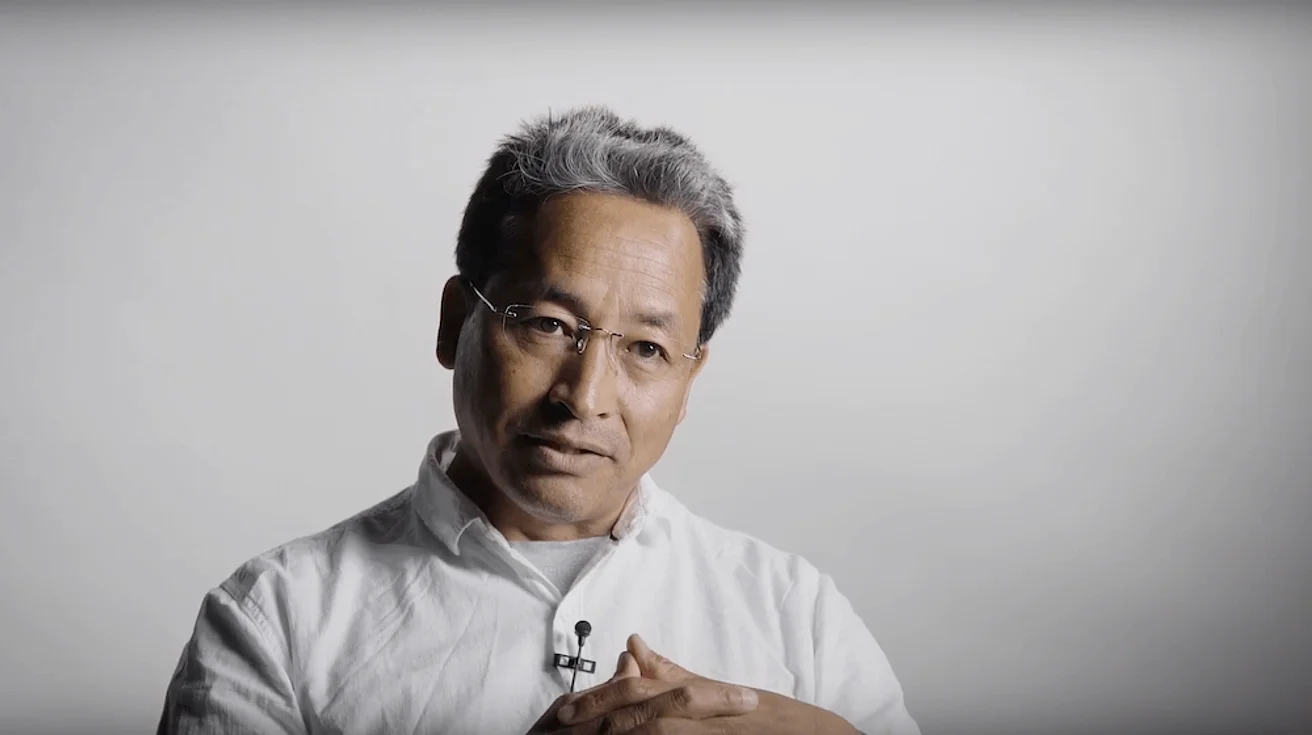
Sonam Wangchuk
 India
IndiaAlso known as: Ice Man of Ladakh
Birthday
September 1, 1966
Birth Sign
Virgo
Birthplace
Alchi, Ladakh, India
Age
60 years old
Height
5 ft 8 in (173 cm)
About
Sonam Wangchuk is an Indian engineer, innovator, and educator from Ladakh, best known for founding the Students' Educational and Cultural Movement of Ladakh (SECMOL) and inventing the Ice Stupa artificial glacier. His work bridges sustainable architecture, water conservation, and educational reform, earning him the 2018 Ramon Magsaysay Award. Today, Wangchuk continues to advocate for Himalayan environmental protection and Ladakh's autonomy, speaking globally about indigenous solutions to climate change.
Early Life & Background
Wangchuk grew up in the remote village of Alchi in Ladakh, a high-altitude desert where harsh winters and scarce resources shaped his worldview. The region's educational system was ill-equipped for local needs, with rote learning and curricula irrelevant to Ladakhi life. After completing his schooling in Leh, he moved to Srinagar for higher education, graduating with a degree in Mechanical Engineering from the University of Kashmir in 1987. During his college years, he became acutely aware of the disconnect between mainstream education and the realities of rural Ladakh. This frustration, combined with witnessing water shortages and energy dependence, planted the seeds for his later innovations. He returned to Ladakh determined to create practical, locally-rooted solutions.
Career Growth
In 1988, Wangchuk co-founded SECMOL with a group of like-minded students, aiming to reform education in Ladakh. He designed the organization's solar-powered campus on the banks of the Indus River, a living laboratory of sustainable design using local materials and passive solar heating. In 1994, he helped launch Operation New Hope, a government-NGO partnership that overhauled Ladakh's public school system, making it more practical and culturally relevant. The turning point came in 2014 when he developed the Ice Stupa technique. Inspired by Chewang Norphel's artificial glaciers, Wangchuk created a method to freeze winter stream water into conical ice mounds that melt slowly in spring, providing irrigation for crops. The Ice Stupa won widespread acclaim and has been replicated in several Himalayan regions. Wangchuk continues to refine the technology and advocate for decentralized water management.
Career Timeline
Public Image & Style
Wangchuk is widely seen as a pragmatic visionary, combining scientific rigor with deep respect for Ladakhi culture. In media, he is often called the 'Ice Man of Ladakh' and portrayed as a grassroots innovator who shuns bureaucracy. His public talks mix technical explanations with gentle humor and a palpable love for his homeland. While he has no official fandom, supporters, especially young Ladakhis, refer to themselves as 'SECMOL family' or 'Wangchuk's disciples'. His social media presence is minimal; he lets his work speak for itself. Critics sometimes dismiss his solutions as small-scale, but his Magsaysay Award and international recognition have cemented his reputation as one of India's most creative environmental problem-solvers.
Fame & Fandom
Sonam Wangchuk commands a following that defies the traditional architecture of celebrity fandoms. There is no organized fan club, no merchandise-driven movement, and no collective ritual of adoration centered on his person. Instead, his supporters are best described as a coalition of students, activists, and citizens mobilized by his advocacy for Ladakh's autonomy and environmental survival. This group identifies not with a brand but with the cause, often referring to themselves as the 'SECMOL family' or simply as disciples of his educational philosophy. The most potent narrative in this modern mythology stems from a verified event in July 2026: a twenty-six-day hunger strike undertaken to protest exam paper leaks and demand educational reform. This act galvanized a youth movement known as the 'Cockroach' Gen Z movement, transforming Wangchuk into a symbol of resistance against corruption and a catalyst for what he termed a peaceful revolution before 2047. While this political fervor defines his public standing, his global reach is quantified by the iFANN Global Fame Rankings, which track influence across media coverage and consumption signals worldwide. Within this framework, Sonam Wangchuk is currently recognized as the 53rd most famous person from India and holds the position of the 11th most famous person in AI. These placements have remained steady through the reporting cycle, reflecting a consistent level of attention rather than viral fluctuation. The data confirms that while he lacks a formalized fanbase with a specific name, his impact resonates deeply within specific sectors, securing his status as a figure of significant renown without the trappings of pop culture stardom.
Interesting Facts and Legends
The SECMOL campus stands as a reflection of sustainable design, constructed entirely from rammed earth and recycled materials without a single brick of cement. Wangchuk once drove a solar-powered vehicle from Leh to Kargil to demonstrate the viability of renewable energy in the region. The moniker 'Ice Stupa' derives from the artificial glacier's striking resemblance to traditional Buddhist stupas. A strict vegetarian who embraces a minimalist lifestyle, he remains personally involved in training students at SECMOL in sustainable farming and construction techniques despite his global renown. He has been the subject of the documentary 'Ice Stupa: The Artificial Glacier' and a 2020 biography titled 'Sonam Wangchuk: The Ice Man of Ladakh'. In recent years, his legend has expanded beyond engineering to include high-stakes political activism. Reports from mid-2026 describe him leading a massive mobilization of India's Gen Z against the government, an event framed by some observers as a call for a 'second independence movement.' That same year, a hunger strike over exam paper leaks drew international attention and inspired protesters who dubbed themselves the 'Cockroach' group, vowing to persist even after his fast concluded. These events have transformed his narrative from that of a regional innovator into a figure of national political significance.
Notable Quotes
“If you want to save Ladakh, you have to save the Himalayas. If you want to save the Himalayas, you have to save the planet.”
“Ice Stupas are a simple and effective way to conserve water in the mountains.”
“Education must be relevant to the life and culture of the student.”
Family & Personal Life
Sonam Wangchuk keeps his family life private. He was born to a Buddhist family in Alchi; his father was a government employee and his mother a homemaker. He has two siblings, a brother and a sister, who live in Ladakh. Wangchuk himself is unmarried and has no children. He lives modestly on the SECMOL campus, where he tends to a small garden and shares meals with students and volunteers. He often describes the SECMOL community as his extended family.
Notable Connections
Wangchuk's work is deeply connected to the Ladakhi community and the SECMOL network of students and educators. He credits Chewang Norphel, the 'Glacier Man of India', for inspiring the Ice Stupa. His innovations have been supported by the Ladakh Autonomous Hill Development Council and various NGOs. He collaborates with environmentalists and researchers across the Himalayan region.
Relationships & Dating History
Sonam Wangchuk has never publicly discussed any romantic relationships. He is not married and has no known partners. His personal life remains entirely private, with no confirmed dating history or rumors. As of 2026, he is believed to be single and devoted to his work.
Salary, Net Worth In 2026
$2 Million
iFANN Editorial Team estimate
Per iFANN's editorial analysis, the net worth of Sonam Wangchuk in 2026 is estimated at $2 Million. His financial standing derives primarily from fees associated with speaking engagements and consulting work for sustainable design projects, alongside grants awarded to the Students' Educational and Cultural Movement of Ladakh (SECMOL). He does not draw a salary from SECMOL and maintains a frugal existence. The Ice Stupa technology remains open-source, ensuring that he earns no royalties from its widespread adoption. His assets are limited to personal belongings and a small savings account, with no known real estate holdings or external investments. This figure represents a modest growth since receiving the 2018 Ramon Magsaysay Award, which provided a cash prize of $50,000; however, the majority of these funds were donated directly to SECMOL to support ongoing operations.
Awards Won (5)
Wangchuk has won over 15 awards, most notably the 2018 Ramon Magsaysay Award, often called Asia's Nobel Prize. In 2017, he received the Global Award for Sustainable Architecture. The SECMOL campus was awarded a UNESCO Chair in Ecopolis and Sustainable Living in 2020. Other honors include the Rolex Awards for Enterprise (2021) and the Padma Shri (2024), India's fourth-highest civilian award.
2024 · Civilian
Social work
2021 · Environment
Ice Stupa
Known For
SECMOL
1988 · Co-founder and Director
Ice Stupa
2014 · Inventor
Operation New Hope
1994 · Key Leader
Keywords
Quick Facts
- Profession
- engineer, activist
- Born
- +1966-09-01
- Birthplace
- Alchi, Ladakh, India
- Gender
- Male
- Birth Sign
- Virgo
- Height
- 5 ft 8 in (173 cm)
- Education
- B.Tech Mechanical Engineering, University of Kashmir (1987)
- Net Worth
- $2 Million
Personal Details
- Height
- 5 ft 8 in (173 cm)
- Education
- B.Tech in Mechanical Engineering, University of Kashmir (1987)
Frequently Asked Questions
Who is Sonam Wangchuk?
What is the Ice Stupa?
What is Sonam Wangchuk's net worth in 2026?
Is Sonam Wangchuk married?
What awards has Sonam Wangchuk won?
Social Media
Similar People
Join the community
fans discussing