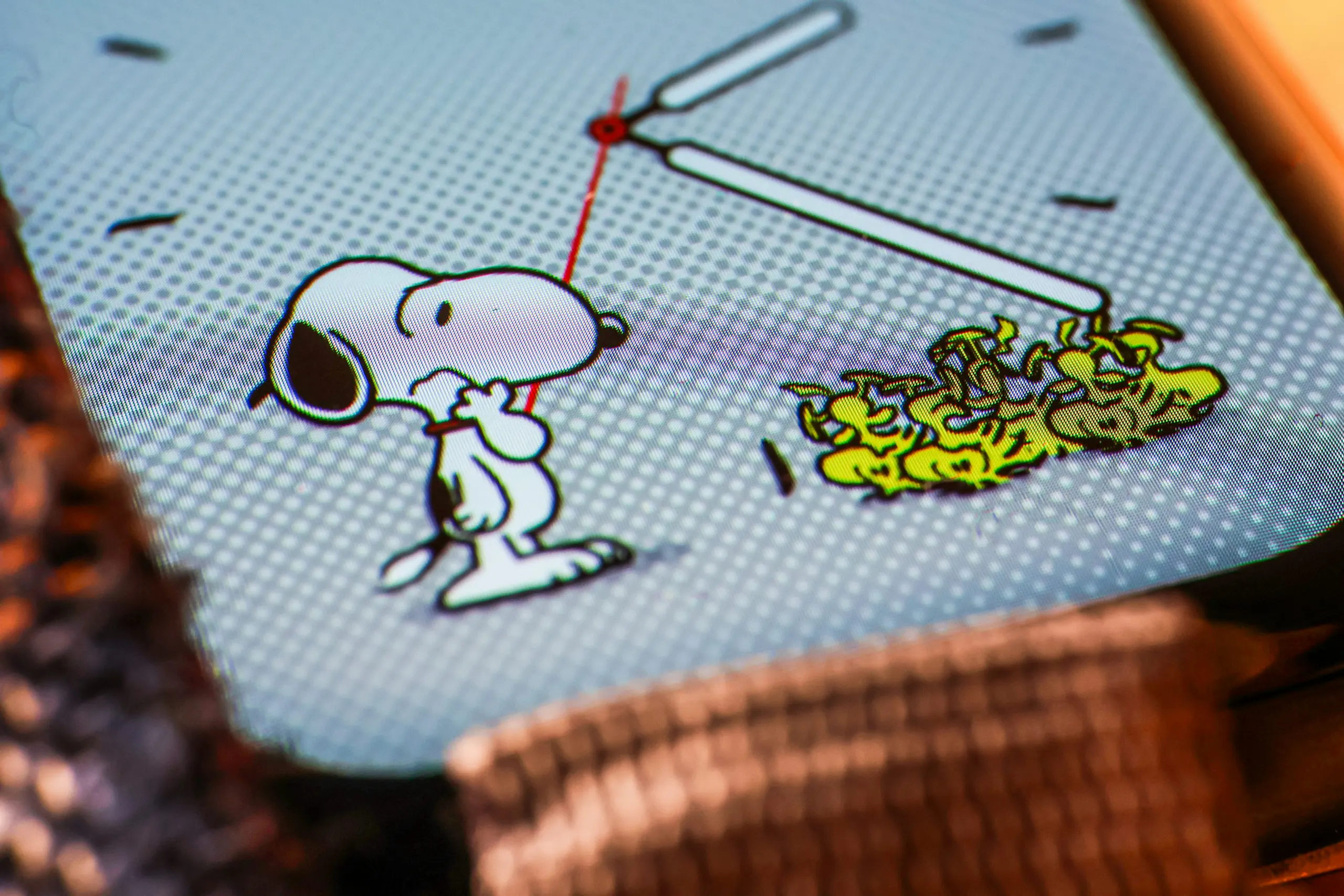
Snoopy
Comic strip character•beagle•World War I flying ace•novelist•Joe Cool
Also known as: Joe Cool, The Flying Ace, World-Famous Author, Snoopy Brown
Birthday
August 10, 1950
Birth Sign
Leo
Birthplace
Daisy Hill Puppy Farm (in canon)
Age
76 years old
About
Snoopy is the white beagle at the center of Charles M. Schulz's Peanuts, a comic strip that ran from 1950 to 2000 and still reaches readers through newspapers, streaming, and a licensing operation that never really stops. He is not a supporting player anymore. He is the franchise's breakout star, the character whose image moves more merchandise than any other in the strip and who, in Japan and parts of Europe, is better known than Charlie Brown himself. His day job, as far as he is concerned, is sleeping on the roof of his doghouse. His side gigs are more interesting: World War I flying ace, celebrated novelist, Joe Cool, attorney at law, shortstop.
Fans know him as the dog who thinks. Thought bubbles gave him an inner life that no other comic-strip pet had at the time, and that inner life is where the comedy lives: elaborate fantasies, unshakable confidence, and a refusal to behave like a dog. He has appeared in every Peanuts film and television special, more than 50 animated titles in all, and he remains the emotional center of the franchise's 2026 output, from a new Christmas special to international TV deals for The Snoopy Show and Snoopy in Space.
His cultural footprint goes beyond entertainment. NASA named the Apollo 10 lunar module after him in 1969, and the Silver Snoopy Award remains one of the agency's most cherished honors for flight safety. He is, in the truest sense, a cartoon dog who went to the moon without ever leaving his backyard.
Early Life & Background
Snoopy's first appearance came on October 4, 1950, two days after Peanuts debuted in seven newspapers. He was a silent, four-legged dog in those early panels, drawn from memory of Spike, a black-and-white dog Schulz had as a boy in Minnesota. The strip did not name him until November 10, 1950. For the first few years he behaved like a normal pet: he chased balls, walked on a leash, and stayed on the ground.
The transformation started in the mid-1950s, when Schulz began standing him upright and giving him thought bubbles. By 1956 Snoopy had a full inner monologue. In 1957 he started sleeping on the roof of his doghouse. In 1958 he first imagined himself as a World War I flying ace, scarf flapping, Sopwith Camel roaring in his head. Each of these choices was small on its own. Together they turned a sidekick into a character with an interior life richer than most of the human kids around him.
The 1960s added the typewriter, the novel that always opens "It was a dark and stormy night," and the Joe Cool persona. Woodstock arrived in 1967, giving Snoopy a best friend and a straight man. None of this was planned as a breakout. Schulz simply kept following the character wherever the jokes led, and the jokes kept leading somewhere interesting.
Career Growth
The breakthrough came with television. A Charlie Brown Christmas aired in 1965, and Snoopy's doghouse-decorating and ice-skating routines became signature bits, including the dance that fans still imitate. A year later, The Royal Guardsmen turned his Red Baron fantasy into a hit single, "Snoopy vs. the Red Baron," and the character crossed into pop music. In 1969 NASA nicknamed the Apollo 10 lunar module "Snoopy" and the command module "Charlie Brown," and Snoopy became the agency's safety mascot, a role that still generates press coverage in 2026.
The merchandising boom of the 1970s, including the "Snoopy for President" buttons and posters, made him a standalone brand. He has appeared in every Peanuts film and special since, including The Peanuts Movie in 2015, which put the Flying Ace storyline at the center of a feature film. The Apple TV+ era brought Snoopy in Space in 2019, The Snoopy Show in 2021, and Camp Snoopy in 2024. In October 2026 those series continued to sell internationally, and a new Christmas special, his first in five years, was announced with a twist.
Career Timeline
Public Image & Style
Visually, Snoopy is about as simple as a character gets: white fur, black ears, black nose, a black spot on his back, and a red collar. The simplicity is the point. It lets him slide into personas without losing himself. Joe Cool arrives with sunglasses and a swagger. The Flying Ace arrives with goggles and a scarf. The World-Famous Author arrives with a typewriter and a smirk. Media portray him as confident, imaginative, and endlessly resourceful, the exact opposite of Charlie Brown's anxious decency. His voice is silent physical comedy and thought bubbles, which means his public image is built entirely on posture, expression, and the occasional dance.
Fame & Fandom (iFAMOUS Rankings)
Fame data for Snoopy has not yet been gathered by iFANN, so there is no published ranking to point to as of October 2026. That absence says more about the difficulty of measuring a fictional character's fame than about his reach. He is not on the September 2026 iFAMOUS Rankings flagship list, but his face is on lunchboxes, insurance commercials, and NASA safety materials, which is a different kind of ubiquity.
The fanbase has no formal name. Fans are simply Peanuts fans, and they organize around collecting and ritual rather than campaigns. Annual viewings of It's the Great Pumpkin, Charlie Brown and A Charlie Brown Christmas function as shared calendar events. The Snoopy dance gets performed at conventions and in living rooms. Collectors chase plush, LEGO sets, Owala cups, and Starbucks collaborations with a dedication that rivals any stan group. Official channels post daily content across Facebook, Instagram, YouTube, and X, and Peanuts Worldwide runs hospital art programs and charity merchandise that give fans a way to participate beyond buying. The relationship is warm and low-key, which fits a character who has never needed to say a word to be understood.
Interesting Facts and Legends
Snoopy's first appearance came two days after the strip itself debuted, and he did not speak in those early years; thought bubbles arrived later. The Apollo 10 lunar module was named Snoopy while the command module was named Charlie Brown, a pairing NASA has never fully explained in public. Snoopy's novel always begins with the same line: "It was a dark and stormy night." He is more popular than Charlie Brown in Japan and parts of Europe, a fact that has shaped licensing strategy for decades. Bill Melendez voiced Snoopy's laughs and sighs until his death in 2008, and archival recordings of Melendez have voiced the character in every film and special since.
Fans still retell the story of the doghouse that is bigger on the inside, a bit of folklore the strip never explains and Schulz deliberately left ambiguous. The "Snoopy for President" campaign of the 1970s was a real merchandising phenomenon, complete with buttons and posters, though never an actual candidacy. And the Snoopy dance, first seen in A Charlie Brown Christmas, remains the character's most imitated move.
Notable Quotes
“It was a dark and stormy night.”
“Happiness is a warm puppy.”
“To me, the only thing that matters is the here and now.”
“Why can't I have a normal dog?”
Family & Personal Life
Snoopy's family is large and scattered. In franchise canon he was born at the Daisy Hill Puppy Farm in a litter of eight, and his siblings include brothers Spike, Andy, Olaf, and Marbles, plus sisters Belle and Molly. A 2026 Best Friends Animal Society merchandise campaign explicitly centered "Snoopy and his siblings," bringing the extended family back into the spotlight. His owner is Charlie Brown, though the relationship is more roommate than master. His best friend is Woodstock the bird. The cat next door is a recurring antagonist. He has no spouse or children in canon, though he does have nephews, including Spike's son.
Notable Connections
Relationships & Dating History
Snoopy's romantic life exists entirely in canon, and it is mostly comedic. His most persistent crush is Lucy Van Pelt, a running gag since the 1960s in which Snoopy attempts to win her over and Lucy rebuffs him with varying degrees of disdain. In the 1970s he began courting Fifi, a French poodle, in an intermittent relationship that has never quite resolved. Molly Volley, his tennis partner, brought a flirtatious rivalry in the 1970s but never a confirmed romance. Fans sometimes misread Belle, his sister, as a romantic partner, which is a persistent bit of confusion. As of 2026, Snoopy is single in canon and has no current partner. No real-world relationships exist to report.
- RumouredLucy Van Pelt1960 - presentUnrequited crush; Snoopy's attempts to win Lucy are a running gag, and she rebuffs him.
- DatedFifi1970 - presentFrench poodle romantic interest; intermittent and comedic in canon.
- RumouredMolly Volley1970 - presentTennis partner and flirtatious rival; not a confirmed romance.
Salary, Net Worth In 2026
$1.2 Billion
iFANN Editorial Team estimate
Snoopy does not have a personal bank account, but the franchise built around him does, and the iFANN Editorial Team's analysis of licensing revenue, media deals, and estate holdings points to a current value of roughly $1.2 billion as of 2026. That figure reflects the Peanuts Worldwide operation, not a cartoon dog's savings. The bulk of the money comes from licensing: apparel, food, insurance, collectibles, and media. Industry estimates put annual retail sales of licensed Peanuts merchandise at $1 billion to $2 billion, and the Schulz estate has been valued in the $500 million to $1 billion range at various points.
The Apple TV+ deal, a multi-year agreement from 2020 onward, added a new revenue stream in the tens of millions and expanded originals like Snoopy in Space and The Snoopy Show. Royalties from those series, plus classic specials that air every holiday season, keep the catalog earning year after year. The 2026 merchandise pipeline, from Best Friends Animal Society collaborations to Crocs and Aéropostale tie-ins, shows a licensing operation that runs continuously rather than in anniversary bursts. The estate manages the long game, and the long game is healthy.
Awards Won (4)
1966 · Outstanding Children's Program
A Charlie Brown Christmas
1966 · Best Children's Album
A Charlie Brown Christmas (Vince Guaraldi Trio)
Known For
Peanuts
1950 · Himself (beagle)
A Charlie Brown Christmas
1965 · Himself
Snoopy vs. the Red Baron
1966 · Subject of hit single
The Peanuts Movie
2015 · Himself
Snoopy in Space
2019 · Himself
The Snoopy Show
2021 · Himself
Keywords
Sources
Quick Facts
- Born
- August 10, 1950
- Birth Sign
- Leo
- First Appearance
- October 4, 1950
- Owner
- Charlie Brown
- Best Friend
- Woodstock
- Siblings
- Spike, Andy, Olaf, Marbles, Belle, Molly
Personal Details
- Full Name
- Snoopy (no surname; sometimes "Snoopy Brown" in fan usage)
- Children
- None
- Education
- None (self-taught novelist and flying ace)
Filmography
54
Total
4
Film
50
TV
Frequently Asked Questions
Why is Snoopy called Peanuts?
Why is Gen Z obsessed with Snoopy?
Is Snoopy a girl dog?
Is Snoopy 75 years old?
Is Snoopy real?
Similar People
Join the community
fans discussing