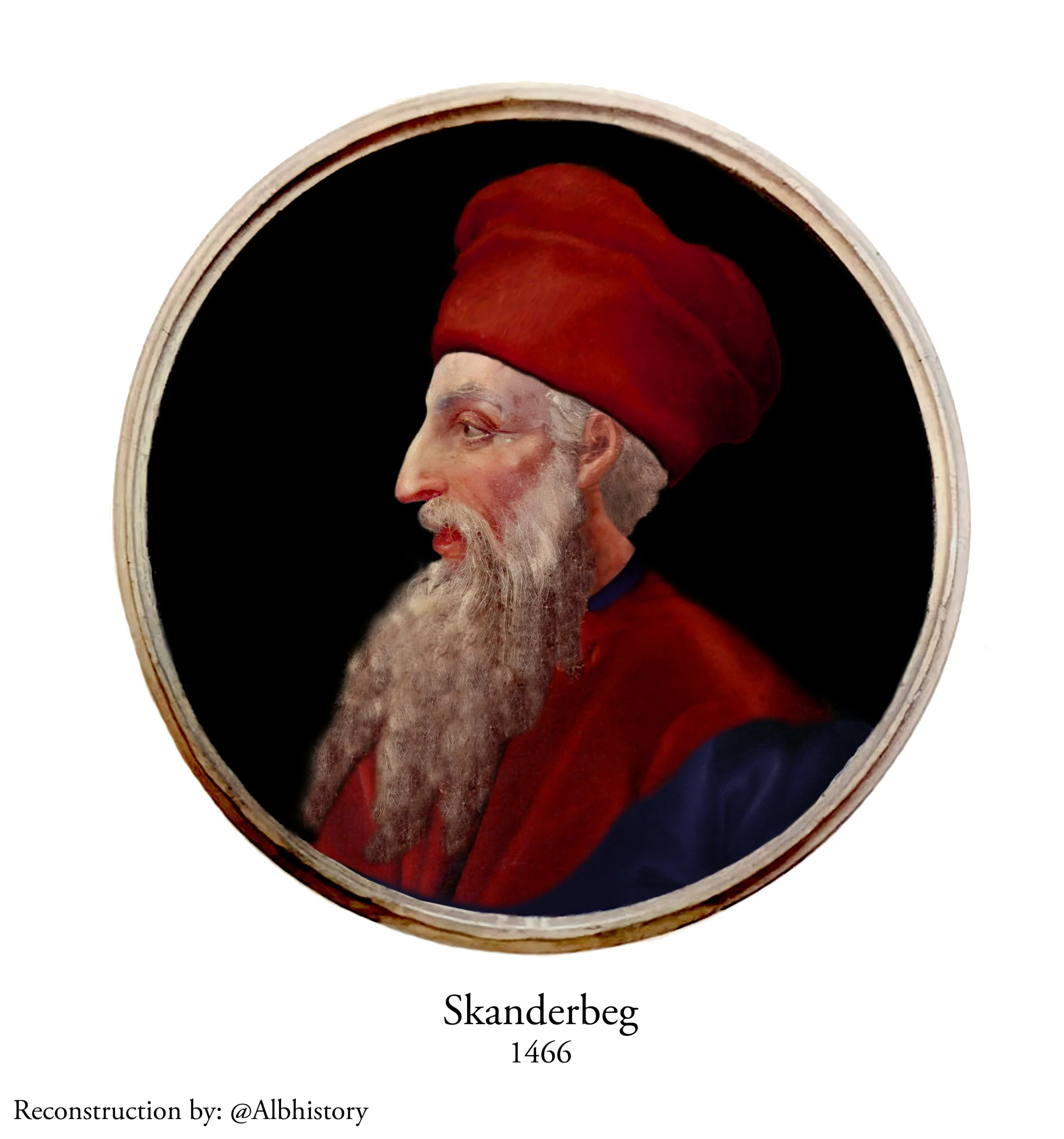
Skanderbeg
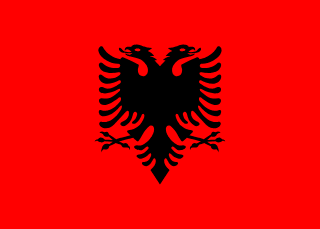 Albania
aristocrat•statesperson•military commander
Also known as: Gjergj Kastrioti, Iskander Bey, Alexander Bey
Birthday
May 6, 1405
Birth Sign
Taurus
Birthplace
Sinë, Albania
Age
Died at 62
About
Gjergj Kastrioti, universally known as Skanderbeg (c. 1405 – 17 January 1468), was an Albanian nobleman and military commander who became the national hero of Albania for leading a twenty-five-year resistance against the Ottoman Empire. Born into the powerful Kastrioti family in Sinë, he is remembered as the ultimate defender of freedom and a 'Dragon' who could outmaneuver the seemingly invincible Ottoman forces. His legacy endures as the cornerstone of Albanian national identity and a symbol of Christian resistance in medieval Europe. He unified the fragmented Albanian principalities under the League of Lezhë in March 1444, becoming its supreme military leader. For the next two decades, he led a guerrilla war that halted Ottoman expansion into Europe, earning him recognition across Western Europe as a model of defiance. Despite facing overwhelming odds against vast armies, he achieved remarkable victories, including the sieges of Krujë in 1450 and 1466. His strategic genius earned him the title 'The Dragon of Albania' and recognition from figures like Napoleon Bonaparte and Winston Churchill as a military genius. He died on January 17, 1468, in Lezhë, likely from malaria or typhoid fever, marking the beginning of the gradual collapse of Albanian resistance, though his spirit survived.
Early Life & Background
Gjergj Kastrioti was born into the nobility of the Kastrioti family in the region of Sinë, located in what is now northern Albania, around 1405. The exact year of his birth remains a subject of historical debate, with estimates placing it between 1403 and 1405. His father, Gjon Kastrioti, was a prominent lord who maintained a precarious balance between the Serbian Despotate and the expanding Ottoman Empire. As part of a political agreement to secure peace and demonstrate loyalty to Sultan Murad II, young Gjergj was taken as a hostage to the Ottoman capital in 1423.
This decision shaped his entire future. He was educated at the prestigious Enderun School within the Ottoman palace system, where he received rigorous training in mathematics, languages, and military strategy. During this period, he converted to Islam and adopted the name Iskander Bey, meaning Alexander Lord. This dual upbringing gave him a unique understanding of both Christian European tactics and Ottoman military organization. His rise through the Ottoman ranks was swift and impressive; by 1440, he had been appointed sanjakbey of the Sanjak of Dibra, governing a significant territory with considerable autonomy while serving under Sultan Murad II. These formative years provided the skills and perspective he would later use to challenge the very power that raised him.
Career Growth
The turning point of Skanderbeg's life occurred in December 1443 during the Battle of Niš. While fighting alongside the Ottoman army against Hungarian forces, he turned his horse around, declared his allegiance to Christianity once more, and fled back to Albania. He arrived in Krujë, where he rallied the local population and seized control of the fortress. This act of defection marked the beginning of a prolonged conflict that would define his legacy. In March 1444, he convened the Assembly of Lezhë, uniting various Albanian princes and nobles under the League of Lezhë. This confederation provided a centralized command structure for the Albanian resistance. Skanderbeg immediately began fortifying Krujë and other key strongholds, transforming them into impregnable bastions against Ottoman attacks. His first major victory came in 1444 when he defeated a large Ottoman force near Torvioll, proving that the seemingly invincible Ottoman army could be beaten.
Over the next two decades, Skanderbeg engaged in a series of brilliant military campaigns. He successfully defended Krujë against massive sieges in 1450 and 1466, repelling Sultan Murad II and Sultan Mehmed II respectively. His tactics often involved feigned retreats and ambushes in the rugged terrain of Albania, which neutralized the numerical superiority of the enemy. He also forged crucial alliances with the Kingdom of Naples (Treaty of Gaeta, 1451), the Republic of Venice, and the Papacy. In 1460–61, he personally led an expedition into Italy to support Ferdinand I of Naples against John II of Anjou. Although designated as the commander-in-chief of a major crusade by Pope Pius II in 1463, the campaign never materialized due to the Pope's death shortly thereafter. Skanderbeg continued fighting alongside Venetians during the First Ottoman–Venetian War until his sudden death in 1468.
Career Timeline
Public Image & Style
Skanderbeg is remembered as the ultimate defender of freedom and a 'Dragon' who could outmaneuver the seemingly invincible Ottoman Empire. His public image is that of a formidable warrior of great stature, often depicted with a mace or sword and wearing his iconic bull-horned helmet. The double-headed eagle he adopted as his personal emblem reinforced his authority and later became the central motif of the Albanian flag. Contemporary accounts describe him as a man of immense physical presence and strategic genius. His leadership style combined religious fervor with military pragmatism, earning him respect from both Christians and Muslims alike. In Western Europe, he was viewed as a model of Christian resistance against the Ottomans, a figure who stood alone against the tide of Islamic expansion. Folklore attributes supernatural feats to him, such as killing a giant bear with his bare hands, though these stories are likely embellishments of his legendary status. His signature aesthetic included the use of the double-headed eagle, which he adopted as his personal emblem and which later became the central motif of the Albanian flag.
Fame & Fandom (iFAMOUS Rankings)
iFANN has not yet collected fame data for this person. As a historical figure from the 15th century, Skanderbeg does not appear in modern celebrity rankings or social media metrics. Instead, his fame is measured by his enduring impact on national identity and historical memory. The 'fandom' surrounding Skanderbeg is effectively the entire Albanian nation and the global diaspora. Fans call themselves Albanians inspired by his legacy, and his birthday (May 6) and death anniversary (January 17) are celebrated annually with great reverence. Notable fan-driven projects include the maintenance of monuments, the organization of historical reenactments, and the creation of digital archives dedicated to his life.
In 2026, his cultural footprint remains robust, evidenced by events such as the FIP Platinum Padel tournament held in Skanderbeg Square in May 2026. The Annual Skanderbeg Street Fair in the Bronx also highlights the active role of the diaspora in keeping his memory alive. His statue in Skanderbeg Square has become a gathering point for protests and civic expression, demonstrating how his legacy continues to shape modern Albanian identity and international relations. Additionally, scholarly discussions in 2026 revisited the Hunyadi-Skanderbeg alliance, reinforcing his international significance. His consistent placement as the greatest Albanian of all time in historical surveys further cements his status as a timeless icon.
Interesting Facts and Legends
Skanderbeg is traditionally depicted wearing a distinctive helmet adorned with a bull's head, a symbol of strength that became his personal emblem. After his death, his body was initially buried in Krujë but was later moved to Lezhë. His skull was reportedly taken to Rome and kept in a church for centuries before being returned to Albania in 2000. The story of his skull's journey has become a modern legend in itself, symbolizing the return of the nation's soul. One famous quote attributed to him is 'I am not afraid of the number of the enemy, but of their quality,' reflecting his focus on strategy over numbers. Another rallying cry used during battles was 'God is with us,' reflecting his deep piety. These quotes, preserved in chronicles by Marin Barleti and others, underscore his tactical acumen. Associated people include his wife Donika Kastrioti, his father Gjon Kastrioti, his son Gjon Kastrioti II, and key allies such as King Alfonso V of Aragon, Pope Pius II, and the Hungarian general John Hunyadi. The Hunyadi-Skanderbeg alliance, recently rediscovered and celebrated in 2026 news coverage, remains a critical part of his diplomatic history.
Notable Quotes
“I am not afraid of the number of the enemy, but of their quality.”
“God is with us.”
Family & Personal Life
Skanderbeg's only recorded marriage was to Donika Kastrioti, née Arianiti, around 1451. This union was politically significant as it solidified an alliance between the Kastrioti and Arianiti families, both of whom were crucial to the defense of Albania. Donika was a member of a prominent noble family and played a vital role in managing his estate and possibly his children after his death. They had at least one son, Gjon Kastrioti II, who succeeded his father briefly before being captured by the Ottomans. Historical records suggest there may have been other children whose names are less documented. The family dynamic was deeply intertwined with the political struggles of the time, as marriages among the nobility were tools for securing alliances and strengthening defenses against external threats. Donika survived Skanderbeg and is recorded as having managed his estate and possibly his children after his death.
Notable Connections
Relationships & Dating History
Historical records confirm only one marriage for Skanderbeg: to Donika Kastrioti, née Arianiti, around 1451. This union was politically significant as it solidified an alliance between the Kastrioti and Arianiti families, both of whom were crucial to the defense of Albania. There is no evidence of other romantic partners, dating history, or extramarital affairs in credible historical sources; such concepts are largely anachronistic to the 15th-century context of high nobility where marriages were dynastic tools. Donika survived Skanderbeg and is recorded as having managed his estate and possibly his children after his death. They had at least one son, Gjon Kastrioti II, who succeeded him briefly before being captured by the Ottomans, and potentially other children whose names are less documented. As Skanderbeg died in 1468, he has been deceased for over five centuries; thus, any inquiry into 'current' relationship status or dating history yields a definitive answer: he is widowed (by Donika) and deceased.
- MarriedDonika Kastrioti1451 - 1468Political alliance between Kastrioti and Arianiti families; she managed his estate after his death.
Death & Aftermath
Died
January 17, 1468 (aged 62)
Death Place
Lezhë, Albania
Cause of Death
Illness, specifically fever or dysentery
Gjergj Kastrioti spent the winter of 1467, 1468 in Lezhë preparing defenses against an anticipated Ottoman siege, but his health deteriorated rapidly after a severe bout of fever. By January 17, 1468, the Albanian commander had retreated to his residence and passed away in his bed at the approximate age of sixty-three. Contemporary chroniclers like Marin Barleti documented that he fell ill during this critical period, though later folklore speculated about poisoning by Ottomans or internal rivals without primary source evidence to support such claims. Upon hearing of his death, Pope Paul II declared a period of mourning and organized a special mass in Rome, describing Skanderbeg as the bulwark of Christianity. Tributes poured in from peers including letters of condolence from Ferdinand I of Naples, while the immediate aftermath saw a cessation of hostilities and collective prayers across the Balkans and Italy.
His funeral took place shortly after his passing in the Cathedral of St. Nicholas in Lezhë with full state honors attended by high-ranking nobles and envoys from Venice and Naples. The original burial location became lost or obscured during subsequent Ottoman conquests and centuries of conflict. Posthumously, Skanderbeg has been honored through numerous films, books, and dedications, most notably the 1953 Soviet-Albanian film Skanderbeg directed by Sergei Yutkevich. Annual memorial services are now held in Lezhë and Krujë, and his legacy lives on through foundations and scholarships maintained by the Albanian government and diaspora organizations to promote culture and history.
Net Worth (Estate Value)
$0
iFANN Editorial Team estimate
As a historical figure from the 15th century, Skanderbeg did not possess a net worth in the modern sense. His wealth was derived from land ownership, tribute collection, and spoils of war. The concept of personal fortune as understood today did not apply to medieval nobility, whose assets were tied to their estates and titles rather than liquid cash. Posthumously, Skanderbeg's legacy has generated immense cultural and economic value for Albania. His image appears on Albanian currency (the lek), and his name is given to cities, squares, streets, and institutions globally. He is honored with numerous state distinctions: he is the patron saint of Albania. In 2026, his cultural footprint remains robust, evidenced by events such as the FIP Platinum Padel tournament held in Skanderbeg Square in May 2026. The Annual Skanderbeg Street Fair in the Bronx also highlights the active role of the diaspora in keeping his memory alive. His statue in Skanderbeg Square has become a gathering point for protests and civic expression, demonstrating how his legacy continues to shape modern Albanian identity and international relations.
Awards & Accolades
View 7 records, honours and achievementsKnown For
League of Lezhë
1444 · Founder and Leader
Ottoman-Albanian Wars
1443-1468 · Military Commander
Siege of Krujë
1450 · Defender
Keywords
Sources
Quick Facts
- Profession
- aristocrat, statesperson, military commander
- Born
- May 6, 1405
- Birthplace
- Sinë
- Died
- January 17, 1468
- Death Place
- Lezhë
- Gender
- Male
- Spouse
- Donika Kastrioti
- Birth Sign
- Taurus
Personal Details
- Full Name
- Gjergj Kastrioti
- Spouse
- Donika Kastrioti
- Children
- Gjon Kastrioti II (at least one son)
- Education
- Enderun School, Ottoman Empire
Frequently Asked Questions
Who was Skanderbeg?
When did Skanderbeg die?
Did Skanderbeg have children?
What is Skanderbeg famous for?
Is Skanderbeg still alive?
Similar People
Join the community
fans discussing