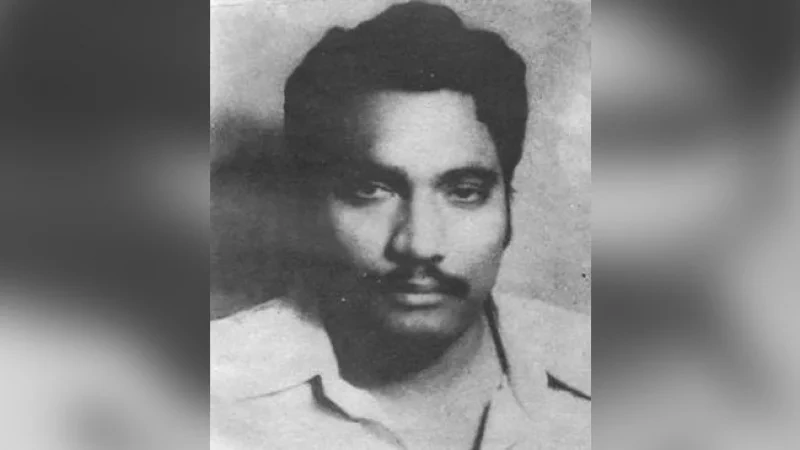
Siraj Sikder
 Bangladesh
Revolutionary•Engineer•Political Activist
Also known as: Sirajul Huq Sikder
Birthday
October 27, 1944
Birth Sign
Sagittarius
Birthplace
Bhedarganj Upazila, Bengal (now Bangladesh)
Age
Died at 30
About
Siraj Sikder was a Bangladeshi revolutionary, engineer, and Marxist-Leninist-Maoist insurgent who founded the Purba Bangla Sarbahara Party (Proletarian Party of East Bengal) in 1968. He is remembered as one of the most uncompromising figures in Bangladesh's radical left, a man who traded a promising engineering career for a life of underground guerrilla organizing.
Sikder's political vision combined Marxism-Leninism with Maoist thought, advocating armed peasant-based revolution to establish a classless society. He fought in the 1971 Liberation War, leading the Purbo Banglar Jatiya Mukti Bahini, and after independence he continued his revolutionary activities against the state. His fiery oratory and ideological purity earned him a devoted following among students and peasants, even as the government hunted him.
His life ended violently on January 2, 1975, in Savar, Dhaka, in what authorities called a shootout but many believe was an extrajudicial execution. He was 30 years old. Today, Sikder is a martyr to leftist groups in Bangladesh, his writings preserved in the Marxists Internet Archive, and his legacy remains a subject of intense debate in the country's political discourse.
Early Life & Background
Siraj Sikder was born on October 27, 1944, in Bhedarganj Upazila, a rural area in the then-Bengal region, now part of Bangladesh. He came of age during the Partition of India in 1947 and the Language Movement of 1952, events that left a deep impression on his developing political consciousness.
He studied engineering at Ahsanullah Engineering College, which later became the Bangladesh University of Engineering and Technology (BUET) in Dhaka. His technical education, however, was soon overshadowed by his passion for revolutionary politics. He immersed himself in leftist student circles, devouring Marxist and Maoist texts and sharpening his skills as a writer and poet.
By the mid-1960s, Sikder had become a fierce advocate of armed struggle, arguing that only a violent peasant-based revolution could achieve a classless society. He was known for his fiery speeches and his willingness to challenge more moderate leftist leaders. His ideological formation was also influenced by the global wave of anti-colonial struggles and the Cultural Revolution in China, which he saw as models for liberation.
The period just before his breakthrough was one of intense underground organizing. He began building a network of like-minded revolutionaries, laying the groundwork for what would become the Purba Bangla Sarbahara Party in 1968. His early life, marked by a combination of engineering discipline and poetic passion, set the stage for his later role as a revolutionary leader.
Career Growth
Sikder's most significant political achievement came in 1968 when he founded the Purba Bangla Sarbahara Party, a clandestine organization committed to overthrowing the state through guerrilla warfare. The party's stated goal was to establish an independent, democratic, peaceful, non-aligned, progressive People's Democratic Republic of East Bengal.
During the Bangladesh Liberation War of 1971, Sikder and his party established the Purbo Banglar Jatiya Mukti Bahini, a regional resistance force that fought alongside other guerrilla groups against Pakistani forces. Historical research indicates that dozens of such regional forces emerged across Bangladesh, with the Sarbahara Party's armed wing being among the most ideologically driven.
After independence, Sikder continued his revolutionary activities, opposing the government of Sheikh Mujibur Rahman. His underground existence meant constant movement and secrecy, but his ideas spread through fiery speeches and written tracts. He remained a thorn in the side of the state until his arrest and killing on January 2, 1975, in Savar, Dhaka.
His death, officially reported as a shootout, is widely believed to have been an extrajudicial execution. Some accounts allege that Sheikh Kamal, son of Sheikh Mujibur Rahman, personally shot Sikder in front of his father. This killing is considered by some historians to be the first extrajudicial killing in independent Bangladesh.
Career Timeline
Public Image & Style
Siraj Sikder's public image is that of an uncompromising revolutionary who rejected parliamentary politics in favour of armed struggle. He is remembered for his fiery oratory and his willingness to sacrifice personal comfort and safety for his convictions.
Media portrayals of Sikder are sharply divided. Leftist and revolutionary circles portray him as a martyr and visionary, while mainstream historical accounts acknowledge his role in the Liberation War but critically examine his post-independence opposition to the state. The circumstances of his death remain a subject of controversy, with ongoing debate about whether it was a legitimate police action or an extrajudicial execution.
While no formal fandom name exists, Sikder is commemorated annually by leftist groups in Bangladesh on his death anniversary (January 2) and birth anniversary (October 27). His writings are studied in leftist political schools, and his memory is kept alive through academic research, commemorative publications, and online communities.
Fame & Fandom (iFAMOUS Rankings)
Siraj Sikder commands a legacy defined not by celebrity worship but by rigid ideological adherence within Bangladesh's leftist circles. His supporters are cadres and activists rather than fans, organizing through the Purba Bangla Sarbahara Party to study his writings and commemorate his martyrdom. Distinct from pop culture phenomena, this movement lacks formal fan names or commercial rituals like birthday billboards. Instead, their interaction manifests in annual wreath-laying ceremonies at his grave in Mohammadpur and the publication of political literature honoring his struggle. The narrative surrounding him is steeped in historical controversy, particularly the contested story of his confrontation with Sheikh Kamal and subsequent alleged torture by Sheikh Mujibur Rahman. While verified events anchor his biography, such as the founding of the "Six Hills" slogan and his death in Savar on January 2, 1975, these elements form a foundational mythology for regional resistance groups rather than viral moments of adoration. There are no documented campaigns where crowds shut down streets in his name, nor any fan-funded projects driving his visibility. Siraj Sikder is currently EVALUATED_UNRANKED according to iFANN's Global Fame Engine, meaning he holds no placement in the published Global Top 1,000 rankings.
Interesting Facts and Legends
Siraj Sikder was an engineer who studied at BUET yet never practiced his trade, choosing instead to dedicate his life to revolutionary organizing. His literary contributions include poetry and political essays translated into English, now preserved in the Marxists Internet Archive. Historians often cite his death as the first extrajudicial killing in independent Bangladesh, with some accounts alleging that Sheikh Kamal personally carried out the execution. Contemporary researchers describe his movement as an overlooked chapter in the nation's history. A persistent legend retold in activist circles claims that after being struck by Sheikh Kamal, Sikder was subsequently tortured by Sheikh Mujibur Rahman himself, though this remains a contested historical narrative. Sikder coined the term "Six Hills," which became the core slogan for his party and symbolized his vision for a classless East Bengal. His life is frequently framed as an "unfinished revolution," a tragedy cut short when he was found dead in Savar at age thirty, leaving behind a legacy that continues to influence Marxist-Leninist-Maoist thought in the region.
Family & Personal Life
Publicly available sources provide minimal information about Siraj Sikder's family and personal life. He was born in Bhedarganj Upazila, but details about his parents and siblings are scarce, as his revolutionary activities kept his personal life deliberately hidden.
He was unmarried at the time of his death, and no spouse or children are documented in historical sources. His life was fully subsumed by his underground existence, which by necessity kept personal details secret.
His legacy has been carried forward by leftist groups and commemorators rather than by family members in the public eye.
Notable Connections
Siraj Sikder is closely associated with Sheikh Mujibur Rahman, the founding leader of Bangladesh whose government he opposed and under whose administration he was killed. Some accounts also link his death to Sheikh Kamal, Mujibur Rahman's son, who allegedly shot Sikder personally. Historian and freedom fighter Mohiuddin Ahmed has written extensively on the Sarbahara Party and Sikder's movement, providing key scholarly analysis.
Relationships & Dating History
Publicly available sources provide no documented romantic relationships, marriages, or children for Siraj Sikder. His personal life was subsumed by his underground revolutionary existence, which by necessity kept personal details secret. Given the clandestine nature of his work, any romantic relationships would have been kept deliberately private. He was unmarried at the time of his death.
Death & Aftermath
Died
January 2, 1975 (aged 30)
Death Place
Savar, Dhaka
Cause of Death
Reported extrajudicial killing by state forces
Wreaths were placed at the Mohammadpur graveyard in Dhaka on January 2, 2026, led by Hasan Fakri, marking another year of remembrance. Tributes have consistently honored Siraj Sikder as a valiant freedom fighter and an uncompromising voice against injustice within leftist circles. In January 2025, activists protested the removal of graffiti depicting him, underscoring his enduring status as a symbol of resistance. Sikder was found dead in Savar, Dhaka, on January 2, 1975, at the age of thirty. While specific medical reports or autopsy records establishing the precise physiological cause have never been made public in accessible official archives, contemporary accounts describe him as having been killed by state security forces.
Initial narratives implicated the Mukti Bahini or specific military factions, while others suggested involvement by intelligence agencies acting without judicial warrant. Some accounts allege that Sheikh Kamal personally shot Sikder in front of his father, though this narrative is widely regarded as an unconfirmed account that has never been officially verified. The funeral was held shortly after his death, likely attended by members of his party and close comrades given the clandestine nature of his activities. No major public ceremony involving national officials was reported due to the sensitive political climate surrounding his execution. This lack of legal resolution has fueled decades of activism and historical debate regarding the unfinished revolution of the Sarbahara Party.
Posthumously, Sikder has received significant cultural attention, including the publication of the book Paharer Laal Akkhyan in late 2024. Researchers like Mohiuddin Ahmed have analyzed his contributions in works such as Lal Sontrash, while his writings are archived at the Marxists Internet Archive. His legacy is maintained through the continued activity of groups like the Purba Banglar Jatiya Mukti Bahini.
Net Worth (Estate Value)
$0
iFANN Editorial Team estimate
Per iFANN's editorial analysis, Siraj Sikder's net worth is $0. As a revolutionary who lived underground, he possessed no personal assets or commercial wealth at the time of his death. He was not a commercial figure, and no financial records exist for him in any source. His estate consists entirely of intellectual property, including political writings and ideological documents preserved in academic repositories. These materials generate no commercial revenue, and there are no estate management entities, licensing deals, or merchandise associated with his name. His legacy remains purely ideological rather than financial, rendering any search results claiming a specific monetary value for him spurious.
Awards & Accolades
View 1 records, honours and achievementsKnown For
Purba Bangla Sarbahara Party
1968 · Founder and leader
Purbo Banglar Jatiya Mukti Bahini
1971 · Leader
Revolutionary writings
· Author
Keywords
Sources
Quick Facts
- Profession
- Revolutionary, Engineer, Political Activist
- Born
- October 27, 1944
- Birthplace
- Bhedarganj Upazila, Bengal (now Bangladesh)
- Died
- January 2, 1975
- Death Place
- Savar, Dhaka, Bangladesh
- Gender
- Male
- Birth Sign
- Sagittarius
- Education
- Ahsanullah Engineering College (now BUET)
Personal Details
- Full Name
- Sirajul Huq Sikder
- Education
- Ahsanullah Engineering College (now BUET), Dhaka
Frequently Asked Questions
Who was Siraj Sikder?
How did Siraj Sikder die?
What was the Purba Bangla Sarbahara Party?
Was Siraj Sikder a freedom fighter?
What is Siraj Sikder's legacy in Bangladesh?
Join the community
fans discussing