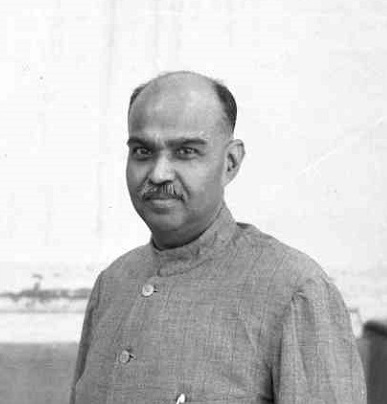
Shyama Prasad Mukherjee
 India
Indiapolitician•university teacher•barrister
Birthday
+1901-07-06
Birth Sign
Cancer
Birthplace
Kolkata
Age
Died at 51
About
Syama Prasad Mookerjee was a prominent Indian barrister, educationalist, and politician whose influence shaped the country's political landscape in the decades surrounding independence. Born on 6 July 1901 in Kolkata, he came from a distinguished family; his father, Sir Ashutosh Mukherjee, was a revered judge and educator. Mookerjee himself pursued law, becoming a barrister, and later served as a professor at the University of Calcutta, where he also held the vice-chancellorship. His political career began in the 1940s when he entered the Bengal cabinet as Finance Minister under Premier A. K. Fazlul Huq, a role he held from 1941 to 1942. Mookerjee's political journey was marked by strong ideological convictions. He opposed the Quit India Movement, believing that India's freedom should come through constitutional means rather than mass civil disobedience. After independence, he joined Prime Minister Jawaharlal Nehru's cabinet as Minister for Industry and Supply, despite his earlier differences with the Congress. However, his tenure was short-lived. He resigned in 1950 to protest the Liaquat-Nehru Pact, which he felt conceded too much to Pakistan. In 1951, with support from the Rashtriya Swayamsevak Sangh, he founded the Bharatiya Jana Sangh, a right-wing political party that would later evolve into the Bharatiya Janata Party (BJP). He also served as president of the Akhil Bharatiya Hindu Mahasabha from 1943 to 1946. His life ended under tragic circumstances. In 1953, Mookerjee attempted to enter Jammu and Kashmir to protest the state's special status and the requirement of permits for Indian citizens. He was arrested by the state police on 23 June 1953. While in custody, he suffered a heart attack and was taken to a hospital, where he died the next day. His death remains a point of political debate, with many viewing him as a martyr for the cause of national integration. Today, Mookerjee is honored by the BJP as its ideological founder, and his legacy continues to influence Indian politics. His story is one of conviction, controversy, and a deep commitment to his vision of India.
Fame & Fandom
The devotion surrounding Shyama Prasad Mukherjee stands apart from modern celebrity culture, rooted not in pop-culture fandoms but in the rigid organizational structures of political parties and ideological movements. His supporters do not gather as a fanbase with a moniker; instead, they operate through the Bharatiya Jana Sangh and its successor, the BJP, treating his memory as a foundational pillar for national integration. Rituals are strictly political commemorations, such as the annual Tiranga Yatra or state-sponsored curriculum updates, rather than the grassroots campaigns seen among entertainers. While no formal fandom name exists to unite civilians under a single banner, the reverence is institutionalized through student wings like the ABVP and cultural groups staging plays about his life. This unique dynamic transforms his legacy into a matter of civic duty and historical myth, particularly regarding his death in detention, which serves as a martyrdom narrative for his followers. Despite this enduring influence, the iFANN Global Fame Engine has evaluated his standing without assigning him a position in the published rankings. Shyama Prasad Mukherjee is currently unranked in the Global Top 1,000 and holds no placement on any Top-100 scope list, reflecting his status as a historical statesman rather than a contemporary global celebrity measured by current consumption signals.
Interesting Facts and Legends
Born into a distinguished family in Kolkata, Syama Prasad Mookerjee was the son of Sir Ashutosh Mukherjee, a revered judge and educator. Before entering politics, he served as a professor and vice-chancellor at the University of Calcutta, establishing himself as a formidable intellectual force. His political career began in the Bengal cabinet, where he served as Finance Minister from 1941 to 1942 before founding the Bharatiya Jana Sangh in 1951. A defining moment in his legacy involves his final journey to Kashmir in 1953, where he entered the region without a permit to protest Article 370. He died under mysterious circumstances while detained in Srinagar on June 23, 1953, an event that evolved into a powerful story of martyrdom for his political heirs. Supporters often recount this incident as the ultimate sacrifice for national unity, fueling decades of folklore surrounding his death. In recent years, his physical legacy has faced challenges, such as the vandalism of his statue in Kolkata, which sparked strong condemnation from his political base who view such acts as attacks on his enduring spirit.
Death & Aftermath
Died
+1953-06-24 (aged 51)
Death Place
Srinagar, Jammu and Kashmir, India
Cause of Death
Heart attack (myocardial infarction)
Shyama Prasad Mookerjee entered Srinagar on May 15, 1953, to protest the standstill agreement regarding Kashmir, only to be detained shortly after his arrival. He spent forty-five days in custody at what was then the Civil Hospital, now the Sher-e-Kashmir Institute of Medical Sciences, where he suffered from severe chest pain that went largely unaddressed by the prison administration. In the early hours of June 24, 1953, the politician passed away at the age of fifty-one, with authorities reporting a heart attack as the official cause based on a hospital statement issued at the time. While the government maintained the death resulted from natural causes exacerbated by stress, family members and the newly formed Bharatiya Jana Sangh rejected this narrative, alleging foul play and political assassination without ever securing a judicial ruling to overturn the initial findings.
The lack of transparency regarding his medical history left the exact nature of his passing as a subject of enduring historical debate rather than legal resolution. Public reaction erupted into widespread outrage across India, with thousands defying curfews to attend his funeral in Srinagar on June 24, 1953. His body was subsequently flown to Calcutta for cremation at the Maniktala Crematorium, drawing millions of mourners who lined the streets in what became one of the largest post-independence processions. The event served as a de facto demonstration of support for his cause, galvanizing the Hindu nationalist movement and cementing his status as a martyr for national integration.
In the decades following his death, his legacy has been honored through the establishment of the Syama Prasad Mookerjee Foundation and institutions bearing his name, including Shyama Prasad Mukherjee University in Ranchi. Political leaders have frequently invoked his memory to discuss geopolitical realities, while his family continues to uphold the stance that he was a victim of conspiracy.
Awards & Accolades
Keywords
Quick Facts
- Profession
- politician, university teacher, barrister
- Born
- +1901-07-06
- Birthplace
- Kolkata
- Died
- +1953-06-24
- Death Place
- Jammu and Kashmir
- Gender
- Male
- Birth Sign
- Cancer
Join the community
fans discussing