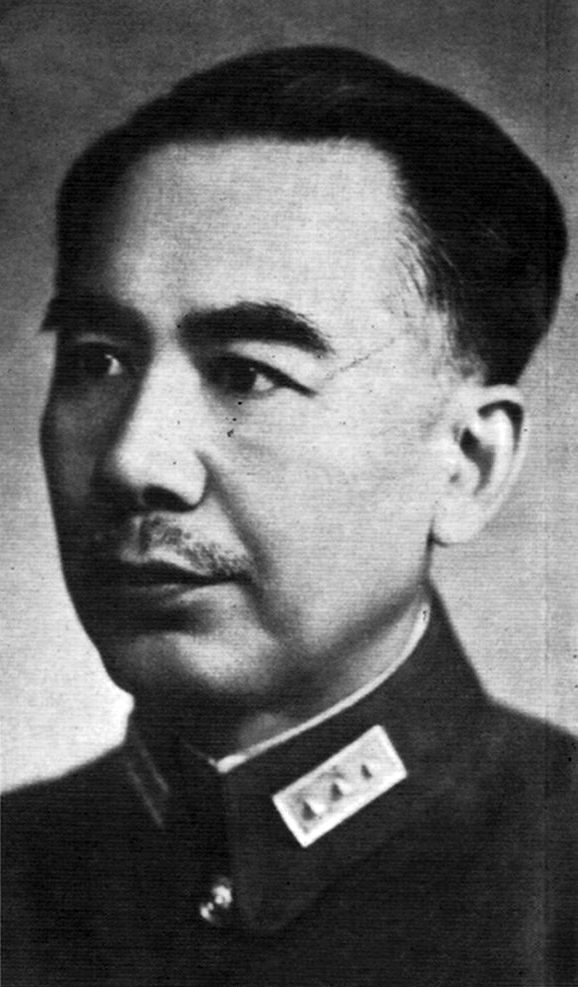
Sheng Shicai
 China
ChinaAlso known as: Sheng Shih-ts'ai
Birthday
December 3, 1895
Birth Sign
Sagittarius
Birthplace
Kaiyuan, Liaoning, Manchuria
Age
Died at 74
About
Sheng Shicai was a Chinese warlord who ruled the vast frontier province of Xinjiang from 1933 to 1944. Born in Manchuria in 1895, he is remembered as one of the most controversial figures of Republican China, a man who shifted alliances between the Soviet Union, the Chinese Communist Party, and the Kuomintang with ruthless pragmatism.
His eleven-year governorship was marked by authoritarian control, brutal suppression of dissent, and a complex relationship with Moscow that ultimately defined his rule. Sheng's Marxist leanings, unusual for a warlord, set him apart from his contemporaries and shaped his political maneuvering.
Today, historians and scholars continue to examine his legacy, particularly his impact on the Uyghur population and the region's turbulent history. His story remains a cautionary tale about power, ideology, and survival in a volatile era.
Early Life & Background
Sheng Shicai was born on December 3, 1895, in Kaiyuan, a city in Liaoning Province, Manchuria. As a Han Chinese growing up in the northeast, he witnessed the region's transformation under Japanese and Russian influence. He traveled to Tokyo to study political economy, where he encountered Marxist literature that would shape his worldview.
After Japan, Sheng attended the Imperial Japanese Army Academy, gaining military training that would later prove crucial. Returning to China, he joined the anti-imperialist May Fourth Movement in 1919, a pivotal moment in modern Chinese history. In 1927, he participated in the Northern Expedition, the Kuomintang's campaign to unify China under its rule.
These experiences forged a pragmatic and ideologically flexible leader. By the early 1930s, Sheng had made his way to the remote northwest, where chaos and rebellion created an opportunity for a man with military skills and political ambition.
Career Growth
Sheng Shicai seized power in Xinjiang on April 12, 1933, during a coup amid the chaos of warlord conflicts and Muslim revolts. He quickly consolidated control, positioning himself as the province's governor. His survival depended on a delicate balance of alliances, most notably with the Soviet Union, which provided military and political support.
During his rule, Sheng implemented authoritarian policies, suppressing political opponents and brutally cracking down on the Uyghur population. One infamous case was the burning to death of Uyghur teacher Memtili Tewpiq, a target of Sheng and his Soviet allies. The 1931–34 Muslim revolt in Kashgar, which laid the groundwork for the first East Turkistan Republic, occurred during his consolidation of power.
Sheng's relationship with the Chinese Communist Party and the Kuomintang shifted with the political winds. He cooperated with the CCP at times, even allowing communist organizers into Xinjiang, but later turned against them. In 1944, his rule ended on August 29, and he relocated to Taiwan, where he lived until his death in 1970.
Career Timeline
Public Image & Style
Sheng Shicai is remembered primarily as a ruthless warlord whose rule over Xinjiang was marked by authoritarian control and shifting alliances. Historical assessments emphasize his survival skills as a regional military leader during the turbulent 1931–34 period. His Marxist background and pro-Soviet tendencies set him apart from other warlords. Contemporary coverage, particularly in sources focused on Uyghur history, portrays him critically as a repressive figure whose policies had lasting negative consequences for the region's indigenous populations.
Fame & Fandom (iFAMOUS Rankings)
Sheng Shicai commands a niche but intense interest among historians and students of Republican China, though he lacks the organized adoration typical of modern celebrities. There is no formal fandom name for this figure; instead, his legacy is kept alive through academic archives, encyclopedia entries, and casual historical discussions on platforms like Reddit where users dissect his notorious political pivots. The narrative that defines his posthumous reputation centers on his ruthless pragmatism: a Manchurian-born warlord who ruled Xinjiang by shifting alliances between the Soviet Union, the Chinese Communist Party, and the Kuomintang with chilling efficiency. Fans of history often retell the story of his betrayal of each ally in turn, a saga grounded in verified records rather than folklore. Other recurring themes include the disputed murder of his own brother, Sheng Shiqi, and the brutal suppression of Uyghur resistance movements, such as the case of Memtili Tewpiq, which remains a somber part of the cultural memory surrounding his rule. These stories function less as fan rituals and more as cautionary tales about the volatility of warlord politics. While there are no fan clubs, birthday billboards, or charity drives dedicated to him, his name appears in over twenty language editions of Wikipedia, reflecting a global curiosity about his complex role during World War II. The Marxists Internet Archive also maintains a collection of his writings, serving as a primary hub for those seeking deeper engagement with his ideological shifts. Despite this enduring scholarly attention, iFANN's Global Fame Engine has evaluated this person, but they do not currently hold a placement in the published rankings (Global Top 1,000 or a Top-100 scope list).
Interesting Facts and Legends
Sheng Shicai was a self-declared Marxist who studied political economy in Tokyo before attending the Imperial Japanese Army Academy. He joined the May Fourth Movement in 1919, marking an early entry into revolutionary politics. His rule over Xinjiang lasted from 1933 to 1944, coinciding with the Second Sino-Japanese War and World War II. The Marxists Internet Archive maintains an archive of his writings, preserving his unique ideological documents. His name appears in over twenty language editions of Wikipedia, including Arabic, German, Japanese, and Russian. Beyond these established facts, legends of his reign persist in historical circles. One widely retold story concerns the murder of his own brother, Sheng Shiqi, a brigade commander whose death remains a matter of dispute regarding who ordered the killing. Another dark chapter involves the violent suppression of Uyghur dissent, specifically the burning of teacher Memtili Tewpiq, an event that underscores the brutality of his alliance with Soviet forces. Historians also frequently cite his "Two-Faced" legacy, a modern characterization applied retroactively to his pattern of switching allegiances so rapidly that it became synonymous with political duplicity in the region.
Family & Personal Life
Historical records provide little information about Sheng Shicai's family life. He was a Han Chinese born in Manchuria, but details about his parents, siblings, or any spouse and children are not documented in available sources. His personal life remained largely private, overshadowed by his political and military career.
Notable Connections
Sheng Shicai's rule involved interactions with Soviet officials, Kuomintang representatives, and local Xinjiang leaders. However, specific individuals are not named in the available sources. His alliances shifted between the Soviet Union, the Chinese Communist Party, and the Kuomintang, reflecting his pragmatic approach to power.
Relationships & Dating History
Historical records provide limited information about Sheng Shicai's personal and romantic life. As a warlord and political leader, his personal relationships were not widely documented or publicized. No marriages, partnerships, or children are mentioned in the available sources, reflecting the private nature of his life and the era in which he lived.
Death & Aftermath
Died
July 13, 1970 (aged 74)
Death Place
Unknown
Cause of Death
Unknown
Sheng Shicai spent his final years in quiet obscurity on the island of Taiwan, far removed from the volatile frontier politics that had defined his rule over Xinjiang. The warlord passed away on July 13, 1970, at the age of seventy-four, marking the end of a life characterized by shifting alliances and ruthless pragmatism. No official medical report or family statement ever detailed the specific cause of his passing, leaving the circumstances of his final days shrouded in silence. Historical discussions following his passing focused almost exclusively on his violent actions during the 1930s rather than any personal commemoration.
Nothing regarding these legal matters was made public or reported in available sources. Scholars continue to examine his complex relationship with Moscow and his authoritarian governance, analyzing his historical impact through the lens of his rule in Xinjiang.
The search results do not mention any posthumous releases, films, books, awards, honours, dedications, foundations, or scholarships created in his name. His estate was not managed through public channels, and no family statements emerged to clarify the disposition of his affairs, leaving the final arrangements unrecorded in the historical archives.
Net Worth (Estate Value)
As a historical figure who died in 1970, no contemporary net worth estimates exist for Sheng Shicai. The available sources do not provide information about his personal wealth, estate value, or posthumous earnings. Unlike modern celebrities, his financial affairs were not publicly documented, and no estate management information is available.
Awards & Accolades
Known For
Rule of Xinjiang
1933-1944 · Governor
Keywords
Sources
Quick Facts
- Profession
- politician
- Born
- December 3, 1895
- Birthplace
- Kaiyuan, Liaoning, Manchuria
- Died
- July 13, 1970
- Death Place
- Tri-Service General Hospital, Taiwan
- Gender
- Male
- Birth Sign
- Sagittarius
Personal Details
- Children
- Education
- Imperial Japanese Army Academy; studied political economy in Tokyo
Frequently Asked Questions
Who was Sheng Shicai?
What did Sheng Shicai do in Xinjiang?
How did Sheng Shicai die?
Was Sheng Shicai a communist?
What was Sheng Shicai's relationship with the Soviet Union?
Join the community
fans discussing