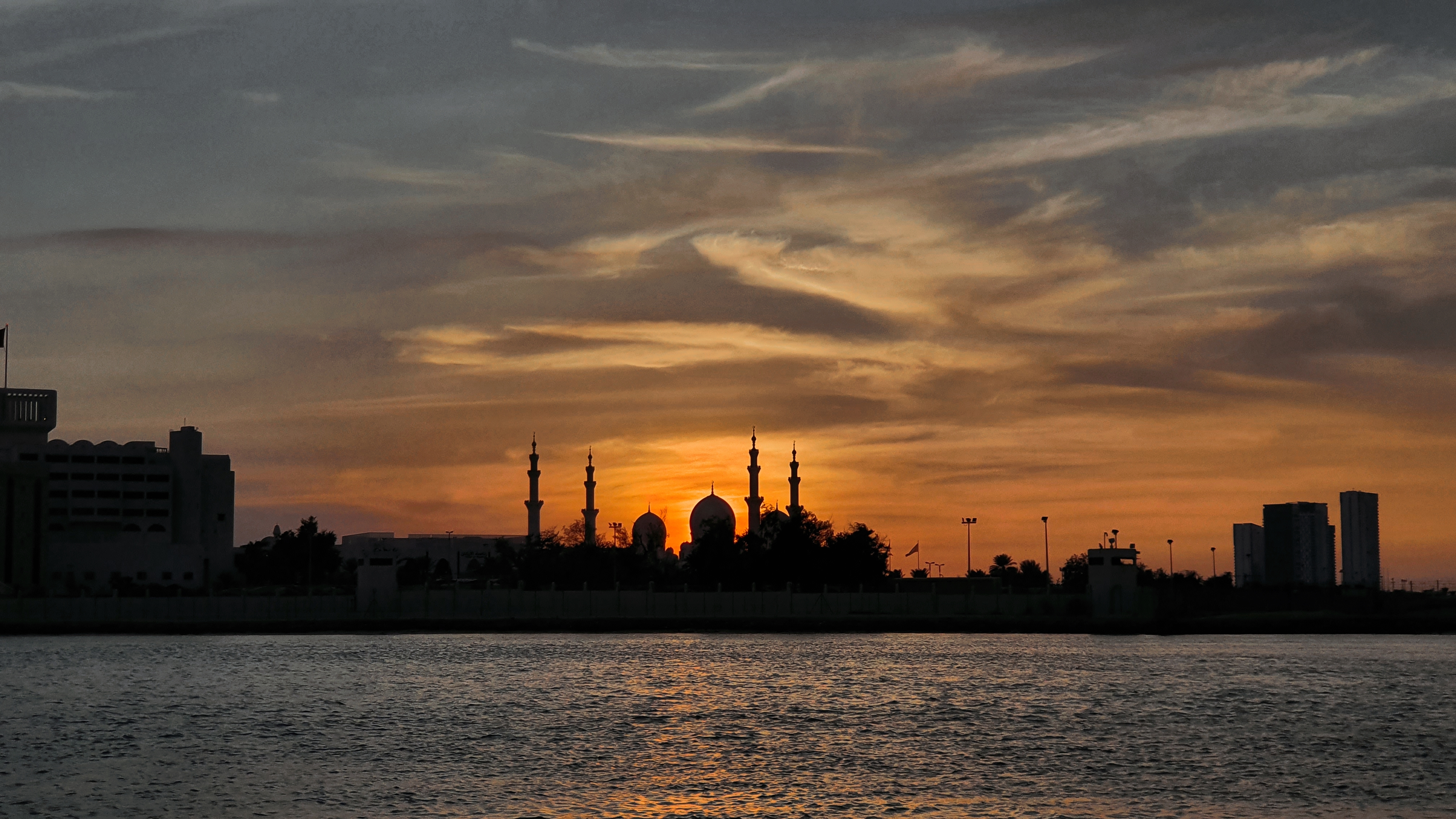
Sheikh Zayed Grand Mosque
 United Arab Emirates
"A landmark of Islamic architecture and cultural exchange in Abu Dhabi"
About
The Sheikh Zayed Grand Mosque stands as the largest religious structure in the United Arab Emirates, serving as a primary venue for daily prayers while functioning as a major cultural institution. Opened to the public in late 2007, the site welcomes millions of visitors annually who come to view its distinctive white marble architecture and learn about Islamic traditions. Unlike many religious sites that restrict access, this complex actively invites non-Muslims to explore its grounds, fostering interfaith dialogue through guided tours and educational programs.
Construction on the project began in 1994 on a former sand quarry site and took thirteen years to complete. The design synthesizes Mamluk, Ottoman, Fatimid, and Andalusian architectural styles into a unified whole. The complex spans roughly 290 by 420 meters and features 82 domes clad in white marble sourced from Greece and North Macedonia. Four minarets rise 107 meters above the courtyard, each reflecting different historical influences. The facility can accommodate over 40,000 worshippers simultaneously.
The mosque serves as the final resting place for Sheikh Zayed bin Sultan Al Nahyan, the founding father of the UAE, who passed away in 2004 before the building's completion. His vision guided the entire project, which employed artisans from Italy, Germany, Morocco, India, and Iran. Notable features include the world's largest hand-knotted carpet, measuring 5,627 square meters, and gold-plated chandeliers fabricated in Germany. Recent developments include the opening of the Light and Peace Museum in 2025 and the introduction of nominal entry fees in September 2026 to support sustainability while keeping prayer access free.
Mission
The organization operates to promote tolerance, peaceful coexistence, and the authentic teachings of Islam while preserving the architectural heritage of the site. It functions as a hub for cultural education, offering guided tours and exhibitions to visitors of all backgrounds. The goal is to foster mutual understanding and respect through direct engagement with Islamic art and tradition.
History
Conceptualized in the 1980s by Sheikh Zayed bin Sultan Al Nahyan, the mosque was designed to reflect the beauty of Islamic architecture and serve as a national symbol. Construction commenced in 1994 on a former sand quarry, bringing together engineers and craftsmen from around the globe. The project utilized materials from multiple countries, including Italian marble workers, German lighting designers, and Moroccan artisans.
The carpet, designed by Iranian artist Ali Khaliqi, required two years to weave using wool from New Zealand and cotton from Iran. It covers 5,627 square meters and remains the largest hand-knotted carpet in the world. The four minarets stand 107 meters tall, drawing inspiration from various Islamic architectural traditions. After 13 years of work, the site officially opened on December 20, 2007.
Sheikh Zayed passed away in 2004 and lies buried within the mosque grounds. Since opening, the site has attracted significant attention, welcoming over 5 million visitors in 2019 alone. In 2025, the Light and Peace Museum opened to expand the cultural offerings. A shift in operational policy occurred in September 2026 when the Centre introduced nominal entry fees for tourists and residents to ensure long-term sustainability, though access for daily prayers remains free.
Subdivisions
Main Prayer Hall
The primary worship space capable of holding over 7,000 worshippers, featuring the massive hand-knotted carpet and one of the world's largest chandeliers.
Visitor Centre
A facility providing guided tours, exhibitions, and cultural programs for tourists and residents.
Light and Peace Museum
Opened in 2025 at the Visitor Centre, this museum explores themes of light, peace, and Islamic art.
Library
A research library containing collections focused on Islamic history, art, and culture.
Notable People
Sheikh Zayed bin Sultan Al Nahyan
Founder and Interred Figure · Vision conceived 1980s; Buried 2004
Commissioned the mosque as a symbol of unity; his burial site anchors the complex.
Milestones
1994
Construction begins on the former sand quarry site
2004
Sheikh Zayed passes away and is buried at the site
2007
Official opening on December 20 following 13 years of construction
2025
Light and Peace Museum opens at the Visitor Centre
2026
Introduction of entry fees for tourists and residents; record-breaking Ramadan season with 3.22 million guests
Departments
Sources
Organization Info
- Founded
- 2007-12-20
- Headquarters
- Abu Dhabi, United Arab Emirates
- Country
- United Arab Emirates
- Parent
- Sheikh Zayed Grand Mosque Centre
- Type
- Religious
- Capacity
- 40,000 worshippers
- Area
- 290m x 420m
- Domes
- 82
- Minarets
- 4
- Carpet size
- 5,627 sq m
Official Website
www.szgmc.gov.ae/
Join the community
fans discussing