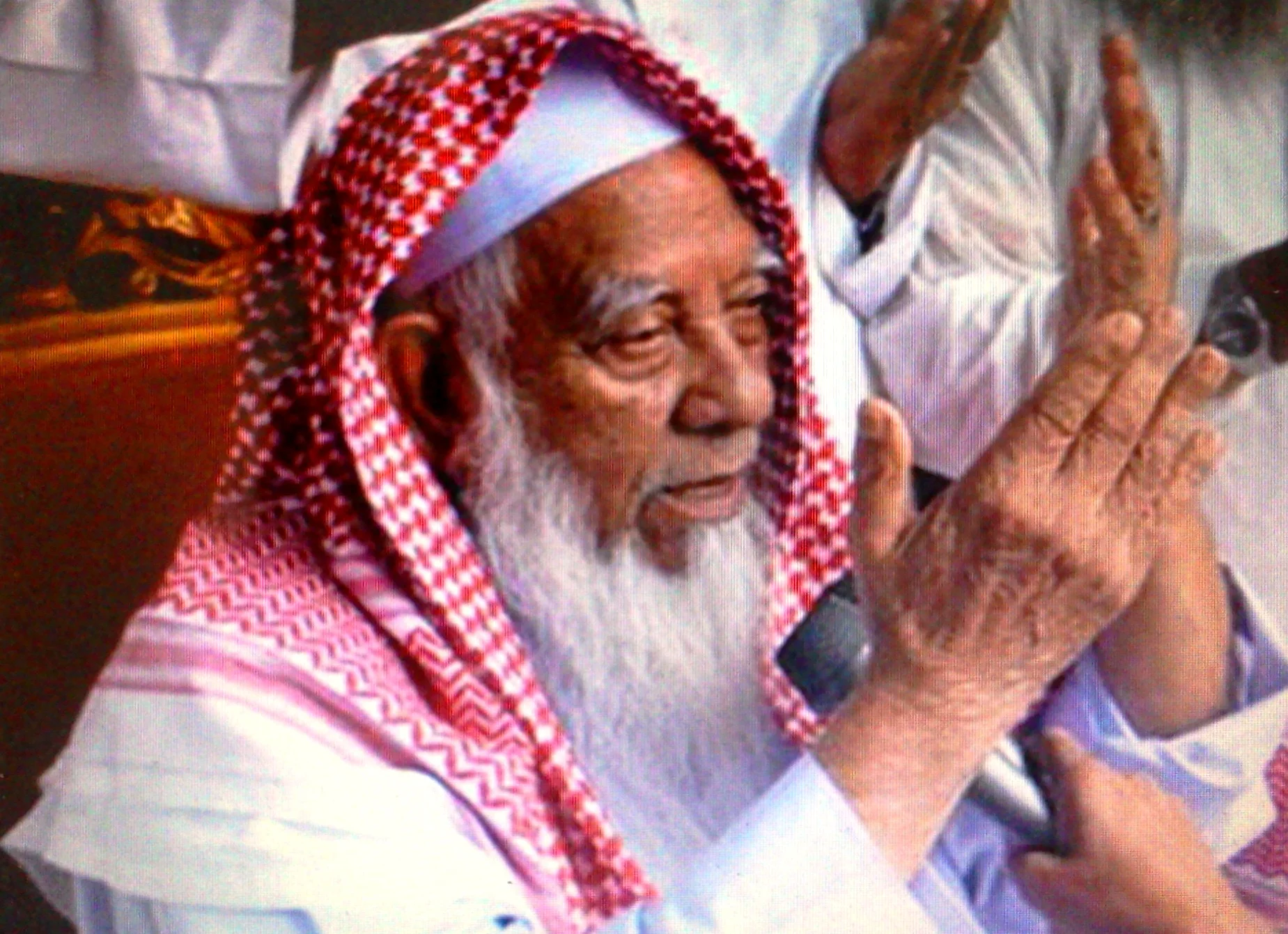
Shah Ahmad Shafi
 Bangladesh
Islamic scholar•Qur'anic exegete•muhaddith
Also known as: Allama Shah Ahmad Shafi, Shah Ahmed Shafi
Birthday
April 5, 1930
Birth Sign
Aries
Birthplace
Rangunia Upazila, Chittagong, Bangladesh
Age
Died at 90
About
Shah Ahmad Shafi was a Bangladeshi Islamic scholar and the founding chief of Hefazat-e-Islam Bangladesh, a conservative Islamic movement that became a major force in the country's religious politics. He also served as the rector of Al-Jamiatul Ahlia Darul Ulum Moinul Islam Hathazari, one of the largest and most prestigious Qawmi madrasas in Bangladesh.
Known for his deep scholarship in hadith and Qur'anic exegesis, Shafi was revered by thousands of students and followers within the Qawmi madrasa community. His leadership of Hefazat-e-Islam, particularly during the mass demonstrations of 2013, put him at the center of national debates over religion and state.
After a long life devoted to Islamic education and activism, he passed away on September 18, 2020, at a hospital in Dhaka, leaving behind a complex legacy that continues to influence Bangladesh's religious landscape.
Early Life & Background
Shah Ahmad Shafi was born in Rangunia Upazila, Chittagong, then part of British India. The exact year of his birth is disputed, with some sources saying 1916 and others 1930, but official records from his madrasa list April 5, 1930. He grew up in a devout Muslim family and received his early education at a local maktab before enrolling at the prestigious Al-Jamiatul Ahlia Darul Ulum Moinul Islam Hathazari.
At Hathazari, he excelled in his studies and developed a passion for the religious sciences. He then traveled to India to attend Darul Uloom Deoband, the renowned seminary where he specialized in hadith and tafsir, earning advanced degrees. His time at Deoband shaped his scholarly outlook, grounding him in the Deobandi tradition that emphasizes strict adherence to Islamic texts.
Returning to Bangladesh, Shafi began teaching at Hathazari Madrasah, gradually building a reputation as a meticulous and dedicated educator. He rose through the academic ranks, eventually becoming a senior instructor and administrator, setting the stage for his later role as rector.
Career Growth
Shafi's career took a decisive turn when he became the rector of Hathazari Madrasah, a position he held for decades. Under his leadership, the institution expanded its curriculum and influence, becoming a model for Qawmi madrasas across the country. He also served as chairman of the Bangladesh Qawmi Madrasah Education Board, overseeing the academic standards of thousands of affiliated institutions.
In 2010, he founded Hefazat-e-Islam Bangladesh, an umbrella organization of conservative Islamic groups. The movement gained national prominence in 2013 when it organized massive protests in Dhaka, demanding constitutional amendments to protect Islamic values. The demonstrations drew international attention, and The Guardian noted the government's wariness of the movement's growing strength.
Shafi led Hefazat-e-Islam until his death in 2020, navigating a complex political landscape. He remained a polarizing figure, admired by his followers for his unwavering stance on religious principles and criticized by secularists for his hardline positions. His final act was resigning from his post at Hathazari Madrasah just before his passing, a decision that sparked speculation but was ultimately seen as a personal choice.
Career Timeline
Public Image & Style
Shah Ahmad Shafi cut a distinctive figure in Bangladesh's public life. He was often seen in traditional white robes and a cap, projecting an image of ascetic piety. His speeches, delivered in a calm but firm tone, resonated deeply with his followers, who saw him as a guardian of Islamic values. To critics, he represented a reactionary force, and his movement was sometimes accused of stoking religious division.
His followers, primarily from the Qawmi madrasa community, regarded him with near-saintly reverence. They saw his leadership of Hefazat-e-Islam as a necessary defense of faith in a rapidly changing society. His death did not diminish his influence; rather, it solidified his status as a martyr-like figure for his movement, with his funeral drawing a massive outpouring of grief.
Fame & Fandom
Shah Ahmad Shafi commanded a following defined not by pop-culture adoration but by deep religious devotion and political alignment within Bangladesh. His supporters, primarily members of the Hefazat-e-Islam movement and the broader conservative Muslim community, viewed him as a guardian of faith rather than a celebrity to be idolized in the traditional sense. There is no formal fandom name attached to his legacy, as his influence stemmed from his role as a scholar and leader rather than entertainment or commercial appeal. The massive gatherings that marked his life, particularly the funeral procession where hundreds of thousands paid their respects, were acts of solemn religious solidarity and political unity rather than fan celebrations. While he did not have a fanbase engaging in chart pushes or birthday rituals, his status as a central figure in national debates over religion and state cemented a unique form of public reverence that transcended typical fame metrics. Despite this profound impact on millions, the iFANN Global Fame Engine has evaluated Shah Ahmad Shafi's current standing and determined that he does not hold a placement in the published rankings, including the Global Top 1,000 or any Top-100 scope list. This evaluation reflects his historical stature as a religious authority rather than a contemporary global celebrity with active digital consumption signals.
Interesting Facts and Legends
The exact year of Shah Ahmad Shafi's birth remains a subject of scholarly debate, with records varying between 1916 and 1930; associates claimed he was 103 at the time of his passing, suggesting a birth year of 1916. In a move that surprised many observers, he resigned from his position as Director General of Hathazari Madrasah just days before his death, though senior teachers later confirmed he passed from natural causes. His funeral became one of the largest in Bangladesh's history, drawing tens of thousands of mourners to the campus despite ongoing COVID-19 restrictions. A story often retold involves the sheer scale of the turnout for his namaz-e-janaza, where hundreds of thousands gathered to honor the man who had called the Hathazari Madrasa campus home for most of his life. Even years after his passing, his legacy is marked by such historic moments of collective mourning, with high-profile figures visiting his grave to offer prayers decades later. He lived a notably simple life, often wearing traditional Bengali attire and maintaining modesty despite his immense influence over the Qawmi madrasa community.
Family & Personal Life
Details about Shafi's family remain largely private, as he kept his personal life out of the public eye. He was married and had children, including a son who has been mentioned in succession discussions within Hefazat-e-Islam, though names are not widely documented. His family lived within the Hathazari Madrasah compound, where he spent most of his adult life. Despite his public prominence, he rarely spoke about his family, preferring to focus on his scholarly and religious duties.
Notable Connections
Shafi worked closely with senior figures in Hefazat-e-Islam, including Mufti Faizullah, who served as the organization's central joint secretary general. He also had relationships with leaders of Islami Oikya Jote, who confirmed his death. Within the madrasa community, he was a mentor to countless scholars and teachers, many of whom went on to lead their own institutions.
Relationships & Dating History
Shah Ahmad Shafi was married, as is customary for Islamic scholars of his standing, but he kept his family life intensely private. No details about his wife's name or their wedding date have been made public. He had children, and his son has been mentioned in discussions about the succession of Hefazat-e-Islam's leadership, though his name is not widely reported. At the time of his death, he was married, and his family remained within the Hathazari Madrasah community.
- Married? - 2020Married life remained private; wife's name not publicly documented.
Death & Aftermath
Died
September 18, 2020 (aged 90)
Death Place
Dhaka, Bangladesh
Cause of Death
Age-related complications
The death of Shah Ahmad Shafi was confirmed by Mufti Faizullah, the central joint secretary general of Hefazat-e-Islam, who announced that the revered scholar had passed away at a hospital in Dhaka. This news came on September 18, 2020, following his transfer from Hathazari to the capital for specialized medical care, where he had been admitted to the Intensive Care Unit after resigning from his directorship at the madrasa due to health reasons. Official accounts attributed the passing to age-related complications, with reports noting he was 103 years old, while unverified online narratives suggesting foul play regarding an oxygen tube were never substantiated by police or medical authorities.
The massive public response saw tens of thousands of people gathering for his funeral prayer, which took place peacefully the following day at the mosque complex of Al Jameyatul Ahlia Darul Ulum Moinul Islam in Hathazari before his burial in the graveyard fronting the Baitul Atiq Jame Mosque within the same compound. Tributes poured in from the highest levels, including President M Abdul Hamid expressing profound sorrow. Years later, the site remained a place of remembrance, highlighted when Prime Minister Tarique Rahman visited the grave on August 9, 2026, to offer prayers.
Net Worth (Estate Value)
$1 Million
iFANN Editorial Team estimate
As a religious scholar and madrasa administrator, Shah Ahmad Shafi did not accumulate personal wealth in the conventional sense. His income derived from his positions at Hathazari Madrasah and Hefazat-e-Islam, which were funded through donations and endowments rather than commercial ventures. He lived modestly, and no significant personal assets have been reported outside of his institutional roles. Per iFANN's editorial analysis, his personal wealth is estimated at $1 Million as of 2026, primarily held in the form of inherited property and modest savings. His legacy, however, lies in the institutions he built, which continue to operate and influence Islamic education in Bangladesh.
Awards & Accolades
Known For
Hefazat-e-Islam Bangladesh
2010 · Founder and Chief
Al-Jamiatul Ahlia Darul Ulum Moinul Islam Hathazari
1980 · Rector
Bangladesh Qawmi Madrasah Education Board
1990 · Chairman
Keywords
Sources
Quick Facts
- Profession
- Islamic scholar, Qur'anic exegete, muhaddith
- Born
- April 5, 1930 (disputed)
- Birthplace
- Rangunia Upazila, Chittagong
- Died
- September 18, 2020
- Death Place
- Dhaka, Bangladesh
- Gender
- Male
Personal Details
- Education
- Al-Jamiatul Ahlia Darul Ulum Moinul Islam Hathazari; Darul Uloom Deoband
Frequently Asked Questions
How old was Shah Ahmad Shafi when he died?
What is Shah Ahmad Shafi's net worth?
Did Shah Ahmad Shafi have children?
What was Shah Ahmad Shafi's role in Hefazat-e-Islam?
Where is Shah Ahmad Shafi buried?
Social Media
Similar People
Join the community
fans discussing