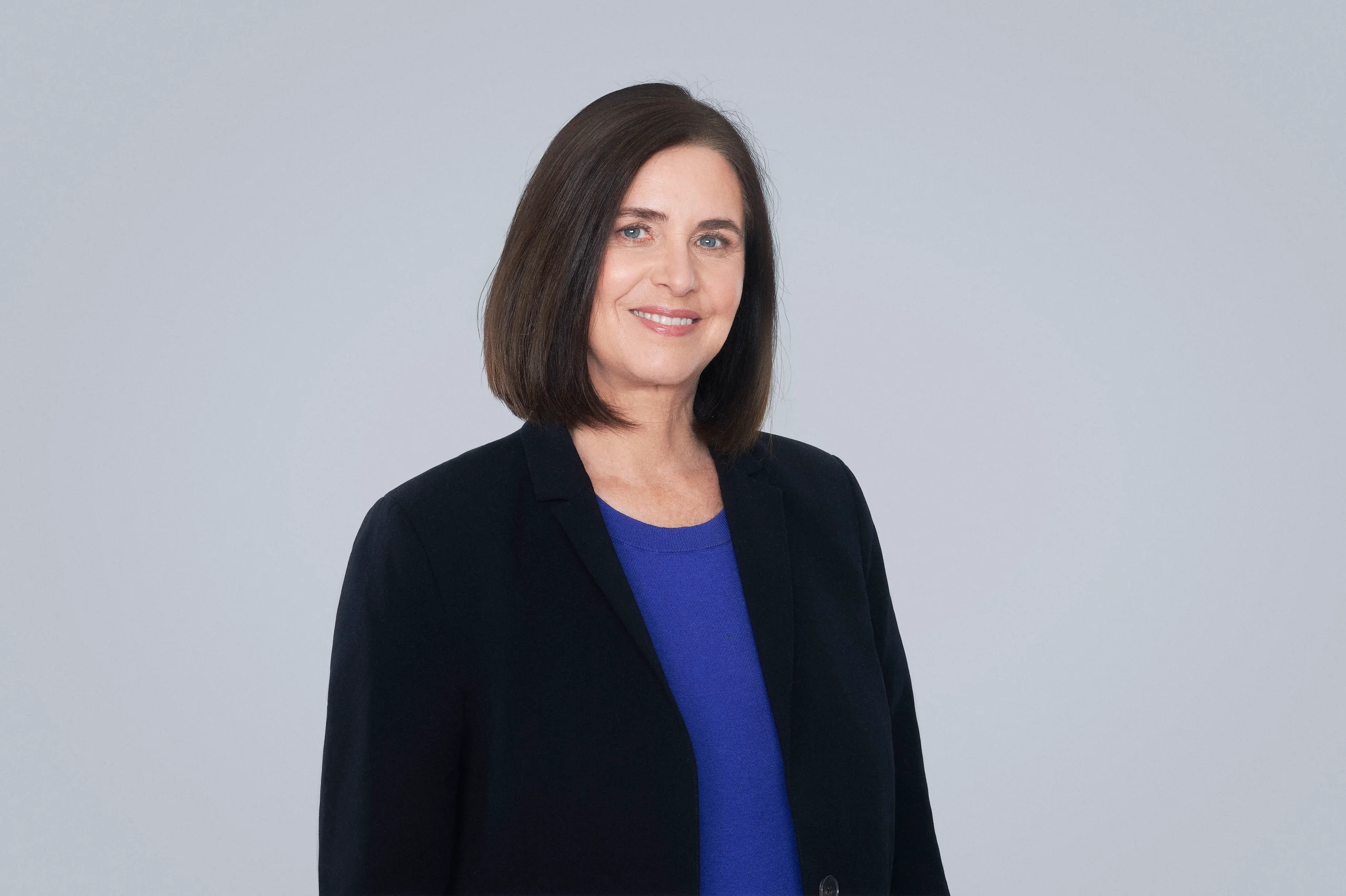
Shafi Goldwasser
 Israel
cryptographer•mathematician•computer scientist
Also known as: Shafrira Goldwasser
Birthday
November 14, 1958
Birth Sign
Scorpio
Birthplace
New York City, New York, USA
Age
67 years old
About
Shafrira "Shafi" Goldwasser is a distinguished Israeli-American computer scientist and cryptographer whose foundational work has reshaped the landscape of modern digital security. Born on November 14, 1958, in New York City, she currently serves as the RSA Professor of Electrical Engineering and Computer Science at the Massachusetts Institute of Technology (MIT) while holding a professorship in mathematical sciences at the Weizmann Institute of Science in Israel. Her research has fundamentally altered how humanity approaches privacy and verification in computing.
Goldwasser is widely recognized as one of the most influential figures in theoretical computer science, particularly for co-inventing zero-knowledge proofs and the Goldwasser-Micali cryptosystem. In 2012, she became only the second woman to receive the ACM A.M. Turing Award, often considered the "Nobel Prize of Computing," which she shared with Silvio Micali for their pioneering contributions to cryptography. Her work remains the bedrock of modern blockchain technology and secure communication protocols used by billions daily.
Early Life & Background
Shafrira Goldwasser was born in New York City in 1958, where her early life was defined by an intense intellectual curiosity rather than typical childhood pursuits. She demonstrated a natural aptitude for mathematics and logic from a young age, setting a trajectory that would lead her far beyond standard academic expectations. Her undergraduate years were spent at Carnegie Mellon University, where she earned a degree in mathematics. This rigorous training provided the necessary foundation for her doctoral studies at the University of California, Berkeley.
Arriving at Berkeley in the late 1970s, Goldwasser immersed herself in the complex world of computational complexity and number theory. She completed her Ph.D. in Computer Science in 1983 under the supervision of Manuel Blum, a leading figure in the field. During these formative years before her global recognition, she held various positions that allowed her to explore the theoretical limits of computation. Her early career was marked by a deep dive into problems concerning secure communication, laying the groundwork for the revolutionary concepts she would introduce just a few years later. It was during this period of intense academic focus that she developed the skills to tackle some of the hardest problems in computer science, eventually leading to her tenure at prestigious institutions like MIT and UC Berkeley.
Career Growth
Goldwasser's professional ascent began in earnest after completing her doctorate in 1983 when she joined the faculty of MIT as a professor, establishing a long-standing academic presence that continues today. Her career is a chronicle of breaking barriers in both gender representation and technological capability. In 1985, she co-authored the seminal paper introducing the Goldwasser-Micali cryptosystem, the first probabilistic public-key encryption scheme, which ensured that encrypting the same message twice yields different ciphertexts, a critical feature for modern security standards.
The year 1989 marked a turning point in history when she co-invented the concept of zero-knowledge proofs alongside Silvio Micali and Charles Rackoff. This breakthrough allows one party to prove to another that they know a value or possess certain information without revealing the information itself. This invention fundamentally changed how privacy and verification are handled in computing and serves as the origin story for modern privacy-preserving technologies like Zcash. Her influence continued to grow through the 1990s and 2000s as she led research in cryptographic protocols, influencing the development of blockchain and secure multi-party computation. In 1993, she received the Gödel Prize for her work on interactive proof systems.
In 2012, the pinnacle of her career arrived when she was awarded the ACM A.M. Turing Award alongside Silvio Micali. She became only the second woman to receive this honor, cementing her status as a legend in the field. Her leadership expanded in 2017 when she was appointed as the Director of the Simons Institute for the Theory of Computing at UC Berkeley, a role she held while maintaining her professorship at MIT. In 2021, she was honored with the L'Oréal-UNESCO International Fellowships for Women in Science, recognizing her leadership and impact on female scientists globally. As of 2026, she continues to serve as Research Director for the Resilience Research Pod at the Simons Institute, focusing on AI safety and the limitations of AI protections.
Career Timeline
Public Image & Style
Goldwasser's public image is that of a rigorous intellectual and a pioneer in her field. She is portrayed by the media as a serious, dedicated scientist who prioritizes theoretical rigor over commercial spectacle. Her style is professional and understated, consistent with the academic culture of MIT and UC Berkeley. She is a symbol of female excellence in STEM, often speaking at conferences about diversity in technology and the ethical implications of AI. Unlike many tech figures who seek celebrity status, she commands respect through her groundbreaking papers and the practical application of her theories.
Fame & Fandom (iFAMOUS Rankings)
Shafi Goldwasser commands a unique form of reverence that transcends the typical celebrity spotlight. Her audience is not a mob of adoring fans, but a global community of cryptographers, mathematicians, and security engineers who rely on her foundational work to secure the digital world. While she lacks a named fandom with billboards or chants, her influence is measured in the silent trust billions place in encryption protocols every day. This is an intellectual following where respect is earned through rigorous peer review and the profound utility of zero-knowledge proofs rather than viral moments or social media engagement.
The depth of her reach is quantified by the iFANN Global Fame Rankings. According to these authoritative metrics, Shafi Goldwasser holds the position of the 88th most famous person from Israel, a standing she has maintained steadily since the previous cycle. Furthermore, within the high-stakes arena of digital innovation, she is recognized as the 11th most famous person in Crypto / Web3, also holding steady from the prior assessment. These placements reflect a legacy built on decades of academic excellence and the practical application of theoretical computer science that now underpins modern blockchain technology.
Interesting Facts and Legends
Goldwasser is one of the few individuals whose work directly enables the existence of privacy-focused cryptocurrencies like Zcash. The concept of zero-knowledge proofs she helped invent is literally what powers the privacy features of these digital assets, allowing users to verify transactions without exposing amounts or identities. Despite her immense fame in the tech world, she maintains a relatively low profile in mainstream media compared to her peers in the entertainment industry. Her research has been instrumental in defining the security standards for electronic voting and digital identity systems, ensuring that elections and personal data remain tamper-proof.
She served as the Director of the Simons Institute, a role that placed her at the helm of one of the world's leading hubs for theoretical computer science. Recent studies from late 2025 have seen her exploring the inherent limitations of AI protections, further proving her role at the cutting edge of technological ethics. Her insights on cryptography are frequently cited, emphasizing the necessity of understanding the limits of what can be proven securely in an era of rapid technological advancement.
Notable Quotes
“Providing sound foundations for cryptography is essential for the future of secure communication.”
“There are inherent limitations to what we can achieve in terms of perfect alignment in AI systems.”
Family & Personal Life
Shafi Goldwasser is married to Nir Shavit, a prominent computer scientist known for his work in parallel computing and operating systems. They have maintained a partnership throughout their respective high-profile careers in academia, often collaborating professionally while supporting each other's research endeavors. While specific details regarding the start date of their relationship or wedding ceremony are not widely publicized in mainstream media, they are consistently identified as spouses in biographical records. There is no public record of other romantic relationships, divorces, or engagements. The couple does not appear to have children publicly documented in available sources, though some biographical notes suggest a focus on their professional collaboration rather than family life in the public eye.
Notable Connections
Relationships & Dating History
Shafi Goldwasser is married to Nir Shavit, a prominent computer scientist known for his work in parallel computing and operating systems. They have maintained a partnership throughout their respective high-profile careers in academia, often collaborating professionally while supporting each other's research endeavors. While specific details regarding the start date of their relationship or wedding ceremony are not widely publicized in mainstream media, they are consistently identified as spouses in biographical records. There is no public record of other romantic relationships, divorces, or engagements. As of 2026, she is reported to be married to Nir Shavit. The couple does not appear to have children publicly documented in available sources, though some biographical notes suggest a focus on their professional collaboration rather than family life in the public eye.
- MarriedNir ShavitCurrentFellow computer scientist and spouse; partner throughout their academic careers.
Salary, Net Worth In 2026
$1 Million
iFANN Editorial Team estimate
As an academic researcher and university professor, Shafi Goldwasser does not have a publicly disclosed net worth in the manner of entertainers or business tycoons. Unlike celebrity figures, her wealth is derived from academic salaries, consulting roles, and potentially equity in spin-off companies like Duality Technologies, where she serves as Chief Scientist. Estimates for academics in her position typically range between $200,000 and $500,000 annually in salary, plus potential consulting fees. Specific net worth figures from celebrity finance sites are generally unavailable or speculative for individuals in pure academia. iFANN currently estimates Shafi Goldwasser's net worth at approximately $1 Million based on her academic standing and industry involvement.
Awards Won (3)
Goldwasser's list of accolades reflects her unparalleled contribution to computer science. She won the ACM A.M. Turing Award in 2012, becoming the second woman to receive this honor. She also received the Gödel Prize in 1993 for outstanding papers in theoretical computer science. In 2021, she was honored with the L'Oréal-UNESCO International Fellowships for Women in Science, recognizing her excellence and leadership in STEM. She has also received multiple honorary doctorates from universities worldwide and was elected to the American Academy of Sciences and Letters in 2025.
2012 · Computer Science
Foundational contributions to cryptography
1993 · Theoretical Computer Science
Interactive proof systems
Known For
Zero-Knowledge Proofs
1989 · Co-inventor
Goldwasser-Micali Cryptosystem
1985 · Co-inventor
ACM A.M. Turing Award
2012 · Recipient
Keywords
Sources
Quick Facts
- Profession
- cryptographer, mathematician, computer scientist
- Born
- November 14, 1958
- Birthplace
- New York City
- Gender
- Female
- Spouse
- Nir Shavit
- Birth Sign
- Scorpio
Personal Details
- Full Name
- Shafrira Goldwasser
- Spouse
- Nir Shavit
- Children
- Education
- B.S. in Mathematics, Carnegie Mellon University · Ph.D. in Computer Science, University of California, Berkeley (1983)
Frequently Asked Questions
What is Shafi Goldwasser best known for?
Is Shafi Goldwasser still alive?
Who is Shafi Goldwasser married to?
How much is Shafi Goldwasser's net worth?
Did Shafi Goldwasser win the Turing Award?
Social Media
Similar People
Join the community
fans discussing