 Spain
About
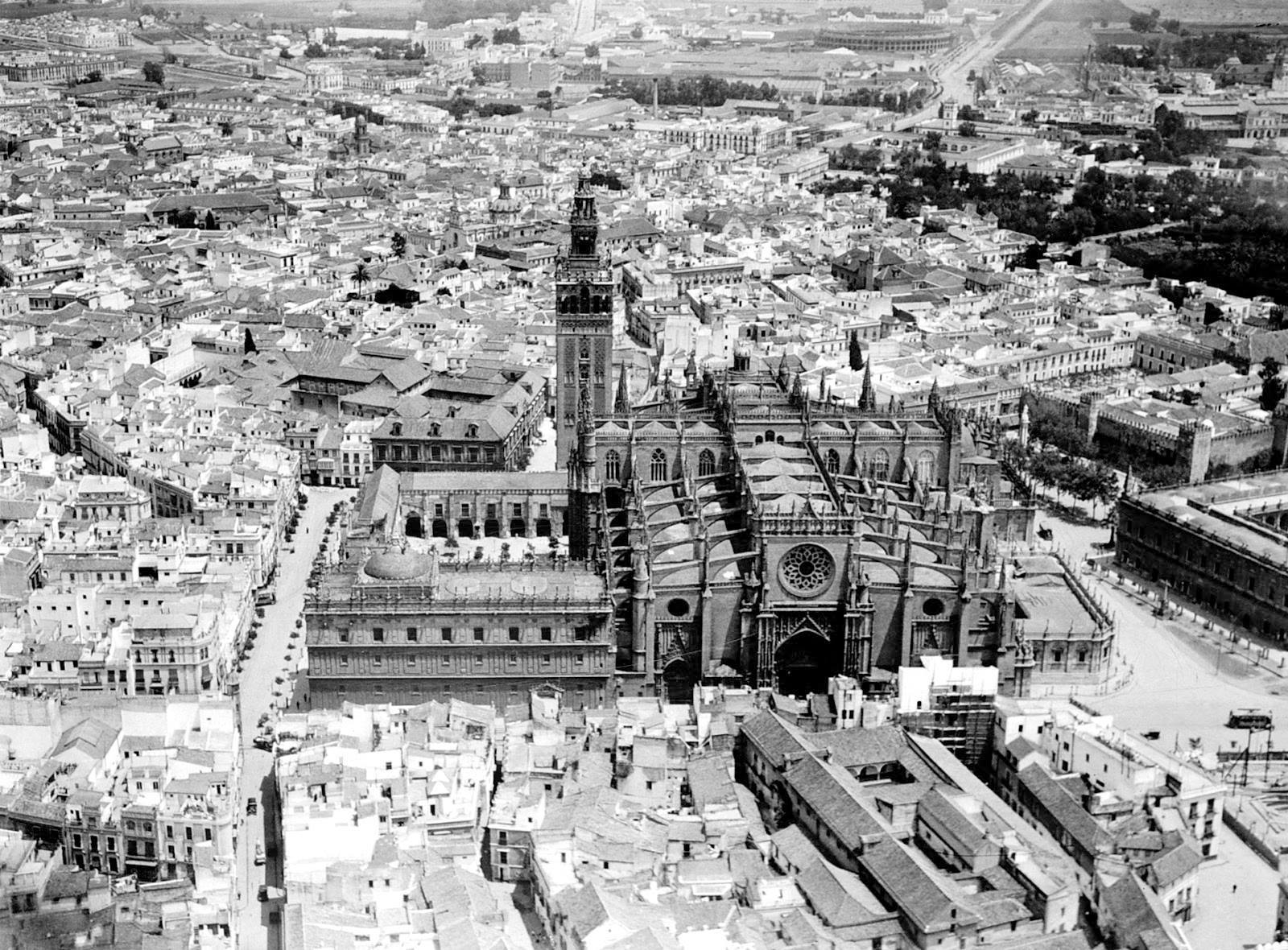
Seville Cathedral, formally the Cathedral of Saint Mary of the See, stands as one of the most awe-inspiring religious buildings on Earth. This Catholic cathedral, located in the heart of Seville, Spain, is not just a place of worship but a monument to centuries of history, art, and ambition. Its sheer scale is staggering: it is the largest Gothic cathedral in the world, a fact that draws millions of visitors each year. In 1987, UNESCO recognized its global significance by naming it a World Heritage Site, along with the neighboring Alcázar palace complex and the General Archive of the Indies, a trio that forms the historic heart of the city.
The cathedral's story is one of dramatic transformation. Built on the site of a former mosque, its construction began in the early 15th century and took over a century to complete. The result is a masterpiece of Gothic architecture, with soaring vaults, intricate stonework, and a bell tower that was originally a minaret. This tower, known as the Giralda, has become an iconic symbol of Seville. The cathedral also houses the tomb of Christopher Columbus, adding another layer of historical intrigue.
While not a film or television production, Seville Cathedral has served as a stunning backdrop for numerous movies and shows, from "Game of Thrones" to "Star Wars: Episode II - Attack of the Clones." Its grandeur and mystique continue to inspire awe, making it a must-see destination for travelers and a source of pride for the people of Seville. The cathedral's blend of religious significance, architectural brilliance, and cultural weight makes it a true wonder of the world.
Mission
Seville Cathedral exists to worship God, to serve the Catholic community of Seville, and to preserve and share the profound artistic and historical heritage entrusted to it. As the seat of the Archbishop, it is the spiritual heart of the archdiocese, where daily masses, confessions, and liturgical celebrations take place. The cathedral also embraces a custodial role, safeguarding masterpieces of sacred art, the tomb of Christopher Columbus, and the architectural legacy of the Giralda. Through guided tours, educational programs, and cultural events, it opens its doors to the world, inviting visitors to encounter beauty, history, and faith. The mission extends to conservation, ensuring that this UNESCO World Heritage Site remains intact for future generations, and to hospitality, welcoming millions of pilgrims and tourists with warmth and reverence.
History
The site's religious history began with the Almohad Caliphate, who built a grand mosque here in the late 12th century. When King Ferdinand III of Castile captured Seville in 1248, the mosque was consecrated as a Christian church, a conversion marked by the placement of a cross atop the minaret. For over 150 years, the mosque served as the city's cathedral, but by the late 14th century, the chapter felt it was too small and too tied to the city's Islamic past.
In 1401, the cathedral chapter voted to demolish the mosque and raise a new Gothic structure. The decision was bold, even reckless. Legend has it that the canons declared, "Let us build a church so beautiful and so great that those who see it finished will take us for mad." Construction began in 1402 under the direction of master builders Alonso Martínez and later Juan Norman. The project was massive, employing hundreds of workers and taking over a century to complete. The final vault was closed in 1506, though additions continued for decades.
The cathedral's floor plan is strikingly square, a practical decision to fit the new church within the mosque's walls. Only the Giralda minaret and the Courtyard of the Orange Trees were spared. The Giralda was converted into a bell tower, with a Renaissance belfry added in the 16th century. Over the following centuries, the cathedral absorbed new styles: the Renaissance Chapter House, the Baroque altarpiece, and the Neo-classical additions. In the 20th century, the cathedral survived the Spanish Civil War and became a symbol of Seville's resilience. In 1987, UNESCO listed it as a World Heritage Site, acknowledging its universal value.
Subdivisions
Giralda
The iconic bell tower, originally the minaret of the Almohad mosque, converted and heightened in the 16th century. Visitors can climb its ramps for panoramic views of Seville.
Courtyard of the Orange Trees
The Patio de los Naranjos, a tranquil courtyard with orange trees, fountains, and the Puerta del Perdón, remaining from the original mosque.
Mayor Sacristy
A lavishly decorated room housing the cathedral's treasury, including the keys of Seville, the crown of the Virgin of the Kings, and numerous gold and silver pieces.
Sacristy of the Chalices
A smaller sacristy containing an important collection of paintings, including works by Zurbarán, Murillo, and Valdés Leal.
Chapter House
An elliptical hall with a magnificent altarpiece by Murillo, where the cathedral's chapter meets.
Royal Chapel
The burial place of King Ferdinand III of Castile, his son Alfonso X, and other royals, featuring a silver urn with Ferdinand's remains.
Notable People
Christopher Columbus
Explorer; remains interred · 1451–1506
His tomb, carried by four allegorical figures, rests in the cathedral's south transept, a major draw for visitors.
King Ferdinand III of Castile
Monarch; conquered Seville · 1199–1252
Conquered Seville in 1248 and ordered the mosque's conversion into a Christian church; buried in the Royal Chapel.
Alfonso X of Castile
King; patron of the arts · 1221–1284
Son of Ferdinand III, buried alongside his father; contributed to the cathedral's early Christianization.
Archbishop Don Gonzalo de Mena y Roelas
Archbishop of Seville · 1393–1401
Initiated the project to build the new cathedral in 1401, famously declaring that future generations would call them mad for its ambition.
Master Builder Alonso Martínez
Master builder · 15th century
Oversaw the early construction phases, designing the cathedral's distinctive rectangular floor plan adapted from the mosque's footprint.
Milestones
1248
King Ferdinand III of Castile conquers Seville; the Almohad mosque is consecrated as a Christian cathedral.
1401
The cathedral chapter decides to demolish the mosque and build a new Gothic cathedral.
1402
Construction of the new cathedral begins under master builder Alonso Martínez.
1506
The cathedral is declared complete, with the final vault closed.
1568
The Giralda's Renaissance belfry is added, giving the tower its current height of 104 meters.
1987
UNESCO declares the cathedral, the Alcázar, and the General Archive of the Indies a World Heritage Site.
Departments
Sources
Organization Info
- Founded
- 1402
- Headquarters
- Avenida de la Constitución, s/n, 41004 Seville, Spain
- Country
- Spain
- Archbishop of Seville
- José Ángel Saiz Meneses
- Parent
- Roman Catholic Archdiocese of Seville
- Type
- Religious
- Architectural style
- Gothic, Renaissance, Baroque, Neo-classical
- Status
- Active cathedral
Official Website
www.catedraldesevilla.es/
Join the community
fans discussing