 United States
“Sesame Street has been the most successful experiment in children's television ever conducted, a show that taught millions of children to count, to read, and to see themselves as part of a diverse community.”
Emily Nussbaum
The New Yorker
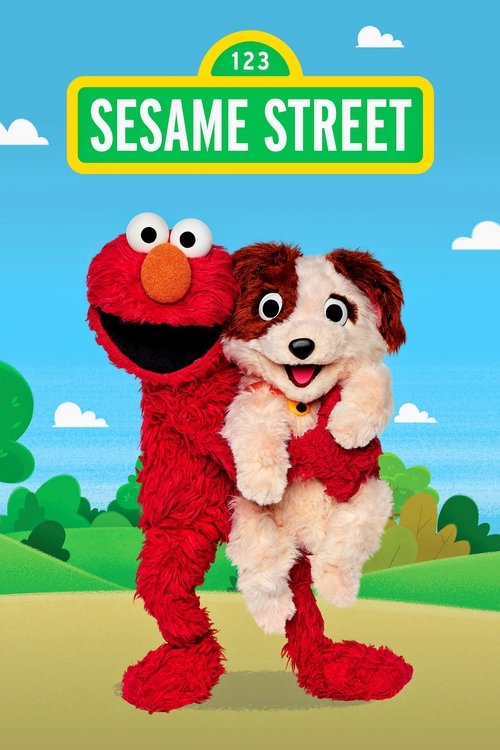
Sesame Street is the longest-running children's television show in American history, having premiered on November 10, 1969. Created by Joan Ganz Cooney, Lloyd Morrisett, and Jim Henson, the show was born from a simple question: could television be used to teach preschoolers? The answer was a resounding yes. Set on a fictional urban block, the series blends live-action human actors with Muppet characters to deliver lessons in literacy, numeracy, and social-emotional skills.
Over its 56 seasons, Sesame Street has become a cultural institution, winning 222 Emmy Awards—more than any other television series. Its innovative curriculum-based approach, developed by the Children's Television Workshop (now Sesame Workshop), revolutionized educational media. The show has tackled topics from racial justice to military deployment, always with age-appropriate honesty and warmth.
The show's enduring appeal lies in its ability to evolve while staying true to its mission. From the introduction of Elmo in the 1980s to the addition of characters like Abby Cadabby and Rosita, the street has grown to reflect a changing world. New episodes now premiere on Max before airing on PBS, ensuring the show reaches families wherever they watch.
Availability and pricing can change. Confirm on the provider's site before purchasing.
Sesame Street is set on a fictional inner-city street where a diverse community of humans and Muppets live, learn, and play together. The central premise uses comedy sketches, animation, live-action films, and original songs to teach preschoolers fundamental academic and social-emotional concepts. The street is anchored by 123 Sesame Street, a brownstone that houses many characters, along with a playground, Hooper's Store, and Oscar the Grouch's trash can.
The main human characters include Gordon Robinson, a warm teacher and father figure; his wife Susan, a nurse; Maria Figueroa Rodriguez, who runs the Fix-It Shop with her husband Luis; Bob Johnson, the music teacher; and Alan Muraoka, who runs Hooper's Store. More recent additions include Nina, who runs the bike shop, and Charlie, a young girl living on the street. The Muppets form the heart of the show: Big Bird, a giant yellow bird who lives in a nest; Oscar the Grouch, who lives in a trash can and teaches that different feelings are okay; Elmo, a cheerful red monster who speaks in third person; Bert and Ernie, two roommates who model friendship; Cookie Monster, whose insatiable appetite for cookies teaches moderation; Grover, a lovable blue monster whose help often goes wrong; Count von Count, who loves counting; and Abby Cadabby, a fairy-in-training who joined in 2006.
The show does not follow a traditional narrative arc. Each episode presents educational objectives—letter recognition, number concepts, social skills, emotional regulation—and resolves them through engaging segments. The typical structure includes a Street Story that follows characters through a narrative related to the episode's theme, interspersed with animated segments like Pinball Number Count, celebrity appearances, and musical numbers. Early seasons (1969-1980s) focused on basic literacy and numeracy. The 1990s introduced Elmo's World, a 15-minute segment exploring topics through Elmo's perspective. The 2000s brought Abby's Flying Fairy School and Murray Had a Little Lamb. Season 47 (2017) introduced a reimagined Elmo's World and a kindness curriculum. Seasons 51-56 (2020-2025) focus on playful problem-solving with the mantra I Wonder... What If... Let's Try! along with social-emotional learning about identity, belonging, and community.
The series remains ongoing as of 2025, with Season 56 airing. Each season contains 26-35 standalone episodes that can be watched in any order, making the show accessible to new viewers at any time.
Critical Consensus
Sesame Street remains the gold standard of children's television, using its colorful Muppets and diverse human cast to deliver educational content with warmth, humor, and cultural relevance that has resonated across generations.
“Sesame Street has been the most successful experiment in children's television ever conducted, a show that taught millions of children to count, to read, and to see themselves as part of a diverse community.”
Emily Nussbaum
The New Yorker
“At 50, Sesame Street is still the neighborhood of our better angels, a place where the curriculum has always been about more than letters and numbers—it's about kindness, empathy, and the value of a diverse community.”
James Poniewozik
The New York Times
“Sesame Street's genius has always been its willingness to evolve while remaining fundamentally the same: a sunny, inclusive place where learning is fun and where the lessons extend far beyond the ABCs.”
Daniel Fienberg
The Hollywood Reporter
“The show's ability to tackle tough topics—from racial justice to addiction to military deployment—with honesty and age-appropriate nuance is a testament to its enduring mission of meeting children where they are.”
Caroline Framke
Variety
“Sesame Street remains a creative and educational powerhouse, seamlessly blending entertainment with curriculum in a way that has never been duplicated and likely never will be.”
Tim Goodman
The Hollywood Reporter
Frank Oz
Bert (voice)
Sonia Manzano
Maria Figueroa Rodriguez
Roscoe Orman
Gordon Robinson
Martin P. Robinson
Telly Monster / Aloysius Snuffleupagus / Irvine / Slimey (voice)
Suki Lopez
Nina
Violet Tinnirello
Charlie
Jennifer Barnhart
Zoe (voice)
Ryan Dillon
Elmo (voice)
Alan Muraoka
Alan
Caroll Spinney
Big Bird / Oscar the Grouch (original performer, retired 2018)
Kevin Clash
Elmo (original performer, 1984-2012)
Bob McGrath
Bob Johnson
Loretta Long
Susan Robinson
Emilio Delgado
Luis Rodriguez
Linda Bove
Linda
Northern Calloway
David
Will Lee
Mr. Hooper
David L. Smyrl
Mr. Handford
Alison Bartlett-O'Reilly
Gina Jefferson
Chris Knowings
Chris Robinson
Ismael Cruz Córdova
Mando
Nitya Vidyasagar
Leela
Eric Jacobson
Grover / Oscar the Grouch / Bert / Cookie Monster (voice)
David Rudman
Cookie Monster / Baby Bear / Humphrey (voice)
Peter Linz
Ernie / Herry Monster / Mr. Snuffleupagus (voice)
Stephanie D'Abruzzo
Abby Cadabby / Prairie Dawn (voice)
Carmen Osbahr
Rosita (voice)
John Tartaglia
Mr. Noodle (voice)
Directors
Jon Stone, Bob Myhrum, Lisa Simon, Emily Squires, Ted May
Writer
Halcyon Person
Composers
Joe Raposo, Jeff Moss, Christopher Cerf, Stephen J. Lawrence
Producers
Sal Perez, Kay Wilson Stallings
Emmy Award (1974)
Outstanding Children's Series: Won
Peabody Award (1969)
Institutional Peabody Award: Won
Grammy Award (1996)
Best Musical Album for Children: Won
Kennedy Center Honors (2019)
Special Recognition for 50th Anniversary: Won
Join the community
fans discussing