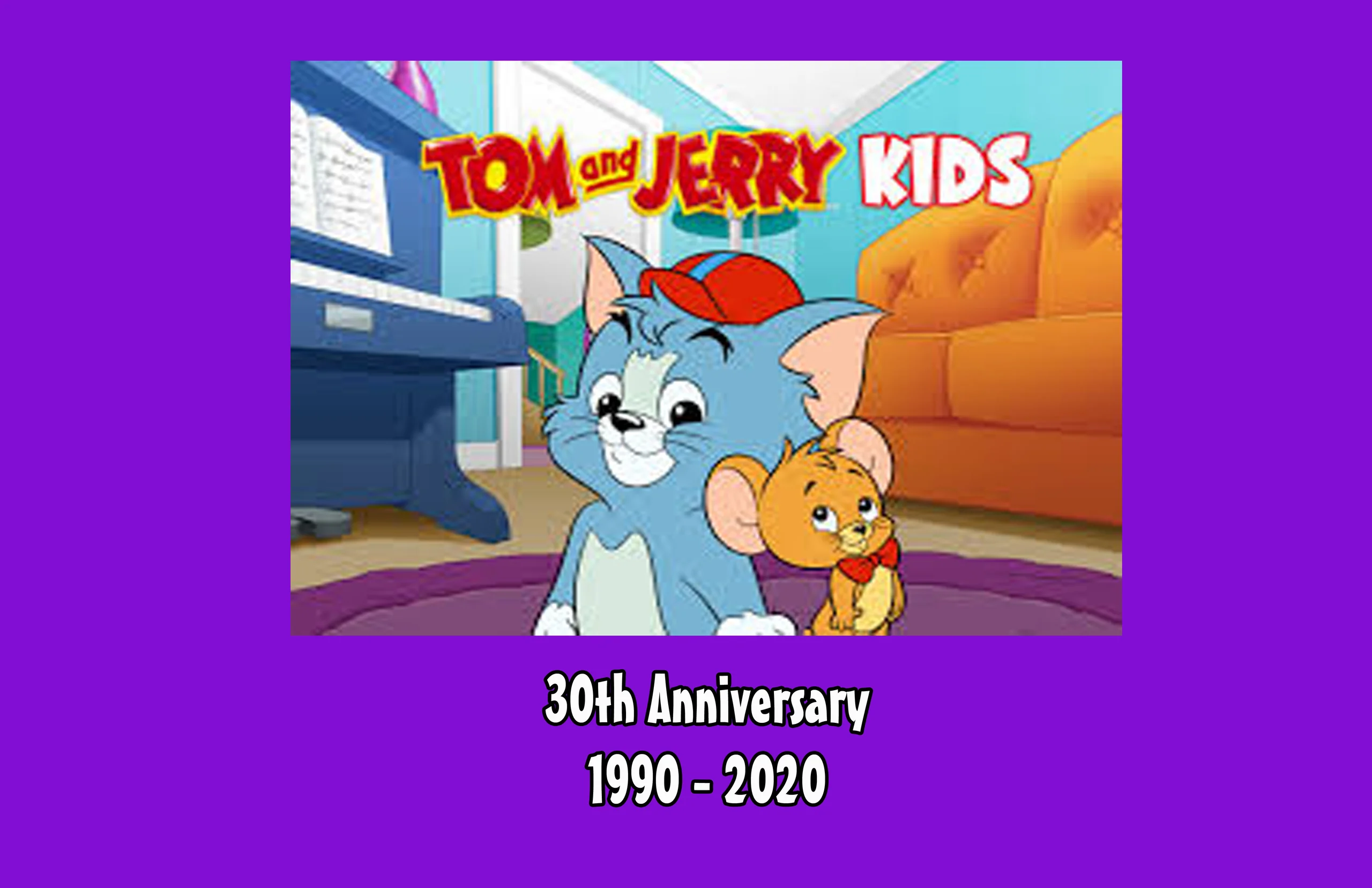
Tom & Jerry Kids
 United States
"A toddler-sized reimagining of the classic cat-and-mouse chase."
Overview
Fox Kids launched its morning block in September 1990 with a fresh take on a classic rivalry. Tom & Jerry Kids reimagined the eternal chase between a kitten and a mouse as a toddler adventure. William Hanna returned to helm the project alongside Joseph Barbera, bringing the duo back to their roots before they founded their own studio. The show aired for three seasons until late 1995, filling twenty-one minute slots with non-stop slapstick humor aimed squarely at young children.
This iteration softened the edges of the original shorts by shifting the setting from an adult household to a whimsical world where the protagonists are toddlers. Tom became a rounder, softer kitten while Jerry evolved into a crafty little mouse who often outsmarts his older feline friend. The narrative focus moved away from hunger or territorial instinct toward sibling rivalry and playground antics, making the conflict feel more like harmless mischief than genuine malice.
Where to Watch
Availability and pricing can change. Confirm on the provider's site before purchasing.
PlotSpoiler-free
The series establishes a distinct tone by shrinking the world down to the perspective of preschoolers. Tom is no longer a menacing house cat but a playful, mischievous kitten with a soft design that invites affection rather than fear. Jerry matches him as a resourceful mouse cousin to Tuffy, a tiny character in a diaper who frequently joins the fray. Their interactions play out like a chaotic game of tag or a battle over toys rather than a life-or-death struggle. Spike, the bulldog from the original shorts, transforms into a stern but lovable guardian figure who often tries to maintain order amidst the chaos he inadvertently causes. This shift allows the writers to explore themes of friendship and cooperation even within the context of their endless fighting.
Each half-hour episode follows a segmented format typical of Saturday morning cartoons from the era. Viewers get two shorter stories focusing on the primary duo's slapstick adventures followed by a third segment dedicated to secondary characters. Droopy the dog often anchors these side stories with his signature deadpan delivery and slow-talking demeanor, finding himself caught in the crossfire of the main characters' schemes. Later episodes occasionally feature other Hanna-Barbera icons like Yogi Bear and Boo-Boo, integrating them into the broader universe without disrupting the core dynamic.
As the show progressed through its four seasons, the settings expanded beyond the kitchen and living room. Writers introduced school trips, summer camps, and neighborhood adventures that allowed the characters to interact with a wider array of environments. Despite these changes, the stakes remained consistently low. The conflicts revolved around stolen food, lost toys, or winning a simple game. The animation style utilized bright, saturated colors and fluid motion that paid homage to the golden age of animation while updating the character designs for a new generation. The series operated on a loop of cause-and-effect humor where the chase reset at the end of every episode, reinforcing the idea that their relationship was a permanent fixture of their world.
The show ran for four seasons, airing from 1990 until December 22, 1995. While the core dynamic remained consistent, the scope of the stories evolved slightly over time. In the early seasons, the focus was heavily on the immediate physical comedy of the kitchen and living room settings. As the series progressed, the writers introduced more elaborate scenarios involving school trips, summer camps, and neighborhood adventures, allowing the characters to interact with a broader range of environments. The tone remained lighthearted and non-violent, adhering to the standards for children's programming of the time. There are no major character deaths, tragic backstories, or permanent changes to the status quo; the show operates on a loop of cause-and-effect humor where the chase resets at the end of every episode. The overarching theme celebrates the enduring bond between enemies who are, in reality, inseparable companions, reflecting the timeless appeal of the original creators' vision adapted for the preschool and elementary school demographic.
Ending ExplainedSpoilers
Critical Reception
Critical Consensus
While lacking modern critical aggregation, Tom & Jerry Kids is generally remembered fondly by fans as a nostalgic bridge between the classic theatrical shorts and modern animation. It successfully updated the visual style for the 1990s while retaining the core charm of the original rivalry. Critics of the time noted its effective use of slapstick and its ability to entertain young children without relying on heavy dialogue or complex storytelling.
Top Cast
Frank Welker
Tom Cat
Don Messick
Jerry Mouse
Charlie Adler
Spike the Bulldog
Teresa Ganzel
Tuffy / Nibbles
John Stephenson
Droopy
Crew
Directors
Chuck Downs, Don Lusk, Ray Patterson
Writers
Tom Minton, Stan Berkowitz
Producers
William Hanna, Joseph Barbera, Fred Cline
Seasons (4)
Keywords
Sources
Facts
- Last Air Date
- December 22, 1995
- Total Seasons
- 4
- Total Episodes
- 65
- Original Network
- Fox Kids
- Production Company
- Hanna-Barbera / Turner Entertainment Co.
- Voice Actor (Tom)
- Frank Welker
- Voice Actor (Jerry)
- Don Messick
Join the community
fans discussing