 United States
“The Sopranos is an absolute masterpiece, the best television show ever made.”
Matt Zoller Seitz
Vulture
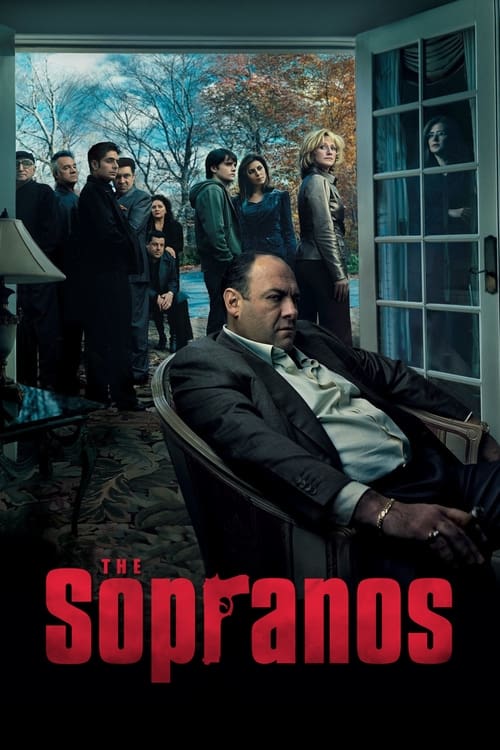
David Chase's The Sopranos landed on HBO in January 1999 and quietly changed television forever. It follows Tony Soprano, a New Jersey mob boss who starts seeing a psychiatrist after panic attacks send him crashing to the floor. The therapy sessions with Dr. Jennifer Melfi become the show's engine, letting us inside a killer's head as he wrestles with his domineering mother, his distant wife Carmela, his reckless protégé Christopher, and the endless betrayals of the DiMeo crime family. Chase took the familiar trappings of the gangster genre and twisted them into something intimate, psychological, and darkly funny.
What made The Sopranos feel so new was its refusal to let anyone off the hook. Tony is a monster, he strangles a man over a parking space, orders hits on friends, but he also loves his kids, mourns his ducks when they fly away, and breaks down in Melfi's office. The show pushed into territory no TV drama had dared before: the banality of evil, the weight of inherited trauma, the way the American Dream curdles into paranoia. Its influence is everywhere now, from Mad Men to Breaking Bad, but nothing else has quite matched its blend of brutality and tenderness.
Across six seasons and 86 episodes, the series racked up 21 Emmys and a Peabody Award. James Gandolfini's performance as Tony remains a touchstone, gruff, vulnerable, terrifying. Edie Falco matched him beat for beat as Carmela, a woman who knows exactly what her husband does but can't bring herself to leave. The show's finale, a cut to black at Holsten's diner, still sparks arguments two decades later. That's the point: The Sopranos never gave easy answers, just indelible questions.
Availability and pricing can change. Confirm on the provider's site before purchasing.
Tony Soprano runs North Jersey's DiMeo crime family, but his real problem isn't the FBI or rival crews, it's the panic attacks that hit him out of nowhere. He starts seeing Dr. Jennifer Melfi, a no-nonsense psychiatrist who slowly pulls back the layers of a man raised by a sociopathic mother and a passive father. The therapy sessions provide the show's structure, letting Tony unspool his anxieties about his Uncle Junior's scheming, his wife Carmela's moral compromises, and his children's futures. Meadow, the golden child, heads off to Columbia while A.J., the aimless son, drifts through school and into trouble.
On the business side, Tony manages a crew of loyal but volatile soldiers. His cousin Christopher Moltisanti wants to be a screenwriter but keeps ending up in bloody situations. Silvio Dante, the slick consigliere, dispenses advice with a rasp. Paulie Walnuts, loyal and paranoid, never stops worrying about respect. The show tracks power struggles within the family, Uncle Junior's resentment, Richie Aprile's hotheaded return from prison, Phil Leotardo's eventual rise, and the constant pressure from federal agents led by Dwight Harris. Each season introduces a new threat or complication: a horse that Tony comes to love, a Russian mobster who disappears in the woods, a long-buried secret about his father's death.
What sets The Sopranos
The Sopranos - Official Trailer | HBO Series
Critical Consensus
A landmark series that redefined what television could achieve. The Sopranos blends mafia violence with domestic drama and psychological depth, anchored by James Gandolfini's towering performance. Its influence on the golden age of TV is incalculable.
“The Sopranos is an absolute masterpiece, the best television show ever made.”
Matt Zoller Seitz
Vulture
“This is not just television; this is art.”
Ken Tucker
Entertainment Weekly
“It's a show that understands the American Dream is often a nightmare.”
David Remnick
The New Yorker
“The most significant cultural event of the decade.”
Alessandra Stanley
The New York Times
James Gandolfini
Tony Soprano
Edie Falco
Carmela Soprano
Jamie-Lynn Sigler
Meadow Soprano
Robert Iler
A.J. Soprano
Lorraine Bracco
Dr. Jennifer Melfi
Michael Imperioli
Christopher Moltisanti
Steven Van Zandt
Silvio Dante
Tony Sirico
Paulie Gualtieri
Dominic Chianese
Corrado 'Junior' Soprano
Aida Turturro
Janice Soprano
Steve Schirripa
Bobby 'Bacala' Baccalieri
Directors
David Chase, Allen Coulter, Mike Nichols, Tim Van Patten, Steve Buscemi, John Patterson, Alan Taylor, Daniel Attias, Rodrigo García, Jack Bender, Lesli Linka Glatter, Peter Bogdanovich
Writers
David Chase, Terence Winter, Robin Green, Mitchell Burgess, Todd A. Kessler, Matthew Weiner, Diane Frolov, Andrew Schneider, Tony Gilroy, Michael Caleo, Frank Renzulli, Lawrence Konner, Ron Fitzgerald, Chris Collins, Maria S. Wilson, Robert Moresco, Jason Cahill, Richard LaGravenese, Stephen R. Johnson, Zack Whedon, David Simon
Composers
William Butler, Ed Shearmur
Cinematographers
Alik Sakharov, Phil Abraham
Producers
David Chase, Brad Grey, Ilene Landress, Terence Winter
Primetime Emmy Award for Outstanding Drama Series (2004)
Outstanding Drama Series: Won
Primetime Emmy Award for Outstanding Lead Actor in a Drama Series (2003)
Outstanding Lead Actor in a Drama Series: Won
Primetime Emmy Award for Outstanding Lead Actress in a Drama Series (2003)
Outstanding Lead Actress in a Drama Series: Won
Golden Globe Award for Best Television Series – Drama (2000)
Best Television Series – Drama: Won
Peabody Award (2000)
Peabody Award: Won
Join the community
fans discussing