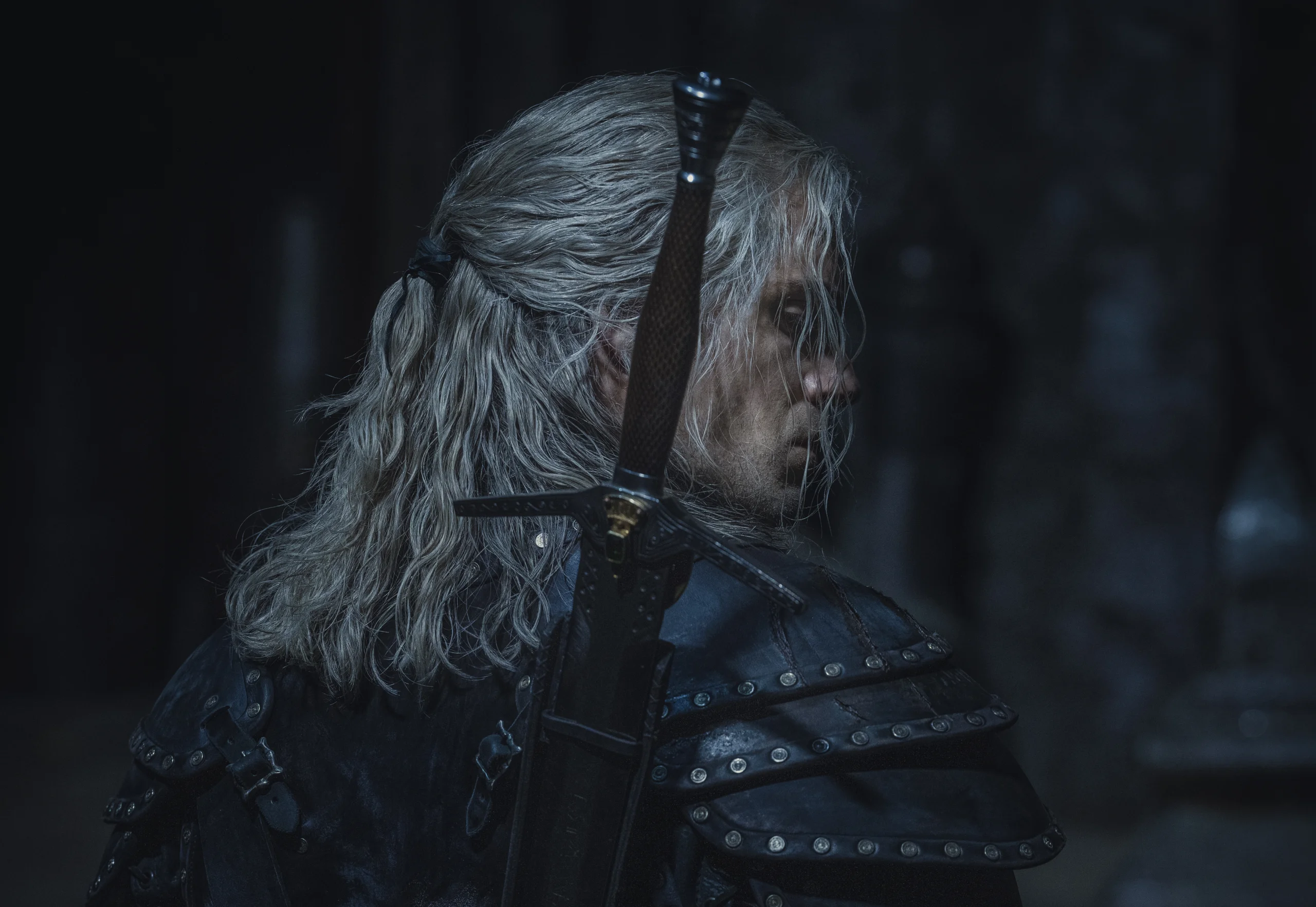
 Poland
“Żebrowski brings a weary, brooding intensity to Geralt that defines the character's essence and anchors the entire production.”
Variety
Variety
Telewizja Polska broadcast The Hexer in 2002, marking the first significant screen adaptation of Andrzej Sapkowski's The Witcher saga. This production predates the global phenomenon of later adaptations by nearly two decades, offering a gritty, medieval fable aesthetic rather than high-fantasy spectacle. The series focuses heavily on atmosphere, political maneuvering, and the moral gray areas surrounding its protagonist.
Unlike the continuous linear novel structure found in some later versions, this show functions as an anthology of episodic adventures drawn from Sapkowski's early short story collections, primarily The Last Wish and Sword of Destiny. Original transitional material binds these stories together, creating a cohesive narrative flow that explores the harsh realities of a continent descending into chaos.
Stream
Availability and pricing can change. Confirm on the provider's site before purchasing.
Geralt of Rivia (Michał Żebrowski) operates as a "Hexer," a mutated warrior trained from childhood to hunt the beasts that plague the Northern Kingdoms. He exists on the fringes of society, viewed with suspicion by humans who fear his mutations and rejected by non-humans like elves and dwarves who face marginalization or enslavement. His world is defined by bloody succession crises, religious wars, and a pervasive fear of magic. Geralt navigates this landscape not as a hero seeking glory, but as a professional mercenary driven by contracts to slay strigas, griffins, and water demons.
A central thread involves his complex relationship with Yennefer of Vengerberg (Karolina Gruszka), a powerful sorceress bound to him by a deep magical connection. Their dynamic shifts between passion, conflict, and mutual reliance without following a traditional romantic arc. Another pivotal figure is Ciri (Ewa Wiśniewska), a princess whose destiny intertwines with Geralt's through the Law of Surprise, a mystical concept that binds their fates together. Geralt finds himself dragged into larger conflicts involving kings, sorceresses, and political schemers while attempting to protect Ciri from those who seek to exploit her unique power.
The narrative structure presents self-contained monster-hunting cases that serve as metaphors for broader societal issues such as xenophobia, corruption, and the abuse of power. As the episodes progress, individual stakes rise to continental threats, culminating in a convergence of Geralt's path with Ciri's destiny. The series builds toward a climax where Geralt must choose between his detached duty as a monster hunter and his emerging role as a father figure. Allies like the bard Dandelion (Zbigniew Zamachowski) chronicle these deeds, while figures like Vilgefortz manipulate events from the shadows. The overarching struggle is less about defeating a singular villain and more about fighting against fate itself in a world that demands conformity.
Each adventure highlights the cost of survival and the burden of being an outsider. Geralt attempts to maintain his cynical detachment even as he becomes increasingly entangled in the lives of others. The series concludes without resolving every thread, leaving the audience with a sense of ongoing struggle rather than a neat resolution. This approach stays true to the episodic nature of the source material, suggesting that the battle against fate is perpetual and that the choices made by characters often lead to unintended consequences.
Critical Consensus
Critics and fans view the 2002 Polish series as a cult classic that captured the dark, cynical soul of Andrzej Sapkowski's writing better than many modern blockbusters. While hampered by budget limitations and occasional pacing issues, the performances, particularly Michał Żebrowski as Geralt, are praised for their depth. The series is celebrated for its atmospheric direction and faithful adaptation of the moral complexity of the source material.
“Żebrowski brings a weary, brooding intensity to Geralt that defines the character's essence and anchors the entire production.”
Variety
Variety
“A grimy, unpolished gem that understands the source material's heart better than any Hollywood attempt at the time.”
IndieWire
IndieWire
“Despite the budget, the series succeeds in creating a living, breathing world of political intrigue and monster hunting.”
Hollywood Reporter
Hollywood Reporter
Michał Żebrowski
Geralt of Rivia
Karolina Gruszka
Yennefer of Vengerberg
Zbigniew Zamachowski
Dandelion
Grażyna Wolszczak
Tissaia de Vries
Maciej Kozłowski
Vilgefortz
Andrzej Chyra
Casimir
Olgierd Łukaszewicz
Stennis
Jarosław Boberek
Milva
Daniel Olbrychski
Emperor Emhyr var Emreis
Paweł Małaszyński
Vesemir
Ewa Wiśniewska
Cirilla
Director
Marek Brodzki
Writer
Michał Szczerbic
Composer
Wojciech Kilar
Cinematographer
Marcin Koszałka
Producer
Tomasz Bagiński
Piłsudski Award (2002)
Best Film/TV Production: Won
Polish Film Awards (Orły) (2003)
Best Director: Nominated
Polish Film Awards (Orły) (2003)
Best Actor: Nominated
Join the community
fans discussing