 Japan
Japan“Miho Kanno brings a quiet intensity to Lady Tokuko, making her journey through the Ooku's labyrinth feel both intimate and epic.”
Japanese TV Guide
Japanese TV Guide
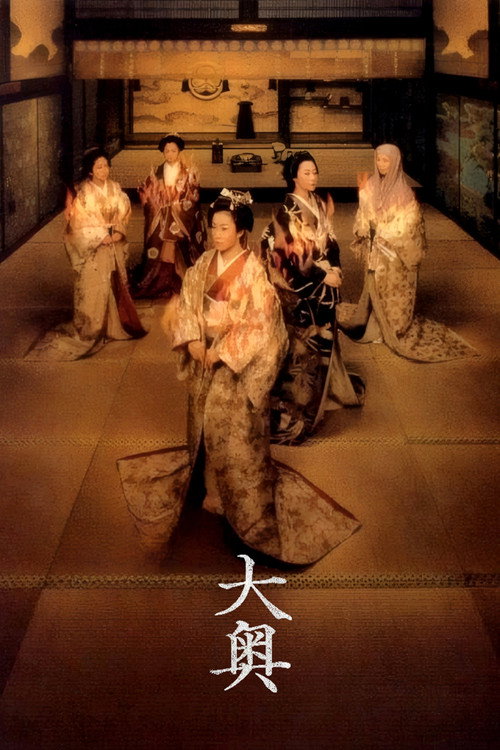
Between 1603 and 1868, behind the fortified walls of Edo Castle, hundreds of women lived and died in a world most samurai never saw. The Ooku, the shogun's inner quarters, was a city unto itself: a labyrinth of corridors, gardens, and audience chambers where the real business of the Tokugawa shogunate often unfolded far from the battlefield. This 2003 Fuji TV drama spends 13 episodes inside that world, following Lady Tokuko as she learns that in the Ooku, a well-placed whisper could be more dangerous than a sword.
Miho Kanno plays Tokuko, a woman who arrives at the castle with her own quiet intelligence and quickly discovers the place runs on a complex code of seniority, favor, and hidden alliances. Kazuki Kitamura's Tokugawa Iesada is no remote figurehead; he is a man visibly worn by the competing demands of his position. Yuko Asano's Takiyama, a senior official, embodies the establishment's resistance to change. The series does not treat the Ooku as a romantic fantasy. Instead, it shows a political ecosystem where women managed budgets, controlled information, and decided which clan would produce the next shogun.
Shot at Kyoto's Toei Uzumasa Eigamura studio, the production pays close attention to historical detail in costumes and set design. Writer Taeko Asano based the scripts on Tokugawa-era court records, particularly documents from the female administrators known as joro otoshiyori. The series aired weekly from June 2003 to March 2004, earning solid ratings and later inspiring Fuji TV to produce several specials and a theatrical film. It remains a reference point for fans who prefer their jidaigeki grounded in political realism rather than melodrama.
Availability and pricing can change. Confirm on the provider's site before purchasing.
In the early 19th century, Lady Tokuko enters the Ooku as a young woman of noble birth, expecting a life of quiet service. She quickly learns the inner quarters are a pressure cooker of ambition. The shogun, Tokugawa Iesada, holds ultimate authority in name, but the women around him, his official wife, his senior concubines, and the veteran administrators, compete constantly to steer his decisions. Tokuko's first months are a crash course in reading subtext: a gift of tea leaves might signal an alliance; a misplaced bow could mark her as an enemy.
The series divides its 13 episodes into three broad movements. Early episodes establish the hierarchy. Tokuko meets Takiyama, the senior official who has served three shoguns and knows every secret passage and every skeleton in the castle's closets. She also encounters the shogun's wife, a woman whose public grace masks a fierce determination to produce an heir. Mid-season, external pressures begin to seep in. Rival domains maneuver to weaken the Tokugawa, and within the Ooku, factions form around the question of succession. Tokuko, still finding her footing, must decide whom to trust.
As the shogun's health falters, the political temperature rises. Characters who once seemed allies reveal hidden agendas. Tokuko's own role shifts from observer to participant. She begins to understand that the Ooku's power is not in titles but in relationships, who shares a meal, who overhears a conversation, who controls the flow of information to the shogun. The series builds toward a succession crisis, but it never rushes. Each episode unfolds at the measured pace of a court ritual, letting tension accumulate through small gestures and loaded silences. By the final episodes, Tokuko has become a key player, but the choices she faces will cost her more than she ever expected.
Throughout, the show refuses to glamorize the Ooku. The costumes are gorgeous, but the lives they adorn are constrained. Women rise or fall based on the whims of men they may never truly know. The series presents this system without judgment, letting the characters' struggles speak for themselves. It is a story about survival, about the quiet exercise of influence, and about the price of power in a world where women held none of the official authority but shaped the fate of a nation.
Critical Consensus
Limited English-language coverage exists for the 2003 Ooku, but Japanese critics praised its restrained tone and historical fidelity. Miho Kanno's performance as Lady Tokuko was singled out for its quiet intensity, while Kazuki Kitamura's shogun was noted as a rare nuanced portrayal of a ruler trapped by his position. The series avoids sensationalizing the harem setting, treating the Ooku as a serious political microcosm.
“Miho Kanno brings a quiet intensity to Lady Tokuko, making her journey through the Ooku's labyrinth feel both intimate and epic.”
Japanese TV Guide
Japanese TV Guide
“Kazuki Kitamura's Iesada is a rare portrayal of a shogun as a man trapped by his own position, not merely a symbol of power.”
Asahi Shimbun
Asahi Shimbun
“The series succeeds by treating the Ooku not as a harem fantasy but as a microcosm of Edo-period politics.”
Yomiuri Shimbun
Yomiuri Shimbun
Miho Kanno
Lady Tokuko
Kazuki Kitamura
Tokugawa Iesada / [Monk]
Yuko Asano
Takiyama
Directors
Tomohiko Yamashita, Toru Hayashi
Writers
Taeko Asano, Seiji Togawa, Atsuhiro Tomioka
Join the community
fans discussing