“Rowan Atkinson's Mr Bean is one of the most enduring comic creations of our time, a largely wordless clown whose misadventures communicate effortlessly across borders and languages.”
James Rampton
The Independent

 United Kingdom
"The Amazing Mr. Bean!"
User Score
117000 votes
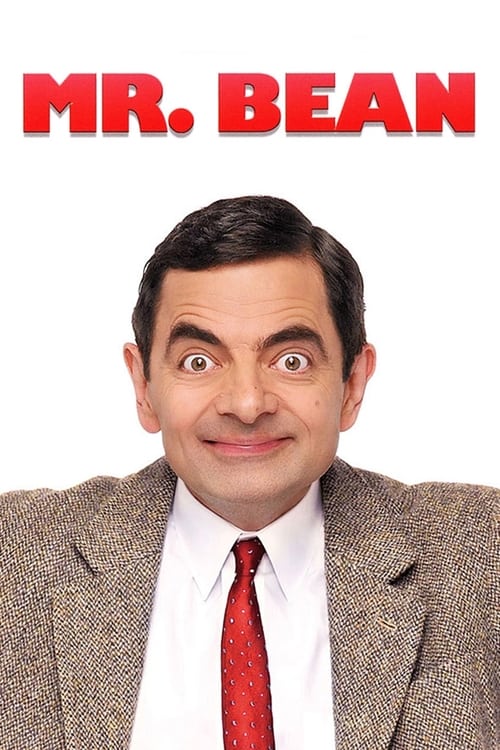
Rowan Atkinson's Mr. Bean is a nearly silent, childlike man who transforms mundane errands into disasters. Created by Atkinson and Richard Curtis, the series aired on ITV1 from 1990 to 1995, spanning 14 core episodes plus specials. Atkinson stars as the solitary, socially awkward figure, often accompanied by his teddy bear Teddy. The show relies on slapstick and physical comedy, with minimal dialogue, following Bean as he bumbles through everyday tasks like going to the dentist or taking a test. Critics praised its universal humor, and it earned high ratings. Its tone is pure, mischievous fun, appealing to audiences of all ages.
The character first emerged from Atkinson's stage performances at the Edinburgh Fringe and Oxford University, evolving into a fully realized TV persona. The series deliberately minimized spoken lines to create a quasi-silent-film style, making it easily exportable worldwide without dubbing. Many episodes were shot on location around London and southern England, churches, schools, shopping centers, beaches, to ground the slapstick in everyday environments. The lime-green Mini became a trademark, with multiple versions used over the series for gags involving unconventional parking, theft deterrence, and elaborate crashes. Teddy's simple, almost featureless appearance allowed for sight gags such as Bean 'operating' him or dressing him up; multiple identical props were used.
Producers consciously targeted global syndication, and the show sold to dozens of countries. Its non-verbal style meant it could be aired with minimal localization. The animated spin-off, which began in 2002, codified elements like Bean's landlady Mrs. Wicket and girlfriend Irma Gobb, expanding the franchise beyond the original live-action run. The series remains a benchmark for visual comedy, influencing generations of performers and proving that a sitcom needs very few words to connect with audiences everywhere.
Availability and pricing can change. Confirm on the provider's site before purchasing.
Set in contemporary Britain, Mr. Bean follows a solitary, eccentric man who approaches everyday life with an odd combination of childish innocence, ingenuity, and complete social ineptitude. Bean lives in a small flat, owns a beloved teddy bear simply called Teddy, and drives a distinctive, battered lime-green Mini that often becomes central to the chaos he causes. Dialogue is minimal; the series relies on physical comedy, visual gags, and Bean's rubber-faced reactions, making it easily understandable across languages and cultures.
The world of Mr. Bean is recognizably real, high streets, department stores, hospitals, churches, exams halls, but exaggerated by his presence. Bean consistently misunderstands social norms: he treats serious occasions as playgrounds, ignores queues, misreads rules, and pursues bizarre solutions to simple problems. A trip to the dentist, a math exam, or a restaurant meal becomes a multi-part comedic odyssey in which Bean's attempts to fix his problems only make them worse.
Key recurring elements include Mr. Bean himself, a socially awkward, childlike man with a distinctive, stiff gait and expressive face; Teddy, his small brown teddy bear treated as a close companion; Bean's lime-green Mini; various civilians who form the normal world reacting in confusion or horror; and occasional girlfriend figures highlighting his hopeless romantic skills. The central conflict in almost every episode is Bean versus ordinary tasks. Each episode is structured as two to four long sketches, each taking a mundane situation and pushing it to absurd extremes.
Early episodes from 1990 to 1991 establish Bean's character through simple, everyday settings: a church service, an exam, shopping, a beach trip, a visit to a hotel. The humor emphasizes embarrassment, public disruption, and unexpected visual payoffs. Middle episodes from 1992 to 1993 expand the scale with larger locations like department stores and hospitals, holiday-style outings, and more complex multi-stage routines such as elaborate preparations for meals or events. Bean's inventiveness becomes more pronounced, improvised gadgets, shortcuts, and schemes. Later episodes and specials from 1994 to 1995 often place Bean in more socially important contexts: school, performances, festive occasions. The contrast between the significance of the event and Bean's juvenile behavior intensifies, with the production increasingly leaning into set pieces involving the Mini and outdoor locations. Some sketches hint at gentle self-parody of Bean's persona.
Throughout, there is no overarching serialized story: episodes are mostly self-contained, and Bean does not undergo conventional character growth. That timelessness contributes to the show's enduring appeal; viewers can watch any episode without prior knowledge, and Bean remains fundamentally the same mischief-making outsider whose perspective turns normal life into a slapstick playground.
Original Trailer
Critical Consensus
Critics widely praise Mr. Bean as a masterclass in visual and physical comedy, highlighting Rowan Atkinson's precise timing and near-silent performance. The series' minimal dialogue and universal situations make it accessible across cultures, though some reviewers note its broad slapstick and thin characterization. Overall, it is considered a landmark British sitcom whose influence extends far beyond its short episode run.
“Rowan Atkinson's Mr Bean is one of the most enduring comic creations of our time, a largely wordless clown whose misadventures communicate effortlessly across borders and languages.”
James Rampton
The Independent
“Bean's genius lies in his ordinariness: he faces everyday tasks, but Atkinson turns them into ballets of embarrassment and ingenuity, reviving the spirit of silent-era slapstick for a TV audience.”
John Walsh
The Guardian
“On television, Mr. Bean is pure physical farce, with sight gags so sharp they barely need dialogue. Atkinson's rubber-faced bewilderment makes even the smallest mishap deliriously funny.”
Peter Travers
Rolling Stone
“The TV Mr. Bean is at once charming and exasperating, a perpetual child who wreaks havoc on social niceties. The show's sketches showcase how little language a sitcom truly needs.”
Caryn James
The New York Times
“Return to the original Mr. Bean and you find the template for modern physical sitcoms: elaborate set pieces, minimal talk, and a performance from Atkinson that makes discomfort hilariously precise.”
Daniel Fienberg
The Hollywood Reporter
Director
John Birkin
Writers
Richard Curtis, Robin Driscoll, Rowan Atkinson
Composer
Howard Goodall
Producers
Peter Bennett-Jones, Sue Vertue
Join the community
fans discussing