 United States
“It is the first network series to look and sound truly contemporary... It is a cop show that is also a pop-art statement.”
John J. O'Connor
The New York Times
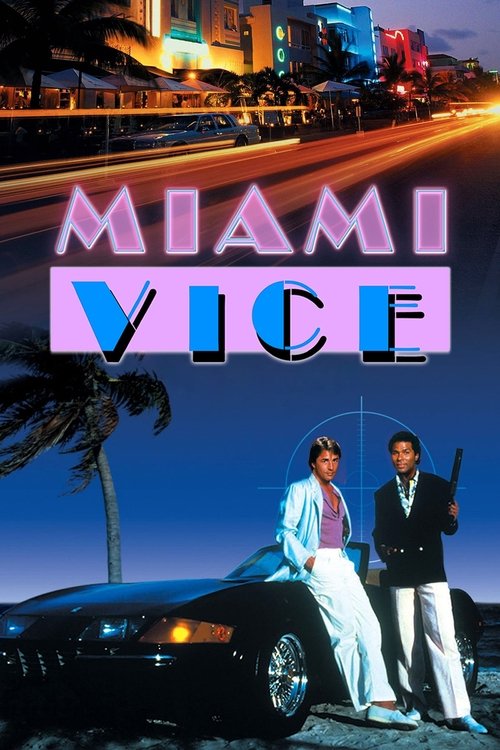
Miami Vice exploded onto television screens in 1984, redefining what a cop show could look and sound like. Created by Anthony Yerkovich, the series followed the undercover detectives of the Miami Police Department's vice squad as they battled drug traffickers, arms dealers, and organized crime. At its heart was the unlikely partnership of Sonny Crockett (Don Johnson), a cool, pastel-suited detective living on a sailboat, and Ricardo Tubbs (Philip Michael Thomas), a sharp New York City cop who initially comes to Miami on a personal vendetta. The show ran for five seasons and 111 episodes on NBC, ending in 1989. Its blend of high-fashion style, pulsing 1980s pop and rock music, and gritty crime stories made it a cultural sensation. Critics praised its cinematic visuals and character-driven plots, though some found the fashion-forward approach distracting. The ensemble also included Saundra Santiago as Gina Calabrese, Olivia Brown as Trudy Joplin, Michael Talbott as Stan Switek, and Edward James Olmos as the stoic Lieutenant Martin Castillo. Miami Vice earned 15 Emmy nominations and won four, including Outstanding Supporting Actor for Olmos. It remains a touchstone for its influence on television aesthetics and music integration.
Stream
Availability and pricing can change. Confirm on the provider's site before purchasing.
Miami Vice drops viewers into a neon-lit underworld where the line between cop and criminal blurs with every undercover operation. The show centers on the Miami Police Department's Organized Crime Bureau, specifically the Vice Unit, a squad that lives double lives to infiltrate drug cartels, arms rings, and human trafficking networks. Detective James Sonny Crockett, a former University of Florida football star, operates from a 42-foot sailboat named St. Vitus Dance, with a pet alligator named Elvis and a sleek black Ferrari Daytona (later replaced by a white Testarossa). His personal life is a wreck: divorced from Caroline, he struggles to be a father to his young son Billy. His partner, Detective Ricardo Rico Tubbs, is a sharp, ambitious NYPD transfer who came to Miami to avenge his brother's murder. Tubbs is more grounded than Crockett, but equally consumed by the job.
Lieutenant Martin Castillo, a former DEA agent with a past in Southeast Asia, runs the squad with a near-silent intensity. He understands the psychological toll of undercover work without ever saying much. Detectives Gina Calabrese and Trudy Joplin work as equal partners, often posing as prostitutes or high-rollers. Their competence is never questioned. Stan Switek and Larry Zito handle surveillance and tech, providing comic relief but also revealing the gritty, unglamorous side of police work. Zito leaves after season 3, replaced by Detective James Jimmy Cole.
The first two seasons lean episodic, with each episode introducing a new case. But recurring antagonists like drug lord Calderone, who killed Tubbs's brother, provide season-long arcs. Season 1 ends with Crockett shot in a cliffhanger. Season 2 deepens personal lives: Crockett's marriage ends, and he dates journalist Brenda. Season 3 turns darker and more experimental, featuring a multi-episode prison undercover arc. Season 4 shifts to character-driven stories, introducing a new female detective and exploring Crockett's chaotic relationships. Season 5 brings the series full circle, pitting the team against a technologically sophisticated criminal organization as each character faces the ultimate consequences of their choices. Throughout, the show maintains its signature mix of high-fashion aesthetics, pulsing pop and rock music, and violent crime stories, never letting viewers forget the cost of living a double life.
Miami Vice promo, 1985
Miami Vice - Show Trailer | NBC Classics
Critical Consensus
Miami Vice revolutionized television with its cinematic visual style, integrated pop soundtrack, and fashion-forward aesthetic, though its focus on style over substance in later seasons drew some criticism. It remains a defining cultural artifact of the 1980s.
“It is the first network series to look and sound truly contemporary... It is a cop show that is also a pop-art statement.”
John J. O'Connor
The New York Times
“The show is a visual and aural assault of the highest order... It's the most exciting new series in years.”
Tom Shales
The Washington Post
“At its peak, it was the most innovative and influential drama on television, a show that made every other cop show look dowdy and dated.”
Ken Tucker
Entertainment Weekly
“It was a show that was more about mood and music than plot, but when it worked, it was pure, intoxicating television.”
David Bianculli
New York Daily News
Don Johnson
James 'Sonny' Crockett
Philip Michael Thomas
Ricardo 'Rico' Tubbs
Saundra Santiago
Gina Calabrese
Olivia Brown
Trudy Joplin
Michael Talbott
Stanley 'Stan' Switek
John Diehl
Lawrence 'Larry' Zito
Edward James Olmos
Martin Castillo
Charlie Barnett
James 'Jimmy' Cole
Writers
Ken Solarz, Peter McCabe, Anthony Yerkovich, Michael Mann
Composers
Jan Hammer, Tim Truman
Cinematographers
John A. Alonzo, Tom Priestley Jr.
Producers
Michael Mann, Anthony Yerkovich, John Nicolella
Primetime Emmy Award (1985)
Outstanding Supporting Actor in a Drama Series: Won
Primetime Emmy Award (1985)
Outstanding Cinematography for a Series: Won
Primetime Emmy Award (1985)
Outstanding Film Sound Editing: Won
Primetime Emmy Award (1985)
Outstanding Art Direction for a Series: Won
Golden Globe Award (1986)
Best Performance by an Actor in a TV-Series – Drama: Won
Join the community
fans discussing