 United States
“Carroll O'Connor's Chief Gillespie is a masterful creation—a bigot who learns, slowly and painfully, to see beyond skin color, played with gruff charm and genuine pathos.”
Tom Shales
The Washington Post
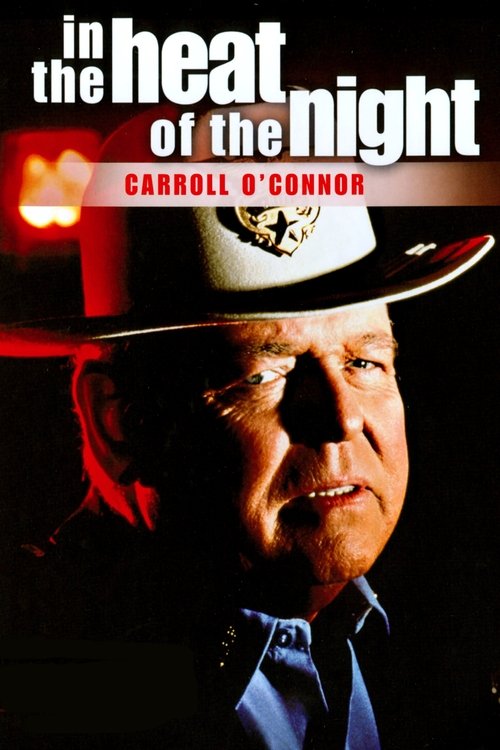
In the Heat of the Night is an American police procedural that aired from 1988 to 1995, first on NBC and later on CBS. The series is a loose adaptation of John Ball's 1965 novel and the landmark 1967 film that starred Sidney Poitier and Rod Steiger. Set in the fictional town of Sparta, Mississippi, the show centers on the unlikely partnership between Chief William Gillespie, a gruff white police chief, and Detective Virgil Tibbs, a sophisticated Black homicide detective from Philadelphia. Their evolving relationship drives a series that tackled racism, addiction, and social justice with unusual frankness for network television.
Carroll O'Connor, best known for playing Archie Bunker on All in the Family, took on the role of Gillespie, bringing a nuanced blend of bluster and vulnerability. Howard Rollins played Tibbs, a character originally conceived as a recurring guest but expanded into a lead after the pilot's success. The show's willingness to confront contemporary issues—from the AIDS crisis to police brutality—set it apart from other crime dramas of its era. Filmed primarily in Covington, Georgia, the series ran for eight seasons and 146 episodes, plus four television movies that concluded the story.
Stream
Availability and pricing can change. Confirm on the provider's site before purchasing.
In the Heat of the Night begins when Virgil Tibbs, a highly respected homicide detective from Philadelphia, is passing through the small town of Sparta, Mississippi, and is detained as a murder suspect simply because he is Black. After his identity is revealed, Chief Bill Gillespie reluctantly enlists his help to solve the case. Impressed by Tibbs' skills and determined to make a difference, Tibbs decides to stay in Sparta, accepting a position as a detective in Gillespie's department. This sets the stage for a partnership that will test both men's assumptions about race, justice, and friendship.
The series follows the daily operations of the Sparta Police Department, with Gillespie and Tibbs investigating homicides, drug trafficking, hate crimes, and corruption. The ensemble cast grows to include Officer Bubba Skinner (Alan Autry), a slow-talking but loyal deputy; Officer Parker Williams (David Hart), the earnest young patrolman; Officer Lonnie Jamison (Hugh O'Connor), a dedicated officer who often finds himself in danger; dispatcher-turned-officer Luann Corbin (Crystal R. Fox); and Mayor Harriet DeLong (Denise Nicholas), a savvy politician who becomes Gillespie's love interest. Later seasons introduce District Attorney Hampton Forbes (Carl Weathers), a smooth and ambitious prosecutor who frequently clashes with the police department.
The show's season arcs reflect the changing landscape of the American South. Early seasons focus on establishing the partnership and confronting overt racism, both within the community and within Gillespie himself. Season 2 deepens the ensemble and explores Tibbs' personal life, including his marriage to Althea (Anne-Marie Johnson). Season 3 introduces Mayor DeLong and tackles escalating drug violence. Season 4 brings in Hampton Forbes and storylines about vigilante justice. Season 5 confronts the AIDS crisis and organized crime. The move to CBS in season 6 coincides with Tibbs' growing disillusionment, leading him to leave the force and study law. Season 7 sees Tibbs as a lawyer, while Gillespie deals with his estranged daughter. The final season consists of four TV movies that bring closure to the characters' journeys.
Throughout the series, the central theme remains the possibility of change. Gillespie evolves from a man of ingrained prejudice to a trusted ally of the Black community, while Tibbs learns to navigate the complexities of Southern life without losing his integrity. The show does not shy away from the ugliness of racism—cross burnings, Klan activity, and systemic injustice are recurring elements—but it also offers moments of hope and humanity. The broad arc of the series traces Sparta's slow progress toward racial reconciliation, mirrored in the deepening bond between its two lead characters.
Weekday Action Block - IN THE HEAT OF THE NIGHT
Critical Consensus
In the Heat of the Night successfully translated the racial tensions of the acclaimed film into a long-running TV series, thanks largely to Carroll O'Connor's commanding performance and the show's willingness to tackle controversial social issues. While often formulaic and occasionally preachy, the series earned respect for its serious treatment of racism, addiction, and justice in the changing South.
“Carroll O'Connor's Chief Gillespie is a masterful creation—a bigot who learns, slowly and painfully, to see beyond skin color, played with gruff charm and genuine pathos.”
Tom Shales
The Washington Post
“The series never quite escapes the shadow of the 1967 film, but O'Connor and Rollins develop a chemistry that makes the weekly investigations compelling television.”
Ken Tucker
Entertainment Weekly
“In the Heat of the Night deserves credit for not shying away from the ugly realities of racism and addiction, even when those realities mirrored the show's own troubled production.”
Howard Rosenberg
Los Angeles Times
“What could have been a tired retread becomes a thoughtful, if uneven, examination of how the South has—and hasn't—changed. O'Connor anchors it all with a performance that ranks among his best.”
John J. O'Connor
The New York Times
“The show's greatest strength is its willingness to let its characters grow and change over time, something rare in network television. Gillespie's evolution from racist to ally is one of TV's most underrated character arcs.”
David Bianculli
New York Daily News
Carroll O'Connor
Bill Gillespie
Alan Autry
Bubba Skinner
David Hart
Parker Williams
Howard Rollins
Virgil Tibbs
Hugh O'Connor
Lonnie Jamison
Crystal R. Fox
Luann Corbin
Denise Nicholas
Harriet DeLong
Carl Weathers
Hampton Forbes
Anne-Marie Johnson
Althea Tibbs
Directors
Winrich Kolbe, Harry Harris
Writers
James Lee Barrett, Cynthia Deming, William J. Royce, John Ball
Composers
Mike Post, Pete Carpenter
Producers
Carroll O'Connor, Fred Silverman, Juanita Bartlett
Primetime Emmy Award (1989)
Outstanding Lead Actor in a Drama Series: Nominated
Primetime Emmy Award (1990)
Outstanding Lead Actor in a Drama Series: Nominated
Primetime Emmy Award (1991)
Outstanding Lead Actor in a Drama Series: Nominated
Primetime Emmy Award (1992)
Outstanding Lead Actor in a Drama Series: Nominated
Primetime Emmy Award (1993)
Outstanding Lead Actor in a Drama Series: Nominated
Primetime Emmy Award (1994)
Outstanding Lead Actor in a Drama Series: Nominated
Primetime Emmy Award (1995)
Outstanding Lead Actor in a Drama Series: Nominated
Golden Globe Award (1989)
Best Performance by an Actor in a TV Series - Drama: Nominated
Golden Globe Award (1990)
Best Performance by an Actor in a TV Series - Drama: Nominated
NAACP Image Award (1990)
Outstanding Lead Actor in a Drama Series: Nominated
NAACP Image Award (1991)
Outstanding Lead Actor in a Drama Series: Nominated
NAACP Image Award (1992)
Outstanding Lead Actor in a Drama Series: Nominated
NAACP Image Award (1993)
Outstanding Lead Actor in a Drama Series: Nominated
Viewers for Quality Television Award (1989)
Best Actor in a Quality Drama Series: Won
Viewers for Quality Television Award (1990)
Best Actor in a Quality Drama Series: Won
Join the community
fans discussing