“The show refuses to romanticize police work, presenting a stark and unflinching look at the realities of the job.”
Janet Maslin
The New York Times
 United States
"The grind continues in Baltimore."
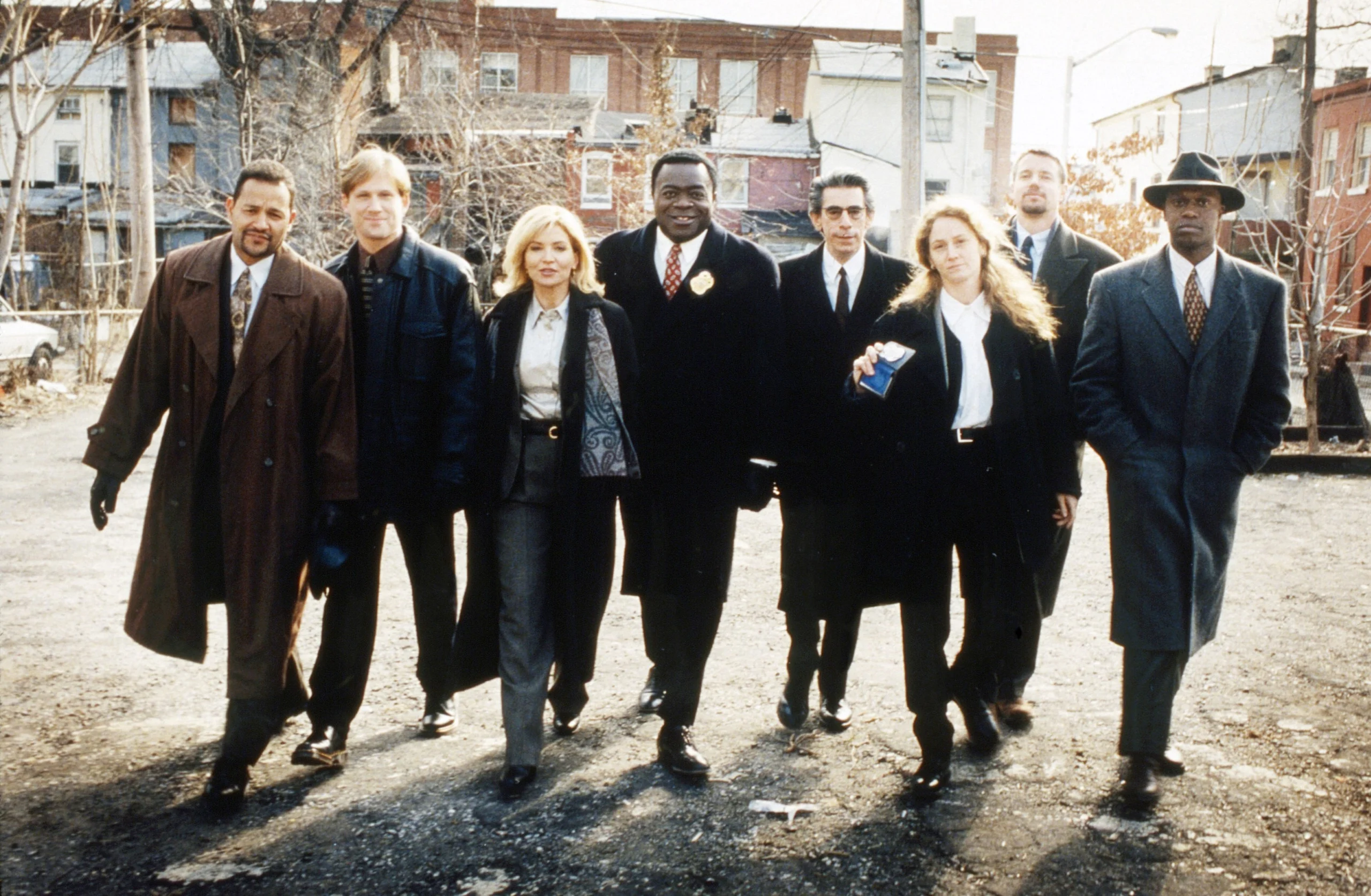
October 14, 1994 marked the return of the Homicide Unit to a full twenty-episode schedule after a truncated second year. The show found its permanent home on Friday nights at 10 p.m., a slot that would define its late-night identity for the rest of its run. This season deepened the focus on the weary detectives navigating the bureaucratic maze of the Baltimore Police Department while chasing down killers who often slipped through the cracks of the justice system.
The roster underwent major changes as Jon Polito departed and Isabella Hofmann stepped in as Lieutenant Megan Russert. Her arrival shifted the dynamic within the precinct, offering a more measured leadership style compared to previous superiors. Daniel Baldwin and Ned Beatty also concluded their time with the series, leaving the core team of Andre Braugher and Richard Belzer to carry the weight of the unit's ongoing trauma and moral ambiguities.
Stream
Availability and pricing can change. Confirm on the provider's site before purchasing.
The third season maintains the show's commitment to realism, rejecting the fantasy of quick fixes or perfect resolutions. Each episode presents a distinct murder case ranging from domestic violence to organized crime hits, yet the path to closure remains fraught with dead ends and bureaucratic hurdles. The narrative emphasizes the human cost of violence, showing how the detectives' professional lives bleed into their personal relationships with spouses, children, and friends. The production utilizes handheld cameras and natural lighting to create an immersive atmosphere that feels less like television drama and more like a documentary observation of police work.
Internal tensions simmer beneath the surface as the remaining detectives grapple with the cumulative weight of their cases. Al Giardello struggles with the limitations of the legal system while John Munch uses humor as a shield against the grim reality of his job. Meldrick Lewis navigates his own moral compass as a younger detective trying to find his place among veterans. The season also features the lingering presence of Stanley Bolander and Beau Felton before their eventual exits, adding layers of personal instability to the unit's roster.
A defining feature of this season is the exploration of the detectives' personal lives, revealing how their professional trauma bleeds into their relationships with spouses, children, and friends. The tone grows darker and more introspective than its predecessors. While the unit faces external threats from criminal elements and internal strife from departmental politics, the core of the story remains the bond between the detectives. They are a family bound by shared trauma and a commitment to finding the truth, even when the truth is painful or inconclusive. The season introduces a crossover event with Law & Order, bringing in Mike Logan (Chris Noth), which highlights the interconnected nature of the NBC universe while allowing for a fresh perspective on the Baltimore unit's methods.
Broadly, the season follows a pattern of case-of-the-week storytelling interwoven with ongoing character arcs. Each episode presents a new murder, ranging from domestic disputes to organized crime hits, but the resolution is rarely clean. The detectives often face dead ends, bureaucratic roadblocks, or the realization that justice is not always served through the legal system. The writing continues to be praised for its sharp dialogue and refusal to romanticize police work. The season ends not with a grand resolution, but with the continuation of the grind, leaving the audience with a profound sense of the endless cycle of violence and the resilience required to face it.
Official Trailer
Critical Consensus
Season three solidifies the show's reputation as a gritty, character-driven masterpiece. Critics praised the raw honesty of the writing and the strong performances from the ensemble cast. The season maintained high production values while exploring complex themes of justice and morality.
“The show refuses to romanticize police work, presenting a stark and unflinching look at the realities of the job.”
Janet Maslin
The New York Times
“Andre Braugher delivers a career-defining performance as the weary but brilliant Detective Giardello.”
Ken Tucker
Entertainment Weekly
“The writing remains sharp and intelligent, avoiding the pitfalls of standard procedural tropes.”
James Poniewozik
Time Magazine
Andre Braugher
Detective Al Giardello
Richard Belzer
Detective John Munch
Isabella Hofmann
Lieutenant Megan Russert
Clifton Collins Jr.
Detective Meldrick Lewis
Danny Aiello
Captain Frank Pembleton
Daniel Baldwin
Detective Stanley Bolander
Ned Beatty
Detective Beau Felton
Melissa Leo
Detective Kay Howard
Directors
Christopher Misiano, Bill D'Elia, Peter Werner, Michael Nankin
Writers
David Simon, Tom Fontana, Ed Burns, George Peckham
Composer
John Cameron
Cinematographers
Paul Sorich, Mark Irwin
Producers
Tom Fontana, David Simon, Marvin Frum, Barry Levinson
Primetime Emmy Awards (1995)
Outstanding Writing for a Drama Series: Nominated
Golden Globe Awards (1995)
Best Television Series - Drama: Nominated
Join the community
fans discussing