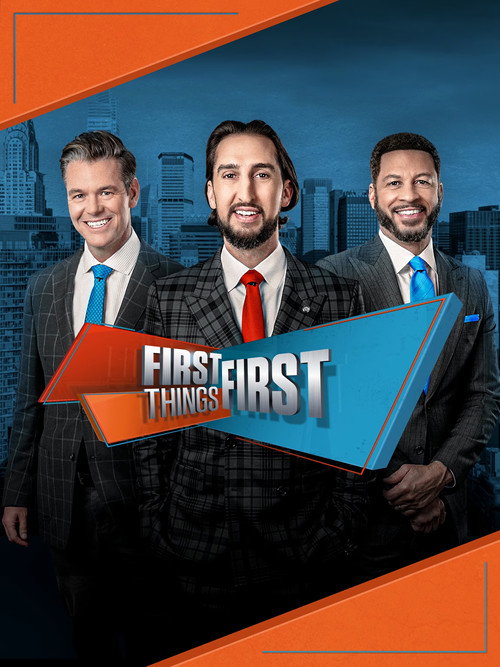
When First Things First launched on September 5, 2017, it arrived as a high-octane sports debate show anchored by Cris Carter and Nick Wright. The program quickly carved out a niche with its unfiltered arguments and distinct personalities, positioning itself against the polished nature of mainstream sports media. Over seven years, the lineup shifted significantly, eventually settling into a trio featuring Nick Wright, Chris Broussard, and Kevin Wildes. This evolution kept the chemistry fresh while maintaining the core appeal of heated takes on current events.
The show airs live for three hours daily across eight seasons, running from late 2017 through the present day. Its format blends hard-hitting analysis with comedy, drawing a dedicated audience that tunes in specifically for the friction between hosts. By the 2024 football season, viewership had surged 57% compared to the previous year. Critics and fans alike praise the dynamic between Wright and Broussard, whose opposing views drive much of the entertainment value.
Availability and pricing can change. Confirm on the provider's site before purchasing.
PlotSpoiler-free
The world of First Things First is defined by a philosophy that prioritizes conflict over consensus. Unlike programs that seek neutral ground or scripted agreement, this show thrives on disagreement. The central engine is not a narrative arc involving characters overcoming external obstacles but rather the constant ideological battle between the hosts regarding player evaluations, team strategies, coaching decisions, and league trends. This dynamic creates a unique viewing experience where the audience tunes in less for definitive answers and more for the spectacle of intelligent, often raucous argumentation. The format simulates the feeling of a passionate tailgate party or a barbershop debate, amplified for a national television audience.
Upon its launch in 2017, the original trio consisted of former NFL tight end Cris Carter, who brought a veteran, authoritative perspective; Nick Wright, known for his aggressive, contrarian takes and rapid-fire delivery; and Ryan Clark, another ex-NFL safety whose grounded approach balanced the group. This initial configuration established the show's reputation for fierce debates, particularly between Carter and Wright. However, the landscape of sports media shifted rapidly in the years following. Following contract negotiations and departures common in the industry, Cris Carter and Ryan Clark eventually left the program.
By the time the show reached its later seasons, the lineup had settled into a new, highly successful chemistry featuring Nick Wright, Chris Broussard, and Kevin Wildes. Broussard, a former NBA player turned analyst, replaced the defensive-minded perspectives of the early days with an offensive, basketball-influenced mindset that translated surprisingly well to football analysis. His presence created a distinct yin and yang dynamic with Wright; while Wright is often the provocateur willing to take unpopular stances just to stir the pot, Broussard frequently serves as the voice of reason or the counter-provocateur, depending on the topic. Kevin Wildes, acting as a co-host and producer, often bridges the gap between the two, providing context, managing the flow of conversation, and occasionally delivering his own sharp insights.
Throughout its run, the show has covered every major sporting event imaginable, from the Super Bowl and NBA Finals to the NFL Draft and March Madness. The broad-stroke shape of each season typically follows the rhythm of the sports calendar. In the summer months, the focus shifts heavily to free agency, trades, and draft analysis, allowing the hosts to speculate wildly without immediate consequence. As the fall arrives, the tone intensifies with the start of the NFL season, where weekly game recaps become the primary battleground. The winter months bring a mix of playoff coverage and cross-sport analysis, while the spring is dedicated to the NBA playoffs and the lead-up to the next NFL season.
The production style is live and unscripted, though it features pre-produced segments such as "The Mahomes Mountain," a recurring feature where Nick Wright ranks quarterbacks based on his personal hierarchy, often sparking outrage and discussion among fans. Another staple is the MVP ballot segment, where the hosts reveal their top picks for league awards, frequently leading to humorous disagreements. The atmosphere is consistently energetic, characterized by interruptions, raised voices, and moments of genuine laughter. The show does not shy away from controversy, often tackling sensitive topics like race, gender, and mental health within the sports world, though always through the lens of athletic competition.
As a daily live sports talk show, First Things First does not receive aggregated critic scores on Rotten Tomatoes, Metacritic, or IMDb in the traditional sense used for scripted dramas or films. Instead, the show's reception is measured by its massive viewership growth, social media engagement, and its status as a leader in the sports talk genre. It is widely praised by sports journalists and fans for its authenticity, lack of corporate sanitization, and the compelling chemistry between its hosts.
 United States