“Jaleel White's Steve Urkel is one of the most unforgettable characters in sitcom history, turning a simple neighbor into a cultural phenomenon.”
Ken Tucker
Entertainment Weekly
 United States
"A family that laughs together, stays together."
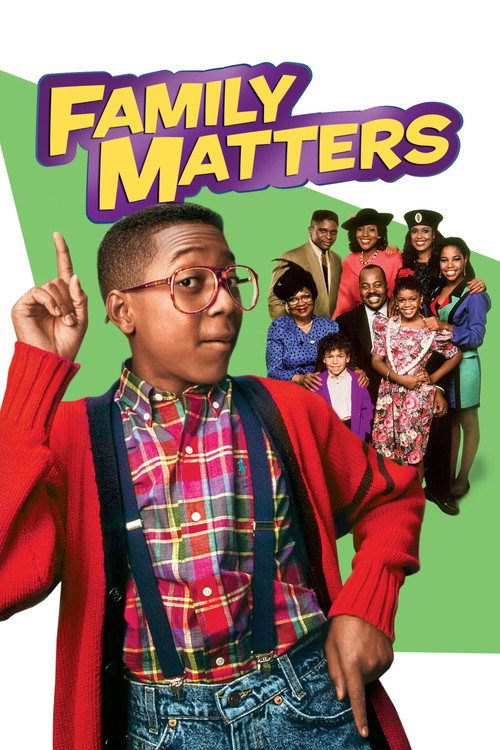
The Winslow household in Chicago offered a warm, middle-class sanctuary that quickly became the setting for one of television's most enduring sitcoms. Created by Michael Warren and William Bickley, this series launched on ABC in September 1989 before moving to CBS for its final chapters. The show ran for nine seasons with 215 episodes, concluding in July 1998. While it began as a spin-off from Perfect Strangers, the program evolved into something entirely its own through the introduction of an unforgettable neighbor.
Carl Winslow served as the anchor of the home, balancing his duties as a police officer with the chaotic energy of his wife Harriette and their three children. Laura brought academic focus to the mix, while Eddie and Judy provided typical teenage friction. Their lives changed forever when Steve Urkel moved next door. What started as minor annoyance grew into a cultural phenomenon that defined the mid-1990s television landscape.
Availability and pricing can change. Confirm on the provider's site before purchasing.
The narrative begins by establishing the domestic rhythm of the Winslow family in a suburban Chicago neighborhood. Carl, a dedicated police officer, attempts to maintain order within his home, often clashing with the natural chaos of raising teenagers. His wife Harriette grounds the household with her strong will and later pursues a career in real estate. Their children, Laura, Eddie, and Judy, navigate the standard trials of growing up, from school pressures to social dynamics. The initial premise focuses on these family interactions, presenting a grounded look at African-American life in the late 1980s.
Disruption arrives in the form of Steve Urkel, a hyper-intelligent but socially awkward teenager who moves into the house next door. Initially appearing as a recurring nuisance, Urkel quickly captures the audience's attention with his high-waisted pants, oversized suspenders, and clumsy demeanor. His catchphrase "Did I do that?" becomes a staple of the show's dialogue. The central conflict shifts from general family issues to the ongoing battle between Urkel's destructive inventions and the Winslows' desire for peace. His unrequited love for Laura drives many plotlines, creating a running gag where his attempts to impress her result in property damage or family embarrassment.
As the series progresses, the tone shifts dramatically from realistic family drama to science fiction fantasy. By the fifth season, the show introduces elements like time travel, cloning, and alien encounters. Urkel creates various alter egos, including the suave Stefan Urquelle, to win Laura's affection. These high-concept storylines dominate seasons six through eight, featuring elaborate gadgets and supernatural events that occasionally overshadow the original family dynamic. Despite the fantastical detours, the core relationship between the Winslows and their eccentric neighbor remains the emotional center of the show.
The final season attempts to return the series to its roots, focusing on character maturation and closure. Laura faces graduation and new romantic prospects, while the rest of the family deals with the reality of their long-term friend leaving the neighborhood. The narrative arc concludes by addressing the impact of Urkel's presence on everyone involved, offering a resolution that respects the history built over nine years without resorting to tragic endings. The show maintains its lighthearted spirit throughout, emphasizing community bonds and the acceptance of differences.
Family Matters: Official Trailer
Critical Consensus
Family Matters stands as a defining sitcom of the 1990s, celebrated for its portrayal of an African-American family and its iconic lead character. While later seasons embraced absurd sci-fi elements that divided some viewers, the show successfully balanced heartfelt family moments with slapstick humor. Its cultural impact remains significant, with Steve Urkel becoming a global symbol of geek chic.
“Jaleel White's Steve Urkel is one of the most unforgettable characters in sitcom history, turning a simple neighbor into a cultural phenomenon.”
Ken Tucker
Entertainment Weekly
“The show's ability to balance family drama with slapstick comedy, especially through Urkel's antics, made it a standout in the 90s.”
David Bianculli
New York Daily News
“Despite the sci-fi detours, Family Matters remained a heartfelt look at a black family navigating life in Chicago, with Urkel as the catalyst for both chaos and connection.”
Alan Sepinwall
HitFix
“The show's evolution from a family sitcom to a vehicle for Urkel's surreal adventures was risky, but it paid off with some of the most memorable moments in TV history.”
Michael Logan
TV Guide
Reginald VelJohnson
Carl Winslow
Jo Marie Payton
Harriette Winslow
Jaleel White
Steve Urkel / Stefan Urquelle
Kellie Shanygne Williams
Laura Winslow
Darius McCrary
Eddie Winslow
Jenna von Oÿ
Judy Winslow
Directors
James Widdoes, John Bowab, Ken Whittingham, Ellen Gittelsohn, Thomas J. Wright
Writers
David J. Steinberg, Bill Prady, John E. Allen, Jim Geoghan, Michael Warren
Composers
Robert Folk, John Deley
Cinematographers
Gary Graver, Peter Kozachik
Producers
John E. Allen, Jim Geoghan, Bill Prady, Michael Warren, William Bickley
NAACP Image Awards (1992)
Outstanding Comedy Series: Nominated
Kids' Choice Awards (1993)
Favorite Male TV Star: Won
Young Artist Awards (1994)
Best Young Actor in a Comedy Series: Nominated
Join the community
fans discussing