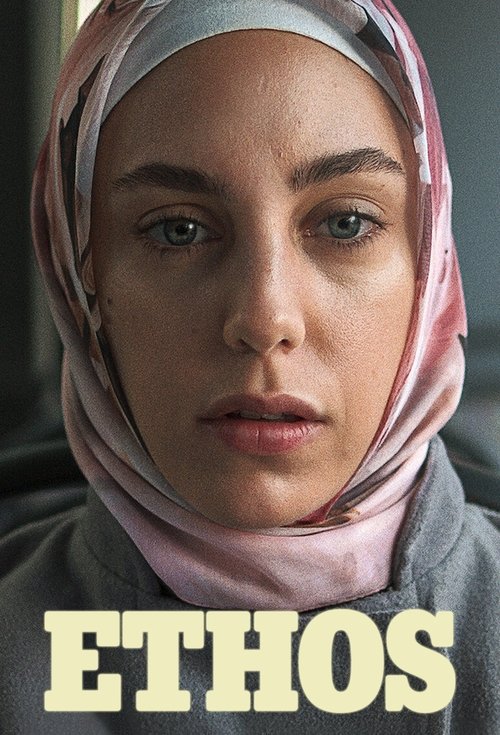
 Turkey
“Berkun Oya's Ethos is a devastatingly beautiful look at the ways trauma ripples through a community, refusing to offer easy answers or happy endings.”
Alissa Wilkinson
The New York Times
November 12, 2020 marked the arrival of Ethos on Netflix, an eight-part Turkish miniseries that immediately set a new standard for psychological drama. Creator Berkun Oya constructed a non-linear narrative inside a psychiatric clinic in Istanbul, using the facility as a pressure cooker to examine how societal expectations fracture individual lives. The show does not follow a single hero but instead intercuts the stories of patients and staff who are bound together by shared pain, betrayal, and the chaotic undercurrents of modern urban life.
The ensemble cast delivers raw performances that anchor this heavy exploration of trauma. Öykü Karayel portrays Meryem, a woman struggling with severe emotional turmoil, while Funda Eryiğit plays Ruhiye, a matriarch fighting against rigid family and religious structures. Defne Kayalar steps into the role of Dr. Peri Aksoy, whose professional boundaries blur as she becomes entangled in her patients' crises. The series tackles difficult subjects like suicide and sexual assault without offering easy answers, forcing viewers to confront the stigma surrounding mental health in conservative societies.
Stream
Availability and pricing can change. Confirm on the provider's site before purchasing.
The story begins with a shocking incident at the clinic that sends ripples through the staff and patients, setting off a chain reaction of revelations. Rather than moving forward in a straight line, the narrative jumps between timelines, using flashbacks to gradually expose how each character arrived at their breaking point. This structural choice mirrors the fragmented nature of memory and trauma, ensuring that the audience pieces together the puzzle alongside the characters. The central conflict extends beyond individual mental health issues; it highlights the collision between personal suffering and the unyielding social structures of Turkey, including gender roles and religious dogma.
Meryem's journey forms the emotional core of the first season. She grapples with a past that threatens to consume her present, navigating a world that demands perfection while offering no support for failure. Her interactions with Dr. Peri Aksoy reveal the complex dynamics between healer and patient, often blurring the lines of trust and manipulation. Meanwhile, Ruhiye faces a different kind of battle within her own home, where traditional expectations clash with her desire for autonomy. Fatih Artman's Yasin adds another layer of tension, his life spiraling due to a web of relationships and societal judgment that leaves him isolated.
As the episodes progress, the atmosphere grows increasingly claustrophobic. Secrets become weapons, and the characters find themselves trapped in a labyrinth of lies. The show builds toward a climax where the accumulated weight of these hidden histories forces a confrontation with reality. The broad-stroke shape of the season explores whether true healing is possible or if the cycle of trauma is inevitable within such a flawed system. Each episode peels back another layer of the characters' defenses, revealing the root causes of their despair without resorting to melodrama. The narrative refuses to offer a tidy resolution, instead leaving the audience with a sense of ongoing struggle and the harsh truth that recovery is rarely a linear path.
The supporting cast deepens the thematic resonance. Tülin Özen plays Gülbin, an older woman seeking connection in a place designed for isolation, while Alican Yücesoy introduces mystery and tension as Sinan. Settar Tanrıöğen appears as Ali Sadi Hoca, a spiritual figure whose influence looms over the moral dilemmas faced by everyone in the clinic. The non-chronological storytelling ensures that every revelation feels earned, forcing the viewer to constantly reassess their understanding of who these people are and what they have done. By the time the final episodes arrive, the distinction between the doctor's observations and the patients' realities has dissolved completely, leaving only the raw human experience behind.
Critical Consensus
Critics universally praise Ethos for its unflinching portrayal of mental health and its refusal to shy away from controversial topics. The series is lauded for its bold direction by Berkun Oya, who masterfully balances multiple storylines without losing emotional impact. Performances are described as raw and authentic, particularly by Öykü Karayel and Defne Kayalar. While some reviewers note the heavy subject matter can be difficult to watch, the consensus is that the show is a vital addition to global television.
“Berkun Oya's Ethos is a devastatingly beautiful look at the ways trauma ripples through a community, refusing to offer easy answers or happy endings.”
Alissa Wilkinson
The New York Times
“This is a gripping, often heartbreaking drama that manages to feel both intimately personal and broadly sociological, anchored by powerhouse performances.”
Daniel Fienberg
The Hollywood Reporter
“Oya has crafted a thriller that isn't about whodunit, but rather why-did-it-happen, peeling back layers of Turkish society with surgical precision.”
Vulture
New York Magazine
“A visceral, emotionally exhausting, yet ultimately rewarding experience that shines a light on the silence surrounding mental health in conservative societies.”
Alex Clark
The Guardian
“Uncompromising and fiercely intelligent, Ethos proves that the most powerful stories are often the ones that refuse to look away from the darkness.”
David Ehrlich
IndieWire
Öykü Karayel
Meryem
Funda Eryiğit
Ruhiye
Fatih Artman
Yasin
Defne Kayalar
Dr. Peri Aksoy
Tülin Özen
Gülbin
Alican Yücesoy
Sinan
Settar Tanrıöğen
Ali Sadi Hoca
Director
Berkun Oya
Writer
Berkun Oya
Producers
Berkun Oya, Ali Farkhonde
International Emmy Awards (2021)
Best Drama Series: Nominated
Golden Butterfly Awards (2021)
Best Actress: Won
Adana Golden Boll Film Festival (2021)
Best Director: Nominated
Adana Golden Boll Film Festival (2021)
Best Screenplay: Nominated
Join the community
fans discussing