“The show gave a voice to a generation of comedians who were previously ignored by mainstream media.”
Anonymous Critic
Variety
 United States
"Uncensored stand-up from the heart of Black America"
User Score
10 votes
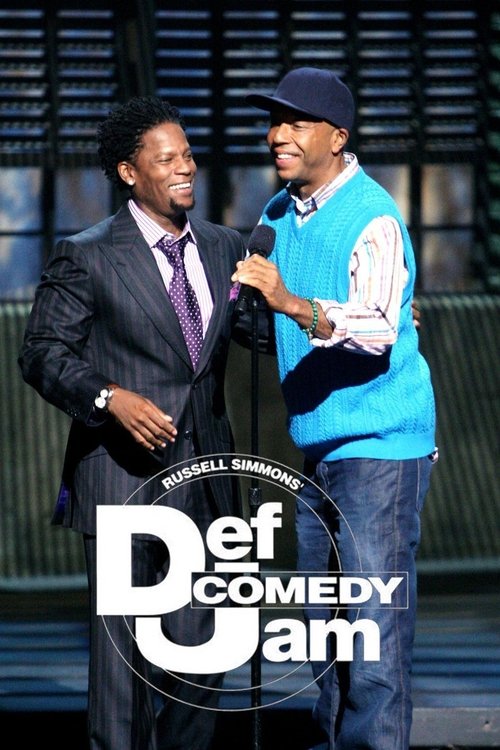
March 7, 1992 marked a turning point in television history when HBO premiered Def Comedy Jam. Russell Simmons and Stan Lathan created a platform that bypassed network censors to showcase raw, unfiltered stand-up comedy from predominantly Black performers. The show recorded live sets at iconic venues like Harlem's Apollo Theater and Catch a Rising Star, delivering an hour of high-energy performances that tackled race, politics, and personal struggle without apology.
While the format remained consistent across its run, the cultural impact shifted dramatically with each season. The series functioned as a launchpad for a generation of comedians who would later dominate mainstream entertainment. Stars like Chris Rock, Dave Chappelle, Martin Lawrence, and Kevin Hart used these stages to refine their voices before becoming household names. Critics praised the authenticity of the content, noting how the show refused to soften edges for a white audience.
Stream
Free with ads
Availability and pricing can change. Confirm on the provider's site before purchasing.
The premise of Def Comedy Jam is straightforward yet revolutionary: a late-night showcase presenting uncensored stand-up comedy from Black American comics. Each episode functions as a variety special rather than a narrative story. A host introduces a rotating roster of comedians who take the stage to perform short sets, typically lasting five to ten minutes. These performers deliver material ranging from observational humor about daily life to sharp political commentary and physical comedy. The "world" of the show exists within the clubs and theaters where audiences gathered to witness this unvarnished expression.
Cultural context defined the show's identity more than any plot could. In the early 1990s, mainstream television rarely allowed Black comedians to speak freely about the realities of their lives. Def Comedy Jam filled that void by leveraging HBO's premium cable freedom from broadcast standards. Comics addressed issues of class, sexuality, and systemic inequality with brutal honesty. This refusal to sanitize their material became the show's defining characteristic. The energy in the room was palpable as performers pushed boundaries that other platforms would never allow.
The structure of the series evolved over two distinct eras. The initial run from 1992 to 1997 established the franchise as a vital institution for Black comedy. Hosts like Martin Lawrence brought star power to the early seasons, guiding viewers through lineups that included emerging talents alongside established veterans. The revival period from 2006 to 2008 continued the same format while introducing a newer wave of comics. Veterans occasionally returned to remind audiences of the show's roots. Across both runs, the series maintained its commitment to showcasing talent that might otherwise remain hidden.
Because the show operates as an anthology-style showcase, there are no fictional characters or recurring storylines to follow. Viewers can tune in at virtually any point without needing prior context. This episodic nature contributed to the series' longevity as a catalog title on streaming platforms decades after its initial broadcast. Each set stands alone as a self-contained performance, allowing fans to experience the work of individual comics regardless of when they first aired.
The sheer volume of talent featured across eleven seasons and numerous specials creates a comprehensive archive of comedic history. Names like Bernie Mac, D.L. Hughley, Cedric the Entertainer, Chris Tucker, Tracy Morgan, Ricky Harris, Steve White, Derrick Fox, Yvette Wilson, and Joe Torry all found significant moments on this stage. The show did not just feature comedians; it documented the evolution of a specific comedic voice during a pivotal era in American culture.
Critical Consensus
Def Comedy Jam redefined stand-up television by providing an uncensored platform for Black comedians. The series launched major careers and offered authentic portrayals of African-American life without softening edges for mainstream audiences. While critics noted occasional controversy over profanity, the show remains celebrated for its raw energy and cultural significance.
“The show gave a voice to a generation of comedians who were previously ignored by mainstream media.”
Anonymous Critic
Variety
“Russell Simmons created a space where Black comedy could exist without apology or censorship.”
Entertainment Weekly Staff
Entertainment Weekly
“From Chris Rock to Dave Chappelle, the talent showcased here went on to define an era of comedy.”
The New York Times
The New York Times
Directors
Stan Lathan, Bob Sumner
Producers
Russell Simmons, Stan Lathan, Bob Sumner
Join the community
fans discussing