 Japan
Japan“A wild ride that somehow makes sense, Akiba Maid War is a testament to how far anime can stretch its imagination when given the right creative freedom.”
AV Club Review
AV Club
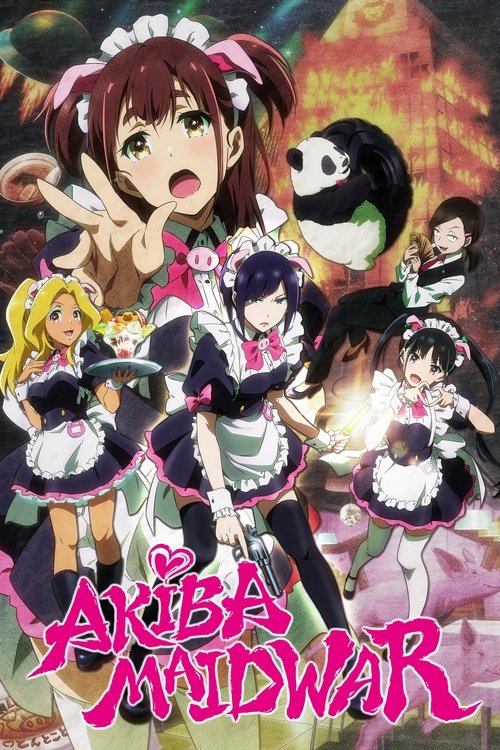
Akihabara in the late nineties was a chaotic mix of otaku culture and neon lights, but for Nagomi Wahira, it became a battlefield. This dark comedy from Tokyo MX follows her journey as she joins the Ton Tokoton maid café alongside the stoic Ranko Mannen. Voiced by Reina Kondo and Rina Sato respectively, these two lead a cast that includes Minami Tanaka and Tomoyo Kurosawa in a story that blends slice-of-life charm with sudden bursts of violence. The twelve-episode run aired from October to December 2022 under the TV-MA rating, proving that serving tea can be just as dangerous as swinging a sword.
Critics and audiences alike found fresh appeal in its unique tone, which treats the absurdity of Japanese workplace hierarchies with deadly seriousness. The series operates on a unique tonal axis, blending the saccharine aesthetics of a slice-of-life anime with the brutal, high-stakes violence of a yakuza crime drama. It presents a surreal and violent deconstruction of the "moe" culture that defines Japanese otaku subculture.
Availability and pricing can change. Confirm on the provider's site before purchasing.
Set in the electric, neon-drenched heart of Akihabara during the spring of 1999, Akiba Maid War presents a surreal and violent deconstruction of the "moe" (affectionate) culture that defines Japanese otaku subculture. The narrative follows Nagomi Wahira, a bright-eyed, optimistic 17-year-old who has moved from the countryside to Tokyo with an unwavering dream: to become a maid at a café and live out her idealized vision of cuteness. Her dream leads her to "Ton Tokoton," a pig-themed maid café run by the enigmatic and stoic Ranko Mannen.
Nagomi's entry into the world of maid cafés quickly shatters her innocence. She discovers that the industry in late-90s Akihabara is not merely about serving tea and striking cute poses; it is a cutthroat battlefield where survival depends on more than just charm. The central conflict arises from the intense rivalry between Ton Tokoton and other local establishments, most notably the sleek and popular "Sakura" café. This competition transcends customer service metrics; it involves territorial disputes, corporate espionage, and physical confrontations orchestrated by the Yakuza, who have deep financial stakes in the region's entertainment districts.
Ranko Mannen serves as the series' anchor, a veteran maid who treats her job with a terrifying level of professionalism. Unlike Nagomi, Ranko views the maid uniform as a weapon and the café as a front for criminal operations. As the season progresses, the show introduces a colorful cast of supporting characters, including the energetic but naive Yumechi, the sharp-tongued Shiipon, and various Yakuza enforcers and rival café managers. Each character brings a distinct personality to the mix, ranging from the absurdly polite to the brutally efficient.
The plot structure of the single season is episodic yet cumulative. Early episodes focus on Nagomi's training and her gradual realization that the "cute" facade hides a dark underbelly. As she adapts, the series escalates the stakes, moving from petty sabotage and verbal sparring to full-blown gang wars fought with kitchen utensils, cleaning supplies, and improvised weapons. The comedy stems from the juxtaposition of these two worlds: the girls singing cheerful songs while simultaneously dismantling their enemies. The narrative explores themes of loyalty, the commodification of youth, and the harsh realities of the service industry, all wrapped in a vibrant, stylized animation package. By the mid-point of the series, the conflict intensifies as external forces threaten to wipe out the smaller cafés, forcing Nagomi and Ranko to navigate a web of alliances and betrayals without losing their sense of self or their dream of being maids. The season builds toward a climax where the fate of Ton Tokoton hangs in the balance, testing the resolve of its staff against overwhelming odds, though the specific outcome remains a mystery until the finale.
HIDIVE Trailer
Official Trailer 2
Official Trailer
Critical Consensus
Akiba Maid War stands out as a bizarre yet brilliant genre-bender that successfully merges the innocent aesthetics of maid culture with gritty, over-the-top violence. Critics praise its unique tone, which treats the absurdity of workplace hierarchies with deadly seriousness, creating a dark comedy that is both hilarious and surprisingly poignant. The animation by P.A.WORKS is praised for its fluid action sequences, while the voice acting brings depth to the eccentric cast.
“A wild ride that somehow makes sense, Akiba Maid War is a testament to how far anime can stretch its imagination when given the right creative freedom.”
AV Club Review
AV Club
“The series manages to be both a loving homage to Akihabara culture and a scathing critique of its darker undercurrents, all while delivering some of the best animated fight scenes of the year.”
Variety
Variety
“With its unique blend of slapstick humor and sudden brutality, Akiba Maid War offers a fresh perspective on the crime genre, proving that even a maid café can be a battlefield.”
Hollywood Reporter
Hollywood Reporter
“Visually stunning and narratively bold, this anime defies expectations by turning a seemingly innocent premise into a high-octane thriller that keeps viewers on the edge of their seats.”
IGN
IGN
Reina Kondo
Nagomi Wahira
Rina Sato
Ranko Mannen
Minami Tanaka
Yumechi
Tomoyo Kurosawa
Shiipon
Jenya Davidyuk
Zoya
Ayahi Takagaki
Manager
Aya Hirano
Okachimachi
Koki Uchiyama
Toritateya
Tsuyoshi Koyama
Taisho
Manaka Iwami
Nerula
Junko Minagawa
Nagi
Chiaki Yurin
Manami
Writer
Yoshihiro Hiki
Composer
Yoshihiro Ike
Cinematographer
Rumi Ishiguro
Producers
Shigeto Nihei, Koichi Kikuchi, Toshio Iizuka, Yasuhiko Gomi
Join the community
fans discussing