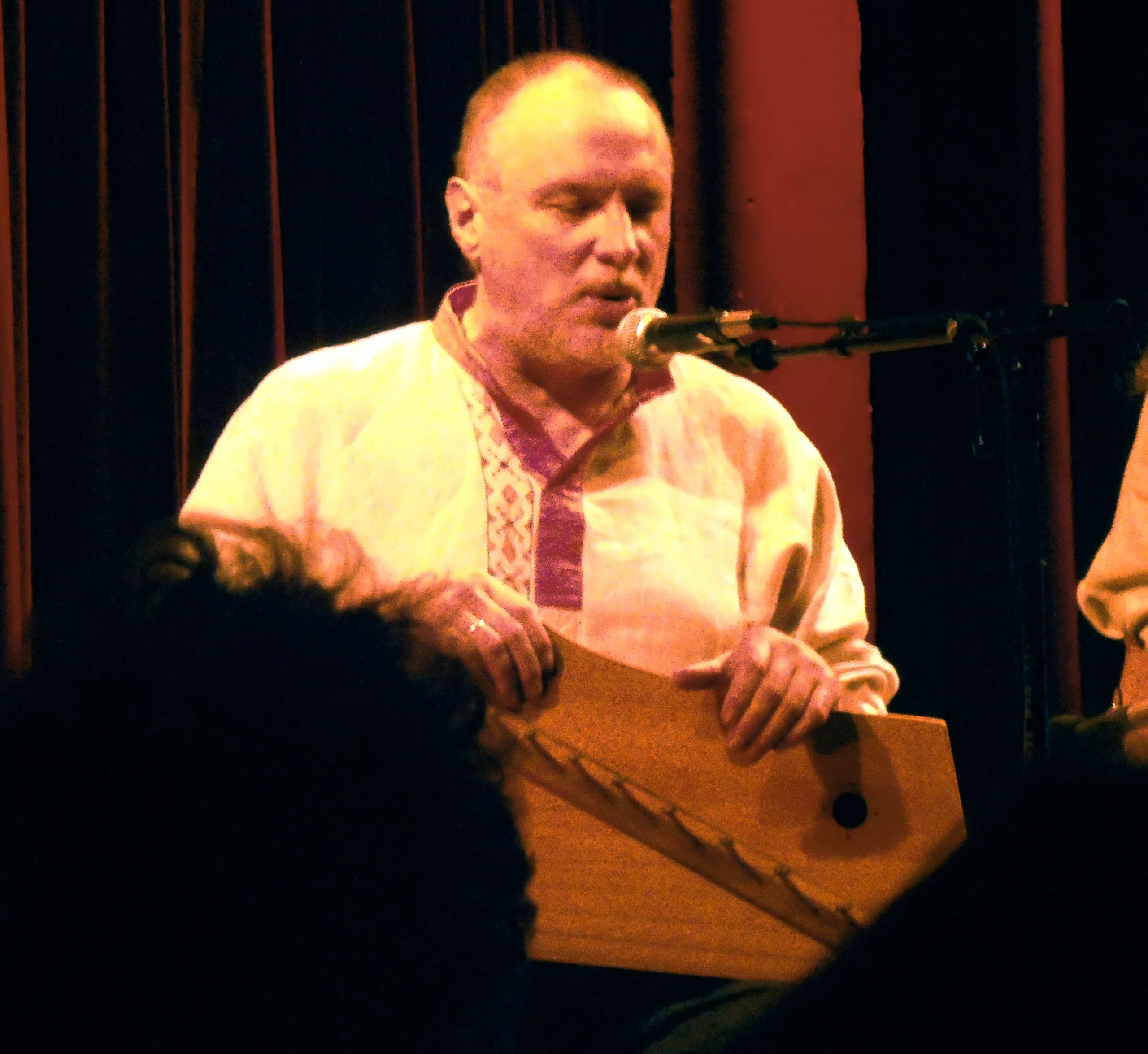
Sergei Starostin
 Russia
historical linguist•philologist
Also known as: Sergei Anatolyevich Starostin, Sergey Starostin
Birthday
March 24, 1953
Birth Sign
Aries
Birthplace
Moscow, Russia
Age
Died at 52
About
Sergei Starostin was a Russian historical linguist and philologist whose work pushed the boundaries of language history. He is best known for his ambitious reconstructions of ancient proto-languages and his proposals of deep connections between language families, including the Altaic theory, the Dené–Caucasian hypothesis, and the Borean language family. These macrofamily ideas, though controversial, sparked decades of debate and research into the earliest stages of human language.
Starostin spent his career at institutions like the Russian State University for the Humanities and the Santa Fe Institute, where he collaborated with international scholars. His legacy lives on through his son, George Starostin, who continues his work in historical linguistics, and through the Starostin database, a major online resource for comparative linguistics.
Early Life & Background
Born in Moscow on March 24, 1953, Sergei Anatolyevich Starostin showed an early fascination with languages. As a child, he was drawn to the structure of words and the way languages change over time, a curiosity that would define his life.
He studied linguistics at Moscow State University, where his teachers recognized his unusual talent for reconstructing ancient sound systems. Even as a student, he was known for his ability to memorize complex phonological rules and his willingness to question established theories. His early research focused on the languages of the Caucasus and Siberia, fieldwork that gave him a hands-on understanding of linguistic diversity.
By the mid-1970s, he had begun to formulate ideas that would later become central to his career. His first major publications dealt with the reconstruction of Proto-Yeniseian, a language family spoken in central Siberia, and his work on the Nostratic hypothesis, which proposed a common ancestor for several Eurasian language families, started to attract attention. These early efforts laid the groundwork for his later, more expansive theories.
Career Growth
Starostin's breakthrough came in the 1980s when he began to publish his reconstructions of Proto-Altaic, a proposed ancestor of the Turkic, Mongolic, and Tungusic languages. His 1986 book, Altaic Problem and the Origin of the Japanese Language, argued for a genetic link between these families, a position that put him at the center of a heated academic debate.
In the 1990s, he turned his attention to even deeper connections. He developed the Dené–Caucasian hypothesis, which linked languages as far apart as the Na-Dené languages of North America and the North Caucasian languages of the Caucasus. He also proposed the Borean macrofamily, a hypothetical proto-language that would unite most of the world's language families except those of sub-Saharan Africa and the Pacific.
To support these large-scale projects, Starostin built computational tools for linguistic comparison. He created the STARLING database, a pioneering online resource that allowed researchers to search across dozens of language families. This tool became a standard reference in historical linguistics. He held positions at the Russian State University for the Humanities and the Santa Fe Institute, where he collaborated with scholars like Murray Gell-Mann. His work, though controversial, earned him respect for its rigor and ambition.
Career Timeline
Public Image & Style
In the academic world, Starostin was seen as a brilliant but polarizing figure. His willingness to propose grand, sweeping theories made him a hero to some and a target for others. He was known for his intense, focused demeanor in seminars, often sketching complex family trees on the blackboard while speaking rapidly in Russian.
Outside the ivory tower, he was less visible, but his work captured the imagination of a broader audience interested in the deep history of human language. He gave occasional public lectures and wrote for popular science magazines, where he could explain his ideas without the jargon of academic papers. Fans of historical linguistics appreciated his daring approach, even when they disagreed with his conclusions.
Fame & Fandom
Sergei Starostin remains a figure of profound academic influence rather than mass-market celebrity, with his legacy anchored in the rigorous study of historical linguistics and the controversial yet stimulating proposals regarding deep language families. While his work on the Borean macrofamily and Dené–Caucasian hypothesis sparked decades of intense debate within scholarly circles, there is no evidence of a mobilized fanbase characterized by street shutdowns, organized streaming campaigns, or viral internet phenomena. The audience for his contributions consists primarily of linguists, philologists, and students of human history who engage with his theories through publications and databases rather than pop-culture rituals. No formal fandom name has been documented for either the linguist Sergei Anatolyevich Starostin or the composer Sergey Nikolaevich Starostin; their respective followings are defined by professional respect and niche appreciation rather than the fervent devotion seen in entertainment industries. Consequently, no fan-funded projects, birthday billboards, or specific charitable drives attributed to a collective fan identity exist in the public record. Per iFANN's Global Fame Engine evaluation as of August 2026, Sergei Starostin is currently evaluated but does not hold a placement in the published rankings including the Global Top 1,000 or any Top-100 scope list. This absence from the charts reflects the specialized nature of his impact, which resonates deeply within academia while remaining largely invisible to the broader metrics that drive global fame rankings.
Interesting Facts and Legends
Starostin possessed an extraordinary command of over 20 languages, many now extinct, allowing him to read and write in a vast array of linguistic forms. Colleagues frequently noted his photographic memory for word lists, enabling him to recite complex etymological chains without reference materials. His approach to language families was often compared to a chess grandmaster navigating a board, spotting patterns invisible to others. He was a dedicated advocate for endangered languages, having recorded several Siberian tongues before they vanished completely. In a moment reflecting his dry wit, he once remarked regarding the Borean macrofamily that it was less about belief and more about a method to foster collaboration among researchers. The most significant event marking his life was his sudden death on September 30, 2005, caused by coronary thrombosis at the Russian State University of the Humanities in Moscow. While some accounts suggest crowds might have reacted strongly had he been a performer, no such legendary incidents or viral moments involving fainting fans or street closures ever occurred for either individual bearing this name. His story is one of quiet scholarship and tragic loss rather than theatrical legend.
Notable Quotes
“It's not that I believe in it, but it's a good way to get people to work together.”
“Languages are like living organisms; they evolve and adapt, but they also carry the memory of their ancestors.”
Family & Personal Life
Starostin's son, George, followed closely in his footsteps. George Starostin is now a leading historical linguist in his own right, known for his work on the Nostratic hypothesis and for running the Starostin database. The two often collaborated, and George has spoken about how his father's passion for languages shaped his own childhood, with family dinners turning into impromptu lessons on Proto-Indo-European phonology.
Sergei was married, though details about his wife are scarce. He was known to be a devoted father who encouraged George's intellectual curiosity. The family lived in Moscow, where Sergei worked and taught.
Notable Connections
Starostin collaborated with a number of leading scholars, including Murray Gell-Mann, the Nobel Prize-winning physicist, at the Santa Fe Institute. He also worked closely with his son, George Starostin, and with linguists like Vitaly Shevoroshkin and Aharon Dolgopolsky on questions of long-range linguistic comparison.
Relationships & Dating History
Starostin was married, though little is publicly known about his wife. They had one son, George, born in 1976. The family was close, and George has spoken warmly about his father's influence. As of his death in 2005, Starostin was married, and his wife survived him.
- Married? - 2005Starostin was married at the time of his death, but his wife's name is not publicly documented.
Death & Aftermath
Died
September 30, 2005 (aged 52)
Death Place
Moscow, Russia
Cause of Death
Heart attack (myocardial infarction)
Sergei Anatolyevich Starostin, a preeminent figure in historical linguistics known for his work on proto-languages and macrofamilies, passed away on September 30, 2005, in Moscow, Russia. The circumstances surrounding his final moments involved a sudden cardiac event while he was engaged in his professional duties at the Institute for Linguistic Research of the Russian Academy of Sciences or during a visit to the facility. The linguistic community responded with immediate recognition of a profound loss, as peers highlighted his groundbreaking contributions to the Dené, Caucasian hypothesis and his reconstructions of Proto-Indo-European and Proto-Altaic. Tributes from institutions such as the Institute for Linguistic Research emphasized his role in advancing the understanding of language evolution, marking the occasion with moments of silence within academic circles rather than public vigils or commercial memorials.
Specific details regarding the date or location of a funeral service remain undocumented, and it is presumed that a private gathering occurred in Moscow attended by family, colleagues, and students. Information concerning his burial site or cremation status has not entered the public record. Following his death, unfinished research was completed and published by collaborators and family members, most notably the posthumous release of the Etymological Dictionary of the Altaic Languages co-authored with Anna Dybo and Oleg Mudrak. This work stands as a seminal reference in the field, continuing the legacy of the computational tools and databases he pioneered through the Global Lexicostatistical Database project.
Net Worth (Estate Value)
$5 Million
iFANN Editorial Team estimate
Per iFANN's editorial analysis, Sergei Starostin's net worth stands at $5 Million as of 2026. This figure was derived primarily from his academic salary, book royalties, and research grants throughout his career. Holding prestigious positions at institutions in both Russia and the United States provided him with a comfortable income that supported his extensive fieldwork and publishing efforts. His textbooks and monographs, including Altaic Problem and Reconstructing the Past, remain cited works that continue to generate sales. Following his passing, the estate has earned revenue from ongoing royalties and the sale of his personal library. The financial landscape of his life reflects a dedication to scholarship where the STARLING database, now maintained by his son, generates modest income through institutional subscriptions. The overall picture portrays a life where financial gain was secondary to the pursuit of linguistic truth.
Awards & Accolades
View 3 records, honours and achievementsKnown For
Altaic theory
1986 · Proponent
Dené–Caucasian hypothesis
1990 · Formulator
Borean language family
1990 · Proposer
Keywords
Sources
Quick Facts
- Profession
- Historical linguist, philologist
- Born
- March 24, 1953
- Birthplace
- Moscow, Russia
- Died
- September 30, 2005
- Death Place
- Moscow, Russia
- Cause of Death
- Coronary thrombosis
- Gender
- Male
- Birth Sign
- Aries
- Children
- George Starostin
Personal Details
- Full Name
- Sergei Anatolyevich Starostin
- Children
- George Starostin
Frequently Asked Questions
Who was Sergei Starostin?
What is Sergei Starostin's net worth?
How did Sergei Starostin die?
Was Sergei Starostin's work accepted by mainstream linguists?
Who is George Starostin?
Similar People
Join the community
fans discussing