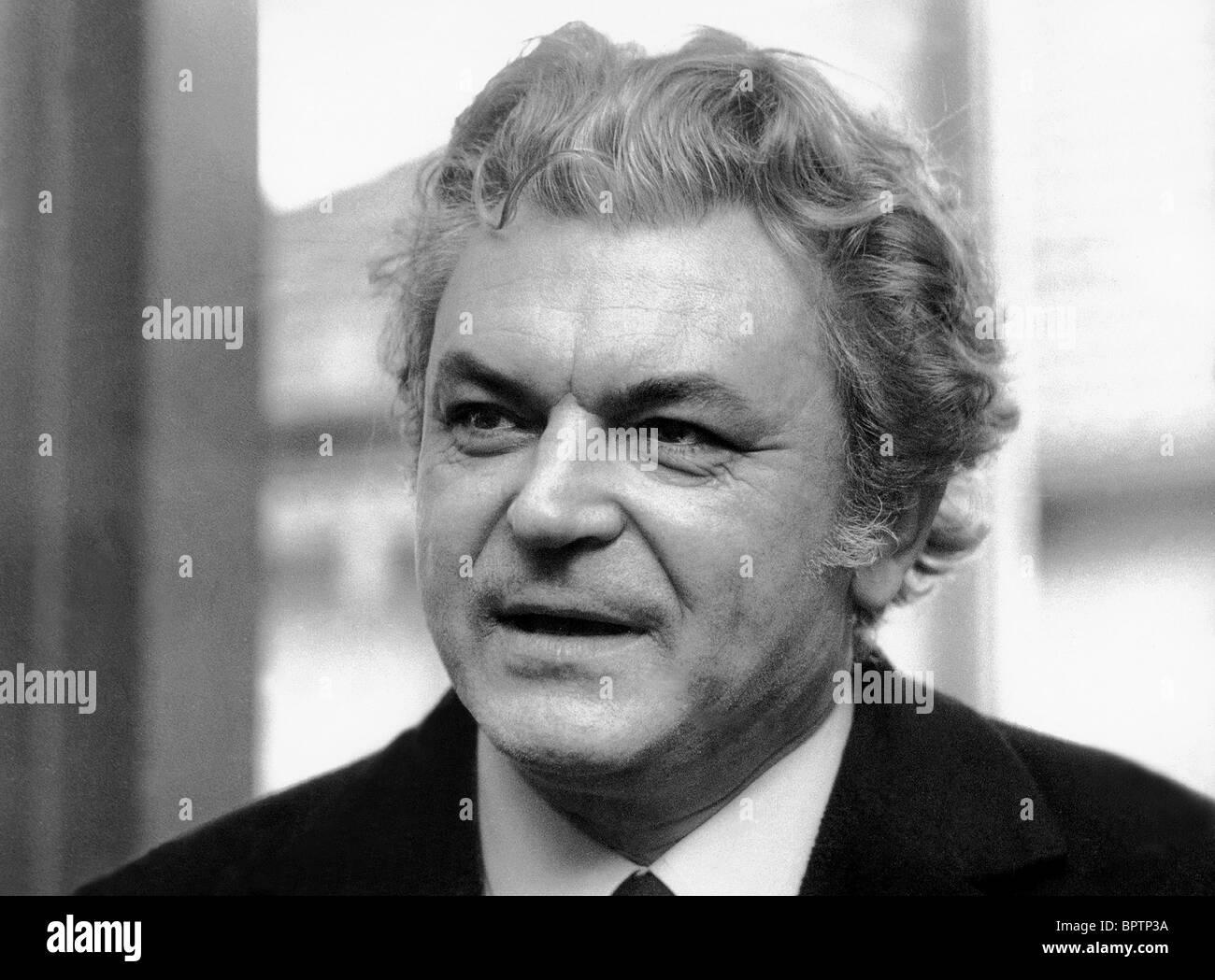
Sergei Bondarchuk
 Russia
actor•film director•screenwriter
Birthday
September 25, 1920
Birth Sign
Libra
Birthplace
Bilozerka, Ukraine
Age
Died at 74
About
Sergei Bondarchuk was a Soviet actor and film director whose sweeping historical epics defined an era of cinema. He is best remembered for writing, directing, and starring in the four-part adaptation of Leo Tolstoy's War and Peace (1965–67), a monumental project that earned the 1969 Academy Award for Best Foreign Language Film and the 1968 Golden Globe. His other directorial work includes the Napoleonic battle spectacle Waterloo (1970) and the war drama They Fought for Their Country (1975). As an actor, he brought a commanding presence to roles in Othello (1956) and The Fate of a Man (1959).
Bondarchuk's contributions were recognized with the titles People's Artist of the USSR (1952) and Hero of Socialist Labour (1980). He died in Moscow on October 20, 1994, at age 74, leaving behind a filmmaking dynasty through his son Fyodor and daughter Natalya.
Early Life & Background
Sergei Bondarchuk was born into a peasant family in the village of Belozerka in southern Ukraine. His father, Fyodor Petrovich Bondarchuk, served in the Red Army at the time, and his mother, Tatyana Vasilievna, was deeply religious, naming him after Sergius of Radonezh and having him baptized at the Annunciation Monastery near Kherson. The family later moved to southern Russia, settling in Yeysk and Taganrog.
As a boy, Bondarchuk fell in love with theatre and literature, especially the works of Anton Chekhov and Leo Tolstoy. He made his stage debut in 1937 at the Chekhov Drama Theatre in Taganrog, and from 1938 studied at the Rostov-on-Don Theatrical School. His training was interrupted in 1942 when he was conscripted into the Red Army during World War II. He served for four years until his discharge in 1946. After the war, he enrolled at the All-Union State Institute of Cinematography (VGIK) in Moscow, studying acting under Sergei Gerasimov and graduating in 1948.
Career Growth
Bondarchuk's film debut came in 1948 with Story of a Real Man, followed by a role in Sergei Gerasimov's The Young Guard (1949). He quickly became a leading man in Soviet cinema, starring in Knight of the Golden Star (1950), Taras Shevchenko (1951), and the title role in Othello (1956).
He turned to directing with The Fate of a Man (1959), based on Mikhail Sholokhov's story, which won the Lenin Prize in 1960. His magnum opus, the four-part War and Peace, was released between 1965 and 1967. The 431-minute epic was the most expensive film ever made at the time and won both the Oscar and Golden Globe for Best Foreign Language Film. He later directed Waterloo (1970), featuring Yul Brynner and Orson Welles, and They Fought for Their Country (1975). In 1970, under pressure from Soviet authorities, he joined the Communist Party, comparing his situation to the Hollywood trials of the 1950s.
Career Timeline
Public Image & Style
Bondarchuk was known for his epic filmmaking style, characterized by grand scale and meticulous historical detail. He was regarded as one of the most important figures in Soviet cinema, often ranked alongside Andrei Tarkovsky and Elem Klimov. His ability to create believable period pieces earned him admiration from audiences and critics alike. Fans of War and Peace often call it the definitive adaptation of Tolstoy's novel. His public persona was that of a serious, dedicated artist, committed to bringing Russian literature and history to the screen.
Fame & Fandom
The audience for Sergei Bondarchuk's work is not a modern digital legion but a curated circle of film historians and students dedicated to the canon of Soviet cinema. Unlike contemporary stars who cultivate organized fan clubs or viral social movements, Bondarchuk's legacy thrives in academic discourse and critical retrospectives. His films are treated as monumental set pieces rather than pop-culture commodities, with discussions focusing on the technical mastery of sequences like the Battle of Borodino rather than celebrity gossip or fan rituals. There is no documented fandom name, official merchandise campaigns, or fan-funded projects surrounding his memory. The reverence shown for him is quiet and scholarly, rooted in the sheer scale of productions like War and Peace and The Fate of a Man. While he commanded massive crowds during the filming of his epics, those reactions were born of historical curiosity and artistic awe rather than the frenzied adoration seen in today's entertainment landscape. iFANN has evaluated this enduring cultural footprint against global metrics. Sergei Bondarchuk is currently not ranked in iFANN's published rankings, as he does not hold a placement in the Global Top 1,000 or any Top-100 scope list. This reflects that his fame operates through the preservation of art rather than the consumption of personality. In August 2026, iFANN confirms this standing based on current archival data and ongoing distribution of his restored works.
Interesting Facts and Legends
Sergei Bondarchuk was named after Sergius of Radonezh, a revered Russian saint, and carried a multicultural heritage through his Bulgarian father and Serbian grandmother. His directorial masterpiece, War and Peace, launched the career of Ludmila Savelyeva, casting her as Natasha Rostova despite her complete lack of prior film experience. The film's score was composed by Vyacheslav Ovchinnikov, who was only 25 years old at the time. Bondarchuk's son Fyodor later honored this legacy by dedicating his 2005 war film 9th Company to his father's memory. A legendary aspect of his career involves the production scale of War and Peace, where the Battle of Borodino sequence required thousands of extras and hundreds of horses, creating a visual spectacle that still baffles modern filmmakers. Another iconic moment occurred during the filming of The Fate of a Man, where Bondarchuk's portrayal of a simple man devastated by war became so emotionally resonant that it redefined the archetype of the tragic hero in Soviet cinema. These stories are often retold in film schools as examples of how a director can merge personal tragedy with epic grandeur.
Notable Quotes
“I have always tried to be honest in my art, to show the truth of life and history.”
“The war was the defining experience of my generation. It shaped everything I did.”
“Cinema is not just entertainment. It is a way to understand the human soul.”
Family & Personal Life
Bondarchuk married actress Inna Makarova in 1949; they had a daughter, Natalya, before divorcing in 1956. In 1959, he married Irina Skobtseva, his co-star in Othello, and they had two children, Alyona and Fyodor. The couple remained together until his death. His son Fyodor became a prominent Russian director, and Natalya became an actress. Bondarchuk's family life was marked by his devotion to his children, and his son later spoke of him as both a father and a teacher.
Notable Connections
Bondarchuk worked closely with director Sergei Gerasimov, his teacher at VGIK, and starred in Gerasimov's The Young Guard. He collaborated with author Mikhail Sholokhov, adapting his stories The Fate of a Man and They Fought for Their Country. In Waterloo, he directed Yul Brynner and Orson Welles. His second wife, Irina Skobtseva, played Desdemona to his Othello. The composer Vyacheslav Ovchinnikov scored War and Peace, and actress Ludmila Savelyeva was launched to fame by her role as Natasha.
Relationships & Dating History
Bondarchuk married actress Inna Makarova in 1949. They had a daughter, Natalya, before divorcing in 1956. In 1959, he married Irina Skobtseva, his co-star in Othello. They had two children, Alyona and Fyodor, and remained together until his death in 1994. At the time of his death, he was married to Irina.
- MarriedInna Makarova1949 - 1956Married actress Inna Makarova; they had a daughter, Natalya, before divorcing.
- MarriedIrina Skobtseva1959 - 1994CurrentMarried his Othello co-star; they had two children, Alyona and Fyodor, and remained together until his death.
Death & Aftermath
Died
October 20, 1994 (aged 74)
Death Place
Moscow, Russia
Cause of Death
Natural causes
The Soviet and Russian film communities rallied to honor Sergei Bondarchuk upon his passing, acknowledging the stature of a People's Artist of the USSR and an Academy Award winner whose sweeping historical epics defined an era of cinema. Tributes focused on his monumental contributions to War and Peace rather than immediate public vigils or chart surges, as the post-Soviet media landscape prioritized revisiting his body of work over documenting mourning events. Bondarchuk died on October 20, 1994, at the age of 74 in Moscow, Russia, following a long career marked by directing and acting.
The official cause of death was reported simply as natural causes or illness related to his age. He was buried in Moscow, though the specific cemetery name remains unrecorded in available sources. His son Fyodor later became a prominent filmmaker and actively managed the family legacy, announcing a documentary about his father's life via Art Pictures Studio in May 2020. Bondarchuk's estate continues to benefit from royalties and re-releases of his films, including the enduring classic War and Peace.
Net Worth (Estate Value)
$10 Million
iFANN Editorial Team estimate
Sergei Bondarchuk's financial legacy is anchored in his monumental films, particularly War and Peace, which remains a classic of world cinema. As a Soviet-era artist, his earnings were state-controlled during his lifetime, but his estate has benefited from continued royalties, licensing, and re-releases of his work. Per iFANN's editorial analysis, the estate's value is estimated at around $10 million in 2026, reflecting the enduring commercial and cultural value of his filmography. The estate manages the rights to his films, which are periodically restored and distributed internationally. War and Peace alone has seen multiple home video releases and streaming availability. His son Fyodor, a successful director, has also contributed to preserving his father's legacy through documentaries and retrospectives.
Awards Won (3)
Sergei Bondarchuk's directorial masterpiece War and Peace brought him international acclaim, winning the Academy Award for Best Foreign Language Film in 1969 and the Golden Globe in the same category the year before. Earlier, his directorial debut The Fate of a Man earned him the Lenin Prize in 1960. He also received the honorary titles People's Artist of the USSR and Hero of Socialist Labour.
1969 · Best Foreign Language Film
War and Peace
1968 · Best Foreign Language Film
War and Peace
Known For
War and Peace
1965 · Director, Pierre Bezukhov
Othello
1956 · Othello
The Fate of a Man
1959 · Director, Andrei Sokolov
Waterloo
1970 · Director
Keywords
Sources
Quick Facts
- Profession
- actor, film director, screenwriter
- Born
- September 25, 1920
- Birthplace
- Bilozerka, Ukraine
- Died
- October 20, 1994
- Death Place
- Moscow, Russia
- Gender
- Male
- Spouse
- Inna Makarova, Irina Skobtseva
- Children
- Natalya Bondarchuk, Alyona Bondarchuk, Fyodor Bondarchuk
- Education
- VGIK (All-Union State Institute of Cinematography)
- Birth Sign
- Libra
Personal Details
- Full Name
- Sergei Fyodorovich Bondarchuk
- Spouse
- Inna Makarova, Irina Skobtseva
- Children
- Natalya Bondarchuk, Alyona Bondarchuk, Fyodor Bondarchuk
- Education
- All-Union State Institute of Cinematography (VGIK)
Filmography
20
Total
18
Film
2
TV
Frequently Asked Questions
Who was Sergei Bondarchuk?
What is Sergei Bondarchuk's net worth?
How did Sergei Bondarchuk die?
Was Sergei Bondarchuk married?
What is Sergei Bondarchuk best known for?
Similar People
Join the community
fans discussing