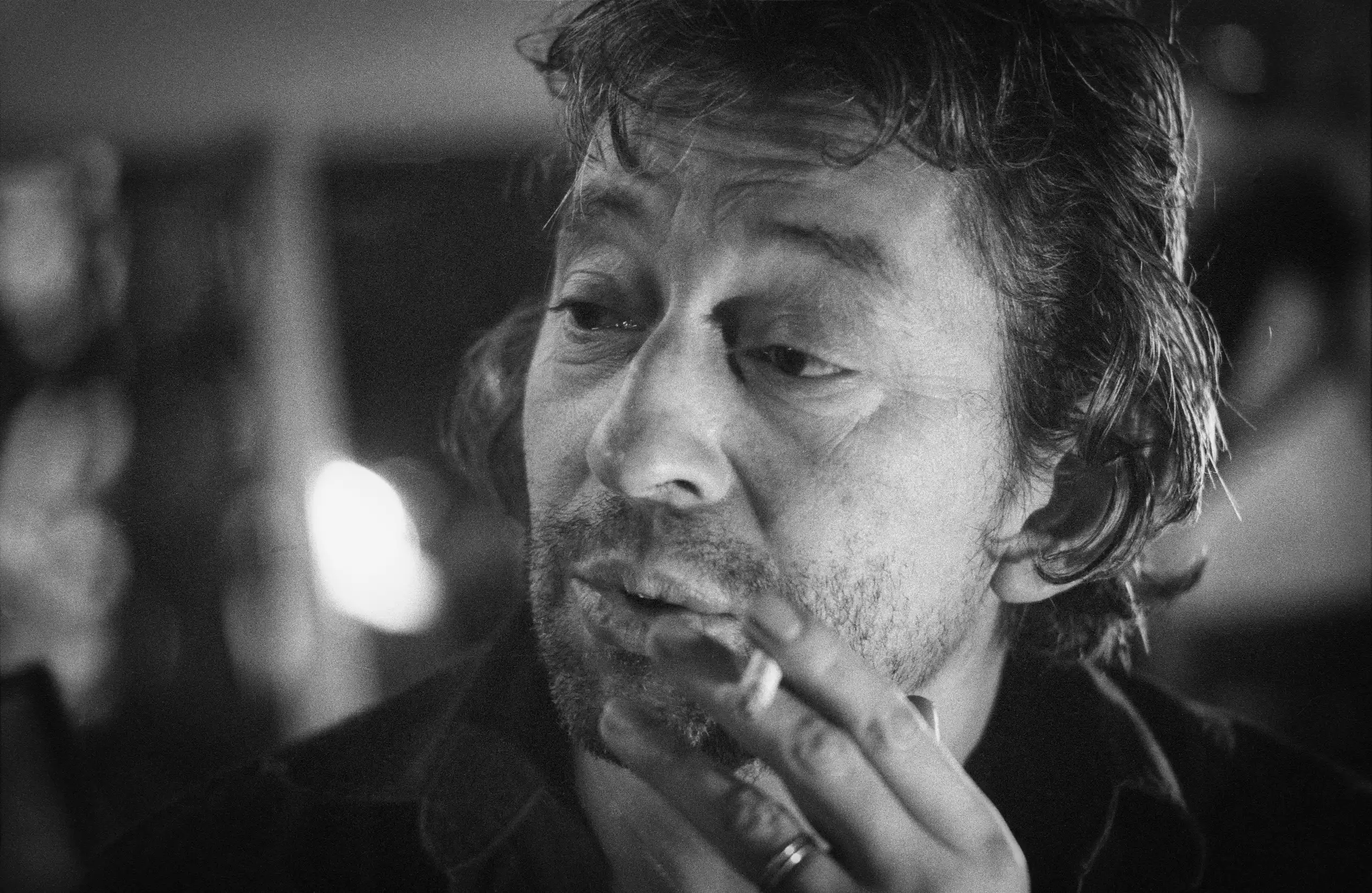
Serge Gainsbourg
 France
singer-songwriter•actor•composer•film director
Also known as: Lucien Ginsburg, Serge Gainsbourg
Birthday
April 2, 1928
Birth Sign
Aries
Birthplace
4th arrondissement of Paris, France
Age
Died at 62
Height
5 ft 9 in (175 cm)
About
Serge Gainsbourg was a French singer-songwriter, actor, composer, and film director who became one of the most provocative figures in 20th-century pop culture. Born Lucien Ginsburg in Paris, he crafted a career defined by genre-hopping versatility and lyrical daring that challenged social norms. His catalog spans jazz, chanson, rock, funk, reggae, and electronica, with over 550 songs written that have been covered more than 1,000 times by artists ranging from David Bowie to Massive Attack.
Gainsbourg died on March 2, 1991, at age 62 from a second heart attack at his apartment in Paris. Despite his passing, his legacy has only grown stronger. He is now regarded as a national treasure in France and a cult icon globally, remembered for his sharp wit, sexual frankness, and ability to blend high art with underground taboo. His influence permeates modern music and fashion, ensuring his voice remains heard decades after his final recording session.
Early Life & Background
Lucien Ginsburg entered the world on April 2, 1928, in the 4th arrondissement of Paris. His father Joseph was a Russian-Jewish immigrant from Odessa, while his mother Rachel was a Romanian Jew. Recent research published in Le Monde in early 2026 highlighted forgotten Ukrainian roots within the family history, adding complexity to Serge's later self-identification as a Russian Jew. The family moved to Paris shortly after his birth, where young Lucien developed an early fascination with cinema and jazz records. He attended the Lycée Carnot but left before completing his baccalaureate to pursue the arts full-time.
Before achieving fame, he worked as a piano player in nightclubs and wrote for various publications. During World War II, he adopted the stage name Serge Gainsbourg. While some accounts suggest this was chosen to distance himself from his Jewish heritage during the Nazi occupation, he later contested this narrative. A pivotal moment occurred when he began composing for other artists like Juliette Gréco. By the late 1950s, he had established himself as a skilled pianist and songwriter, laying the groundwork for his solo breakthrough with releases like La Javanaise in 1958.
Career Growth
Gainsbourg's transition to solo stardom began in the early 1960s, marked by witty and subversive tracks like Eugène et le Chien in 1963. His reputation as a provocateur solidified with the 1968 release of Bonnie and Clyde, a narrative song recorded with Jane Birkin that won him significant attention for its explicit subject matter. This was followed by the international sensation Je t'aime... moi non plus in 1969, which caused outrage and was banned by the BBC and Vatican Radio due to its simulated sexual sounds.
The mid-to-late 1970s saw him produce his masterpiece Histoire de Melody Nelson in 1975, widely considered one of the greatest albums in French history. He continued to reinvent himself, releasing politically charged works like Aux armes et cætera in 1979 and experimenting with reggae and electronic sounds. Even in his final years, he remained active, collaborating with Brigitte Bardot and working on film scores until just months before his death in 1991. His work has influenced countless artists, including David Bowie and Franz Ferdinand, cementing his status as a musical chameleon.
Career Timeline
Public Image & Style
Gainsbourg projected an image of the ultimate French bohemian: cynical, intellectual, and unapologetically hedonistic. Known for his voracious appetite for alcohol, cigarettes, and women, his lifestyle fueled media speculation and added to his legend. He wore his disheveled charm like armor, often sporting a cigarette holder and a perpetually skeptical expression. His public persona was defined by his willingness to shock, whether through lyrics about incest or explicit duets. Critics viewed him as a genius who refused to be categorized, while the public saw a rogue artist who spoke truths others feared to utter. His style blended military jackets with casual wear, reflecting a mix of authority and rebellion that became synonymous with his brand.
Fame & Fandom
Serge Gainsbourg remains a figure whose cultural footprint extends far beyond his lifetime, commanding attention across media coverage, search activity, and consumption patterns worldwide. The iFANN Global Fame Rankings confirm his enduring stature, placing him as the 50th most famous person in France, a position he has held steady through successive measurement cycles. This specific standing within the country reflects a sustained resonance that few artists of his generation have maintained. While his global reach is significant, his primary dominance remains anchored in French culture, where his work continues to be revisited by critics and historians alike.
No formal organization or collective name defines his fanbase; instead, reverence for his legacy is expressed through institutional study, academic inquiry, and official tributes rather than structured grassroots movements. His audience operates less as an active fandom with rituals and more as a custodial community preserving a complex artistic history. The absence of a named group underscores the nature of his appeal: it is one of deep appreciation for a singular, provocative voice rather than the mobilized energy seen in modern pop phenomena. His status is not merely historical but actively measured, ensuring his relevance in contemporary discourse without reliance on the ephemeral trends that often define celebrity longevity.
Interesting Facts and Legends
Gainsbourg cultivated a persona blending Jewish heritage with a rebellious streak, often exploring themes of sexuality and satire. In 1969, the recording of Je t'aime... moi non plus with Jane Birkin led to bans by major broadcasters, cementing his reputation as a provocateur. A story fans still retell suggests he would not survive modern France due to his confrontational nature, reinforcing his mythical status. Tributes continue to emerge, such as the 2026 exhibition at his former Paris home during Heritage Days. His daughter Charlotte Gainsbourg preserves his memory through photographic projects. Even musicians like Mick Harvey received the Chevalier des Arts et des Lettres specifically for interpreting his work, proving his influence transcends generations.
Notable Quotes
“I am not a star. I am a man.”
“Music is the only thing that can save me from myself.”
“I write songs to make people think, not just to dance.”
Family & Personal Life
Gainsbourg was born to Joseph Ginsburg, a Russian-Jewish immigrant from Odessa, and Rachel, a Romanian Jew. He married Lise Levitzky in 1950, a model and actress, though they divorced in 1958 without having children together. His second marriage to German aristocrat Caroline von Paulus lasted from 1958 to 1962. They had a son named Jude Haim, who sadly died in infancy in 1962. Later, he had a long-term relationship with actress Jane Birkin, with whom he had his famous daughter, Charlotte Gainsbourg, born in 1971. Charlotte has become a respected actress and musician in her own right. Gainsbourg lived primarily in Paris, maintaining a household filled with artistic visitors and creative chaos.
Notable Connections
Relationships & Dating History
Serge Gainsbourg's personal life was as turbulent and public as his art. He was married to Lise Levitzky from 1950 to 1958. They met in Paris in the early 1950s; she was a model and actress. Their union ended due to his infidelity and unconventional lifestyle, and they did not have children together. Following this divorce, he married Caroline von Paulus, a German aristocrat, in 1958. They met in Berlin and had a son named Jude Haim in 1961, though the child tragically died in infancy in 1962. The marriage dissolved in 1962. Gainsbourg then entered a long-term relationship with British actress Jane Birkin in 1968. They collaborated on numerous hit records and films, producing their daughter Charlotte in 1971. Although they never married, they remained partners until his death in 1991. As of the time of his passing, he was widowed, leaving behind a legacy of both artistic brilliance and romantic complexity.
- MarriedLise Levitzky1950 - 1958Met in Paris; divorced due to lifestyle differences; no children.
- MarriedCaroline von Paulus1958 - 1962German aristocrat; son Jude Haim born 1961, died 1962.
- DatedJane Birkin1968 - 1991Long-term partner and frequent collaborator; daughter Charlotte born 1971.
Death & Aftermath
Died
March 2, 1991 (aged 62)
Death Place
Paris, France
Cause of Death
Myocardial infarction
The family of Serge Gainsbourg announced his passing on March 2, 1991, following the discovery of his body by his daughter Charlotte Gainsbourg at their residence in Paris. The singer collapsed while shaving in the bathroom of his apartment at 5 Bis Rue de Verneuil and was found slumped over before medical assistance could arrive. Official records ruled the cause as a myocardial infarction linked to pre-existing heart conditions that had previously required hospitalization. Public reaction to the loss was immediate and widespread across France and internationally, characterized by spontaneous vigils outside his former home and an outpouring of tributes from cultural peers who mourned him as a national treasure.
Sales of his catalog surged significantly in the wake of the announcement, cementing a resurgence of interest that has persisted for decades. His funeral remained a private affair attended by close family members including Jane Birkin and Charlotte, with burial taking place at Montparnasse Cemetery in Paris without public performances or widely disseminated service details. Posthumous recognition continued to accumulate as his estate managed ongoing releases and compilations under family supervision. In 2023, the Maison Gainsbourg opened its doors as a museum dedicated to his life and work, featuring exhibitions such as "5 Bis" curated by his daughter to preserve the memory of the space where he lived.
Net Worth (Estate Value)
$5 Million
iFANN Editorial Team estimate
The estate of Serge Gainsbourg continues to generate significant revenue nearly three decades after his death. Research by the iFANN Editorial Team puts the current value of his fortune at around $5 Million, driven by ongoing royalties from his vast catalog of over 550 songs. These earnings stem from streaming platforms, physical sales, licensing deals for films and commercials, and merchandise featuring his iconic imagery. Posthumous releases and reissues, such as the 2026 exhibitions and remastered albums, contribute to this steady income stream. The estate is managed by his daughter Charlotte Gainsbourg and legal representatives, who oversee the exploitation of his intellectual property rights. Unlike living celebrities whose wealth fluctuates with new ventures, Gainsbourg's financial trajectory remains stable, anchored by the timeless appeal of his work and the enduring demand for his unique sound in the global market.
Awards Won (2)
Gainsbourg received numerous accolades throughout his career, including the Grand Prix du Disque for Histoire de Melody Nelson. He was awarded the Chevalier des Arts et des Lettres by the French government for his contributions to culture. His work has been recognized posthumously with multiple honors, including induction into various music halls of fame. While he rarely sought traditional awards, his impact on French music is undeniable, with many of his albums receiving critical acclaim and commercial success.
1975 · Best Album
Histoire de Melody Nelson
1980 · Cultural Contribution
Lifetime Achievement
Known For
Histoire de Melody Nelson
1975 · Album
Je t'aime... moi non plus
1969 · Song
Bonnie and Clyde
1968 · Album
Keywords
Sources
Quick Facts
- Profession
- actor, composer, film director
- Born
- April 2, 1928
- Birthplace
- 4th arrondissement of Paris
- Died
- March 2, 1991
- Death Place
- 7th arrondissement of Paris
- Gender
- Male
- Spouse
- Lise Levitzky, Caroline von Paulus
- Birth Sign
- Aries
Personal Details
- Full Name
- Lucien Ginsburg
- Height
- 5 ft 9 in (175 cm)
- Spouse
- Lise Levitzky, Caroline von Paulus
- Children
- Charlotte Gainsbourg, Jude Haim Gainsbourg
- Education
- Lycée Carnot
Filmography
24
Total
18
Film
6
TV
Frequently Asked Questions
How old was Serge Gainsbourg when he died?
Who was Serge Gainsbourg's most famous partner?
What is Serge Gainsbourg best known for?
Why was Je t'aime... moi non plus banned?
Is Serge Gainsbourg still influential today?
Join the community
fans discussing