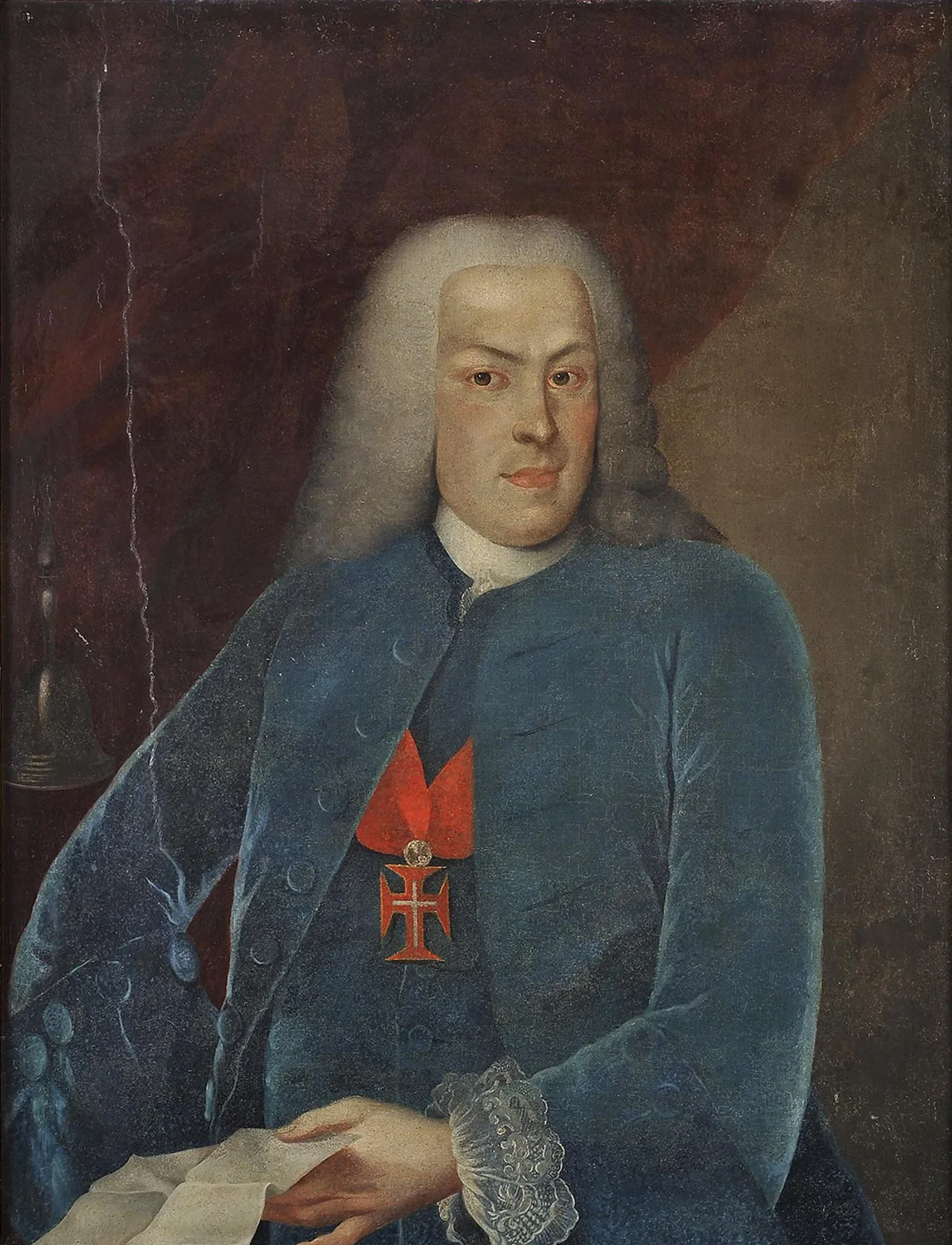
Sebastião José de Carvalho e Melo, 1st Marquis of Pombal
 Portugal
politician•diplomat•seismologist
Also known as: Marquês de Pombal, Count of Oeiras
Birthday
May 13, 1699
Birth Sign
Taurus
Birthplace
Sernancelhe, Portugal
Age
Died at 82
About
Sebastião José de Carvalho e Melo, born in the village of Sernancelhe on May 13, 1699, rose from a minor noble family to become the absolute ruler of Portugal. Known as the Marquis of Pombal, this statesman, diplomat, and amateur seismologist dominated Portuguese politics for nearly three decades during the reign of King Joseph I. His career began modestly after studying at the University of Coimbra and serving briefly in the army before he turned his attention to diplomacy. He secured key ambassadorships in London and Vienna between 1738 and 1749, where he absorbed British commercial practices that would later shape his domestic reforms.
Pombal's ascent to power hinged on the catastrophic Lisbon earthquake of November 1, 1755. While the city lay in ruins and thousands perished, he seized control of the relief efforts, suppressed panic, and directed the reconstruction of the capital using his distinct architectural style. This display of decisive leadership earned him the trust of the king, allowing him to dismantle the old aristocracy through the Távora affair in 1759. He ordered the execution of powerful nobles and expelled the Society of Jesus from Portuguese territories, consolidating his authority as Secretary of State for Internal Affairs. His rule became synonymous with centralization and modernization, though it also involved severe repression of dissent and the promotion of the Atlantic slave trade to fuel Brazil's economy.
His legacy remains deeply divided among historians. On one hand, he implemented sweeping mercantilist reforms, established royal monopolies, and demarcated the Douro wine region to regulate port wine production. He also curbed the power of the Inquisition and granted civil rights to New Christians. On the other hand, his authoritarian methods included the burning of villages like Trafaria that resisted his orders and the establishment of strict censorship boards. When Queen Maria I ascended the throne in 1777 following her father's death, she moved quickly to remove him. Accused of tyranny, Pombal lost his titles, faced prosecution, and spent his final years in exile until his death on May 8, 1782.
Early Life & Background
Sebastião José de Carvalho e Melo entered the world on May 13, 1699, in the small village of Sernancelhe, located in the Beira Alta region of northern Portugal. Born into a family of minor nobility, his father was Dom Manuel de Carvalho e Melo, a country squire, and his mother was Dona Maria Madalena de Noronha. His maternal uncle served as a prominent cleric, providing the young Sebastião with early access to church networks that would prove valuable later in life. Despite these connections, the family did not possess the vast wealth or influence of the high Portuguese aristocracy, placing them in a position where ambition required both talent and strategic maneuvering.
His formal education took place at the University of Coimbra, one of Europe's oldest and most prestigious institutions. There, he dedicated himself to the study of civil law, mastering the legal frameworks that governed the kingdom. Following his studies, he briefly joined the Portuguese army, though this military service was short-lived and did not define his future path. Instead, he pivoted toward diplomacy, a field where his legal background and sharp intellect could flourish. Before achieving national prominence, he navigated the complex social hierarchies of 18th-century Portugal, learning the intricacies of court politics and international relations that would eventually allow him to seize control of the government.
Career Growth
Pombal's trajectory shifted dramatically in the mid-18th century when he was appointed Ambassador to London in 1738. During his tenure there, which lasted until 1745, he closely studied British commercial practices, industrial techniques, and naval strategies. These observations formed the blueprint for his later domestic reforms. He then served as Ambassador to Vienna from 1745 to 1749, further expanding his diplomatic network. Upon returning to Portugal, his reputation as a capable administrator led to his appointment as Secretary of State for Internal Affairs in 1750, though his true power surge came shortly after.
The Great Lisbon Earthquake of November 1, 1755, became the catalyst for his absolute rule. With the capital in ruins and the king paralyzed by grief, Pombal stepped forward with an iron will. He famously declared, "Now bury the dead and feed the living," suppressing looting and organizing immediate rescue efforts. This decisive action cemented his position as the de facto ruler of the kingdom. Between 1755 and 1777, he orchestrated a series of transformative policies: the expulsion of the Jesuits in 1759, the destruction of the Távora family's power in 1759, and the creation of the first protected wine appellation system in the Douro Valley in 1756. He secularized the university system, established vocational schools, and reorganized the economy along mercantilist lines. His administration even promoted the Atlantic slave trade to boost the Brazilian economy, a controversial move that highlighted his pragmatic, if ruthless, approach to governance.
Career Timeline
Public Image & Style
Pombal's public image is deeply polarized. He is viewed by some as a visionary modernizer who saved Portugal from decline and rebuilt Lisbon with foresight. Conversely, he is seen by others as a ruthless dictator who used torture, censorship, and execution to crush dissent. His style is characterized by efficiency, centralization, and a belief in the state's absolute authority. Contemporary accounts often describe him as stern, energetic, and imposing, traits that defined his leadership during the crisis of the 1755 earthquake. His legacy continues to spark debate among historians regarding the balance between necessary reform and tyrannical overreach.
Fame & Fandom (iFAMOUS Rankings)
iFANN has not yet collected fame data for this person. While he holds a definitive place in historical rankings as one of the most influential figures in Portuguese history, there is no organized "fandom" in the modern entertainment sense. However, he has a dedicated following among historians, students of the Enlightenment, and Portuguese nationalists. Fan campaigns are limited to academic discussions, historical reenactments, and preservation efforts of Pombaline architecture. His reputation as a pioneer in seismic-resistant architecture and disaster recovery protocols ensures his recognition globally among urban planners and scholars.
Interesting Facts and Legends
Sebastião José de Carvalho e Melo is widely considered one of history's first amateur seismologists. He personally investigated the 1755 earthquake, collecting data on seismic waves and tsunamis, and published reports that predated modern seismology by over a century. His response to the disaster was so thorough that he effectively invented modern disaster management protocols. Another lesser-known fact is his role in establishing the Demarcation of the Douro Region in 1756, which created the world's first legally defined wine region to ensure the quality of Port wine. Despite his authoritarian reputation, he granted civil rights to "New Christians", Jewish converts to Christianity, who had previously faced persecution by the Inquisition. To enforce his directives, he sometimes employed brutal tactics, such as ordering the burning of villages like Trafaria that resisted his orders, showcasing the dark side of his efficiency.
Notable Quotes
“Now bury the dead and feed the living.”
“I am the only man in Portugal who knows how to govern.”
Family & Personal Life
He was the son of Dom Manuel de Carvalho e Melo and Dona Maria Madalena de Noronha. His mother's brother was a prominent cleric, giving the family early ties to the church hierarchy. In 1743, he married Eleonora Ernestina von Daun, a German noblewoman and daughter of Field Marshal Leopold Joseph von Daun. This marriage was a strategic alliance that bolstered his social standing and provided a stable domestic foundation during his rise to power. The couple had children, though specific details regarding their names and fates are less documented than his political acts. Eleonora survived him, outliving the Marquis by several years. As a historical figure from the 18th century, there is no "dating history" in the modern sense, nor is there a current relationship status; he has been deceased since 1782.
Notable Connections
Relationships & Dating History
Sebastião José de Carvalho e Melo married Eleonora Ernestina von Daun in 1743. She was the daughter of Field Marshal Leopold Joseph von Daun. The marriage was a strategic alliance that bolstered his social standing and provided him with a stable domestic foundation during his rise to power. There are no records of other public romantic relationships, engagements, or divorces; his historical narrative focuses almost exclusively on his political maneuvering. The couple had children, though specific details regarding their names and fates are less documented than his political acts. Eleonora survived him, outliving the Marquis by several years. As a historical figure from the 18th century, there is no "dating history" in the modern sense, nor is there a current relationship status; he has been deceased since 1782.
- MarriedEleonora Ernestina von Daun1743 - 1782Strategic marriage to a German noblewoman; she outlived him.
Death & Aftermath
Died
May 8, 1782 (aged 82)
Death Place
Oeiras, Portugal
Cause of Death
Natural causes associated with advanced age
Sebastião José de Carvalho e Melo passed away on May 8, 1782, within the confines of his exiled estate at Oeiras, Portugal. The Marquis of Pombal, who had spent the final five years of his life under house arrest following the death of King Joseph I and the accession of Queen Maria I, succumbed to natural causes associated with advanced age and frailty. His decline was observed by family members in a setting defined by political seclusion rather than public ceremony, as he remained a figure of significant but polarized memory while stripped of his courtly power. No judicial inquiry or state investigation accompanied his passing.
The determination of his death rested entirely on the observation of those present at the Palácio de Pombal, leading to a quiet conclusion. While some historical narratives have suggested alternative locations, the consistent record places his final days in Oeiras near Lisbon, where he resided after being exiled from the capital. Public reaction to his death reflected the deep divisions his career had engendered, with immediate tributes from high officials remaining muted due to the recent political purge that had removed him from influence. Detractors continued to blame him for authoritarianism, yet the populace generally acknowledged his pivotal role in reconstructing Lisbon after the catastrophic earthquake of 1755.
The Marquis was interred in the Church of São Domingos in Lisbon, specifically within the family chapel, though later traditions associate his remains with the Mercês Church where a memorial monument exists. A private funeral attended by close associates marked the end of his physical presence, lacking the grandeur of a state occasion given his recent disgrace. Posthumously, his name became immortalized in the Pombaline style of architecture and various educational initiatives, ensuring his status as one of Portugal's most important statesmen despite the controversies of his final years.
Net Worth (Estate Value)
$0
iFANN Editorial Team estimate
As a historical figure who died in 1782, Sebastião José de Carvalho e Melo does not have a "net worth" in the modern sense of liquid assets or salary. His wealth consisted of land holdings, titles, and the spoils of his political office. During his lifetime, he amassed significant property, including the Palácio de Pombal in Oeiras. Posthumous valuation is speculative and based on the value of his estate's lands and the economic impact of his policies. There are no credible 2026 net worth estimates for him as he is deceased; any such figures found online would be erroneous or refer to the value of his historical legacy in tourism and real estate, which is not attributed to his personal estate in a financial report.
Awards & Accolades
View 6 records, honours and achievementsKnown For
Rebuilding of Lisbon
1755 · Lead Architect of Reconstruction
Expulsion of the Jesuits
1759 · Political Leader
Douro Wine Regulation
1756 · Policy Maker
Keywords
Sources
Quick Facts
- Profession
- politician, diplomat, seismologist
- Born
- May 13, 1699
- Birthplace
- Sernancelhe, Portugal
- Died
- May 8, 1782
- Death Place
- Oeiras, Portugal
- Gender
- Male
- Spouse
- Eleonora Ernestina von Daun
- Birth Sign
- Taurus
Personal Details
- Full Name
- Sebastião José de Carvalho e Melo
- Spouse
- Eleonora Ernestina von Daun
- Children
- Unspecified number; names not well documented
- Education
- University of Coimbra (Civil Law)
Frequently Asked Questions
Who was the Marquis of Pombal?
How did the Marquis of Pombal die?
What was the Marquis of Pombal's most famous achievement?
Did the Marquis of Pombal have children?
Why was the Marquis of Pombal exiled?
Similar People
Join the community
fans discussing