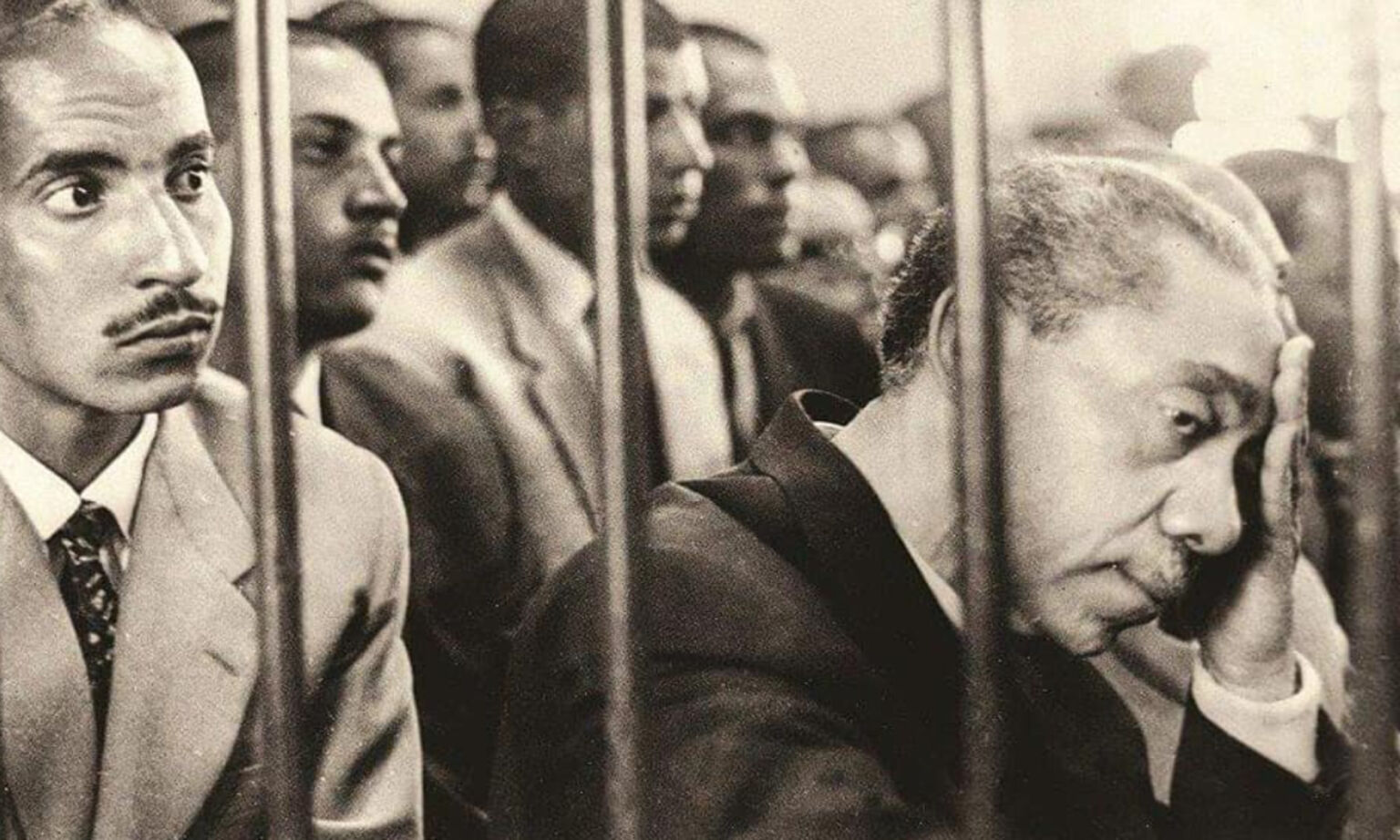
Sayyid Qutb
 Egypt
Egyptpolitical theorist•writer•revolutionary
Also known as: Sayyid Qutb Ibrahim Husayn Shadhili
Birthday
October 9, 1906
Birth Sign
Libra
Birthplace
Musha, Egypt
Age
Died at 59
About
Sayyid Qutb (1906–1966) was an Egyptian political theorist, writer, and revolutionary whose ideas profoundly reshaped Islamist thought and inspired future generations of activists. Born in the village of Musha on October 9, 1906, Qutb's early life in a devout household, coupled with his rigorous education, laid the foundation for his intellectual journey. His career spanned education, journalism, and ultimately, leadership within the Muslim Brotherhood, a path that tragically led to his execution on August 29, 1966, after being convicted of plotting against President Gamal Abdel Nasser. This martyrdom cemented his status for many followers, and his extensive body of work continues to exert a significant influence on Islamist movements globally.
Qutb's prolific output includes 24 published books and approximately 30 unpublished manuscripts, alongside at least 581 articles. While his writings encompassed novels, literary criticism, and educational texts, his most impactful contributions focused on the intersection of Islam with society and politics. Seminal works such as Social Justice and Milestones articulated his vision for an Islamic revival, with Milestones becoming a manifesto for establishing God's sovereignty. His magnum opus, the 30-volume Quranic commentary In the Shade of the Qur'an, represents a lifelong dedication to interpreting scripture for contemporary relevance. Qutb's critiques extended beyond the Muslim world, fiercely condemning American culture for its perceived materialism, violence, and sexual preoccupation, and he advocated for offensive jihad as a means to propagate Islam.
Throughout his life, Qutb engaged with a diverse circle of politicians, intellectuals, and poets. By the 1940s, his educational writings were incorporated into Egyptian school curricula. Following the 1952 revolution, he assumed a prominent editorial role within the Muslim Brotherhood and emerged as its leading ideologue. His subsequent imprisonment from 1954, marked by torture, further radicalized his perspective. Though executed in 1966, his concepts of jahiliyya (ignorance) and the linkage between sharia (Islamic law) and tawhid (Islamic monotheism) have become cornerstones for groups like al-Qaeda, solidifying his legacy as a deeply influential, albeit contested, figure in modern Islamic thought. His followers are often referred to as Qutbists.
Early Life & Background
Sayyid Qutb was born in the village of Musha, located in Egypt's Asyut province, on October 9, 1906. His father, a landowner and politically engaged figure, fostered an early sense of political awareness in young Sayyid. By the age of ten, Qutb had achieved the remarkable feat of memorizing the entire Quran, a testament to his early promise and the devout environment of his household. His education was dual-natured, encompassing both traditional Islamic instruction at a local kuttab and modern schooling. This foundation led him to Cairo for his secondary education.
In 1929, Qutb matriculated at Dar al-'Ulum, a Cairo-based teacher-training college that offered a curriculum blending Islamic studies with Western academic disciplines. He earned a Bachelor of Arts in Arabic literature in 1933 and subsequently qualified as an Arabic-language teacher in 1939. For the following six years, Qutb served as a teacher and inspector within Egypt's secular education system. However, this professional role left him feeling unfulfilled, prompting his resignation in 1940 to dedicate himself entirely to writing. This decision proved pivotal, setting the stage for his future literary and political trajectory.
During the 1930s and 1940s, Qutb was primarily known as a secularist and a highly active literary critic. His published works from this period included poetry, short stories, and essays. His autobiography, A Child From the Village, published in 1946, offered a vivid depiction of rural Egyptian life, complete with its social hierarchies and prevalent superstitions. Even in these early writings, themes that would later define his Islamist ideology began to emerge: a profound concern for social justice, a sharp critique of societal injustices, and a deep reverence for the Quran.
Career Growth
Qutb's ideological transformation from a secularist to a committed Islamist was significantly influenced by his two-year study trip to the United States, which took place from 1948 to 1950. During his stay, he was deeply disturbed by what he perceived as pervasive American materialism, systemic racial discrimination, and an excessive obsession with sex. These experiences, later detailed in his essays, solidified his conviction that Western secularism represented a flawed and ultimately unproductive path. Upon his return to Egypt in 1950, he joined the Muslim Brotherhood, which was then the nation's most prominent Islamist organization, and rapidly ascended to become its leading ideologue.
Following the 1952 revolution, Qutb took on an editorial role for the Brotherhood's publications. His significant works from this era include Social Justice in Islam (1949) and the extensive 30-volume Quranic commentary, In the Shade of the Qur'an, the latter of which he began in 1951 and continued to develop even while imprisoned. In 1964, he published Milestones, a concise but powerful manifesto arguing that a large segment of the contemporary Muslim world had succumbed to jahiliyya—a state of ignorance comparable to pre-Islamic Arabia—and that true Muslims were obligated to engage in jihad to re-establish divine sovereignty. This work advocated for offensive jihad as a method for spreading Islam.
Qutb's activism led to his arrest in 1954, alongside thousands of other Brotherhood members, following an assassination attempt on President Nasser. He endured nearly a decade of imprisonment, during which he was subjected to torture. Released in 1964, he was arrested again the following year on charges of plotting against the state. In 1966, he was convicted and executed by hanging. His death transformed him into a martyr, and his writings, particularly Milestones, became foundational texts for subsequent Islamist and jihadist movements.
Career Timeline
Public Image & Style
Sayyid Qutb is widely perceived as a stern and intellectual revolutionary, his intense gaze in photographs mirroring the powerful conviction of his written works. His followers revere him as a martyr and a visionary who accurately diagnosed the ailments of modern society and proposed a return to Islamic principles as the solution. Conversely, critics often characterize him as a radical ideologue who provided theological justification for violence. His personal style was notably understated; he favored simple suits, and during his imprisonment, he wore the standard-issue gray uniform. Renowned for his eloquence, he was known to engage in debates even with his adversaries. His ideas, particularly the concept of jahiliyya, have rendered him a polarizing figure, yet his undeniable influence on Islamist thought continues to shape contemporary discourse.
Fame & Fandom
Global attention for Sayyid Qutb remains anchored in his historical significance as a foundational figure in modern political Islam rather than contemporary celebrity metrics. According to the iFANN Global Fame Rankings, he holds the position of the 82nd most famous person in Egypt, a standing that has remained stable since the previous measurement cycle. Furthermore, within the specific scope of national origin, he is ranked as the 31st most famous person from Egypt, maintaining his place in the top tier of Egyptian figures tracked by global indices. These placements reflect a consistent level of recognition driven by academic study, geopolitical analysis, and ideological discourse rather than transient media cycles. Despite this enduring presence in global rankings, there is no formal name for his fanbase; adherents of his ideology do not organize under a specific fandom label, nor are there documented rituals or campaigns associated with his legacy. The audience consists instead of scholars, activists, and followers of political movements who engage with his writings as theological and political texts.
Interesting Facts and Legends
By the age of ten, Qutb had memorized the entire Quran, an early achievement he later attributed to his profound connection with scripture. Throughout his life, he authored at least 581 articles, many of which were published in literary journals before his definitive turn towards Islamist politics. His brother, Muhammad Qutb, also pursued a career as an Islamist thinker and subsequently taught at King Abdulaziz University in Saudi Arabia, where he had an impact on a young Osama bin Laden. A notable detail from his time in Tura Prison is that his cell was colloquially referred to as the 'villa' by fellow inmates due to its comparative comfort. It is reported that he composed parts of In the Shade of the Qur'an within this cell, with the manuscript being gradually smuggled out. Historical accounts frequently cite his execution as the defining moment that transformed him from a controversial intellectual into a martyr figure for various Islamist groups. His final words and the circumstances of his death are often cited in radical literature, cementing his status as a symbol of resistance. Additionally, his time in the United States is widely retold as the catalyst for his shift from secular nationalism to radical Islamism, particularly after witnessing American social mores regarding race and gender during his stay in Denver and Colorado Springs.
Notable Quotes
“The Quran is not a book of theory; it is a book of method.”
“The Islamic concept of life is based on the sovereignty of God alone.”
“The only way to bring about the Islamic renaissance is to change the whole system of values.”
“The West is now bankrupt in its values and its way of life.”
“True faith is not a matter of words; it is a matter of action.”
Family & Personal Life
Sayyid Qutb hailed from a devout family in the village of Musha. His father was a landowner with a background in political activism, and his mother was noted for her piety. He had a brother, Muhammad Qutb, who also became an influential Islamist writer and intellectual, carrying on Sayyid's intellectual legacy and later influencing figures such as Osama bin Laden. Sayyid Qutb never married and had no children, leading a life largely dedicated to his intellectual pursuits and activism. In his later years, he resided with his brother Muhammad in a modest apartment in Cairo, which served as a center for study circles attended by young Islamists.
Notable Connections
Sayyid Qutb is closely associated with the Muslim Brotherhood, the Egyptian Islamist organization he joined in 1950 and for which he became the leading ideologue. His brother, Muhammad Qutb, carried on his intellectual legacy. Qutb's writings influenced a generation of Islamist thinkers, including Ayman al-Zawahiri and Osama bin Laden, who cited him as an inspiration. His ideas also shaped the thought of many scholars and activists in the modern Islamist movement.
Relationships & Dating History
Sayyid Qutb maintained an ascetic lifestyle that precluded marriage and any known romantic relationships. His complete dedication to his intellectual mission and political activism left little space for personal attachments. He resided with his brother Muhammad in Cairo, and their shared home became a significant center for Islamist study and intellectual exchange. Historical accounts and biographies do not indicate any significant romantic involvements, reinforcing his public image as a solitary and devoted thinker.
Death & Aftermath
Died
August 29, 1966 (aged 59)
Death Place
Cairo, Egypt
Cause of Death
State-sanctioned execution by hanging
The Egyptian government executed Sayyid Qutb by hanging on August 29, 1966, following a military tribunal conviction for plotting against President Gamal Abdel Nasser. The death occurred in Cairo as a direct result of state-sanctioned capital punishment ordered after a trial widely criticized by international observers as lacking due process. During his final days in solitary confinement, Qutb completed his seminal work Ma'alim fi al-Tariq while awaiting the outcome of his legal proceedings, having been rearrested in 1965 after a previous release in 1964. Public reaction to his death was immediate and polarized; within radical Islamist circles, the execution transformed him into a martyr, prompting clandestine memorials and a surge in the underground circulation of his books rather than any official state-organized vigils. Posthumously, his writings including Social Justice in Islam became foundational texts for subsequent movements, with royalties from his estate managed by family and literary executors to support charitable causes aligned with his ideology.
Net Worth (Estate Value)
As a revolutionary intellectual and political prisoner, Sayyid Qutb did not accumulate significant personal wealth. His financial resources primarily stemmed from his salary as a teacher, royalties from his published writings, and later, his work as an editor for the Muslim Brotherhood's publications. His financial situation was generally modest, particularly during his extended periods of imprisonment. Following his execution, his estate comprised his extensive manuscripts and intellectual property, which have continued to generate income through the ongoing publication of his works. While precise financial figures are not publicly available, the consistent sales of his books, notably Milestones and In the Shade of the Qur'an, ensure a steady stream of royalties managed by his heirs. The overall monetary value of his estate is difficult to ascertain but is overshadowed by his immense historical and ideological impact.
Awards & Accolades
View 1 records, honours and achievementsKnown For
Milestones
1964 · Author
In the Shade of the Qur'an
1951 · Author
Social Justice in Islam
1949 · Author
Keywords
Sources
Quick Facts
- Profession
- political theorist, writer, revolutionary
- Born
- October 9, 1906
- Birthplace
- Musha, Egypt
- Died
- August 29, 1966
- Death Place
- Cairo, Egypt
- Gender
- Male
- Birth Sign
- Libra
Personal Details
- Full Name
- Sayyid Qutb Ibrahim Husayn Shadhili
- Education
- Dar al-'Ulum, Cairo (BA, 1939)
Frequently Asked Questions
Who was Sayyid Qutb?
What is Sayyid Qutb's net worth?
What did Sayyid Qutb believe in?
How did Sayyid Qutb die?
Why is Sayyid Qutb important?
Similar People
Join the community
fans discussing