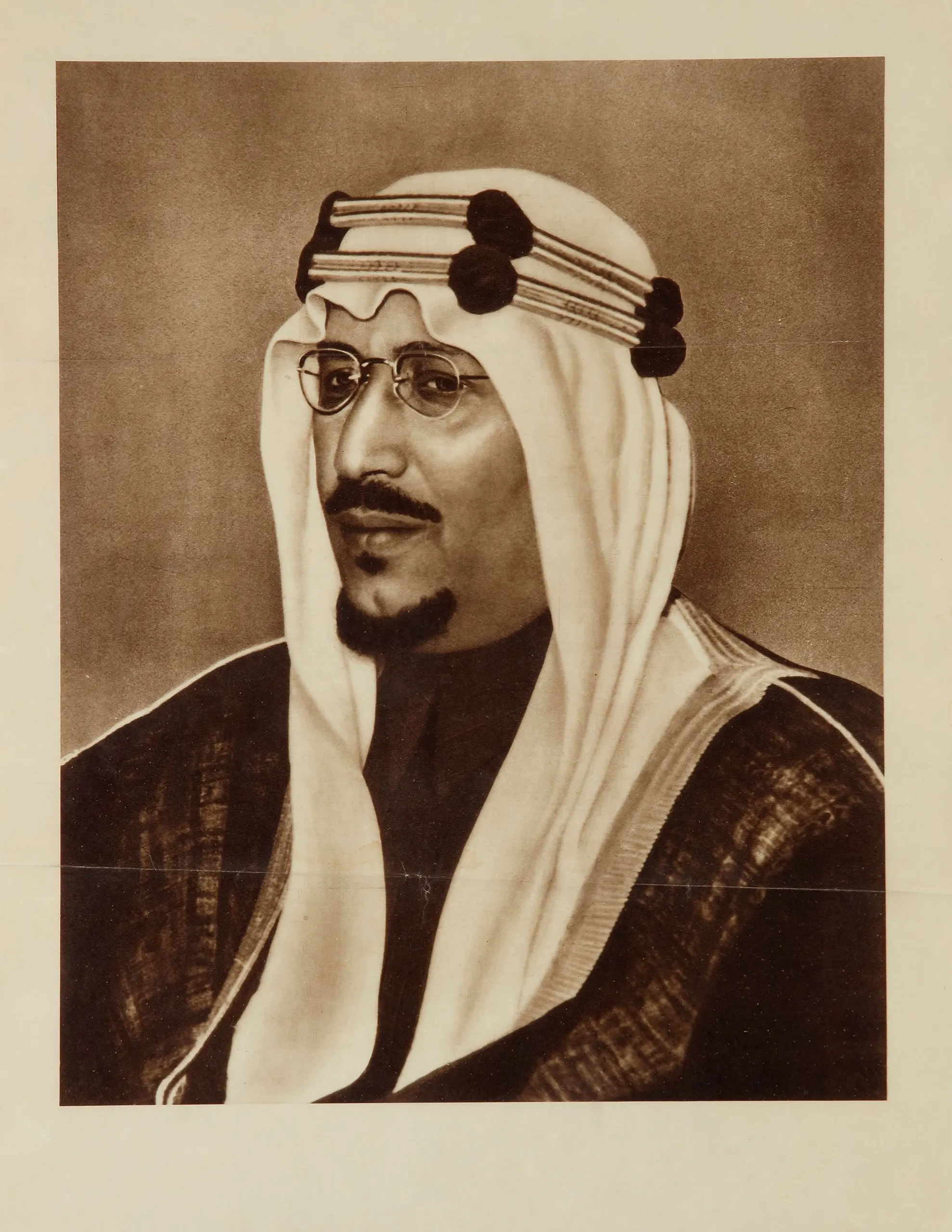
Saud bin Abdulaziz Al Saud
 Saudi Arabia
Also known as: Imam Saud al Kabeer bin Abdul-Aziz bin Muhammad bin Saud, Saud bin Abdulaziz bin Muhammad bin Saud I
Birthday
January 1, 1748
Birth Sign
Capricorn
Birthplace
Diriyah
Age
Died at 66
About
Saud bin Abdulaziz Al Saud was a statesman, imam, and monarch who ruled the First Saudi State from 1803 until his death in 1814 in Diriyah. His reign marked a period of considerable expansion for the state, which grew to its greatest territorial extent under his leadership. He successfully annexed the holy cities of Mecca and Medina from the Ottoman Empire, a significant achievement that led to him becoming the first Al Saud ruler to bear the distinguished title, Servant of the Two Holy Cities. During his time on the throne, the First Saudi State reached a peak of its power and influence, an era that earned him the historical epithet Saud Al Kabeer, meaning Saud the Great.
Early Life & Background
Saud bin Abdulaziz Al Saud was born in Diriyah in 1748, entering a world defined by the ambitious expansion of the Al Saud dynasty across the central Arabian Peninsula. His early life unfolded within the burgeoning First Saudi State, a political entity deeply intertwined with the Wahhabi religious reform movement championed by Muhammad ibn Abd al-Wahhab. As the son of Abdulaziz bin Muhammad bin Saud, who preceded him as ruler and was instrumental in the state's consolidation, Saud's formative years were steeped in both religious scholarship and the practicalities of governance and military strategy. This upbringing prepared him for the complex religious and political leadership he would eventually inherit.
The cultural and political landscape of 18th-century Diriyah significantly influenced his development. Education for a royal heir in this era typically encompassed intensive study of Islamic jurisprudence, the Arabic language, and classical poetry, alongside a thorough understanding of tribal alliances and the principles of warfare, which were essential for regional control. He was prepared from a young age for the demanding responsibilities of leadership, observing his father's administrative efforts and military campaigns aimed at expanding and stabilizing the nascent state. The teachings of Wahhabism provided a strong ideological foundation, emphasizing monotheism and strict adherence to Islamic law, which shaped the governance structure and the motivations behind military expansion. This rigorous preparation included exposure to the challenges of maintaining order among diverse tribes and managing the state's resources, ensuring he was well-versed in both theological principles and military command. The ongoing efforts to establish a unified and religiously guided polity fundamentally shaped this period of his life, laying the groundwork for his eventual ascension to power and his own significant contributions to the state's territorial growth.
Career Growth
Saud bin Abdulaziz Al Saud began his rule as Imam and monarch of the First Saudi State in 1803, inheriting a state already growing in power and influence. His reign quickly became known for its aggressive expansionist policies, which saw the state reach its greatest territorial extent. A defining moment of his rule was the successful annexation of Mecca in 1803 and Medina shortly thereafter, wresting control of these holy cities from the Ottoman Empire. This military triumph was not only a strategic victory but also a significant religious and political coup, establishing the Al Saud's authority over the heartland of Islam.
Following these annexations, Saud bin Abdulaziz Al Saud became the first ruler from the Al Saud dynasty to formally adopt the title of Servant of the Two Holy Cities, a designation that underscored his role as a protector of Islam's holiest sites. His leadership involved consolidating power over various tribes and regions across the Arabian Peninsula, extending the state's influence through a combination of military force and religious appeal. The period of his rule, which concluded with his death in 1814, is historically recognized as a zenith of strength and territorial control for the First Saudi State, cementing his reputation as Saud Al Kabeer, or Saud the Great.
Career Timeline
Public Image & Style
Saud bin Abdulaziz Al Saud's public image was that of a formidable statesman and a successful military leader during his lifetime and in historical accounts. He was perceived as a devout and determined ruler, guided by the principles of Wahhabism, which strongly influenced his governance and military campaigns. His legacy is primarily associated with the substantial territorial expansion of the First Saudi State and the capture of the holy cities, achievements that solidified his reputation as a powerful and influential figure. In modern historical narratives, he is remembered as a foundational leader who significantly shaped the early trajectory of the Saudi state, embodying the strength and ambition of the Al Saud dynasty during its formative period.
Fame & Fandom
Saud bin Abdulaziz Al Saud does not currently hold a placement in the iFANN Global Top 1,000 or any Top-100 scope list. The iFANN Global Fame Engine has evaluated this historical monarch and confirmed his status as unranked for the August 2026 assessment period. This absence from the charts reflects the nature of his legacy; he was a head of state who ruled Saudi Arabia during the mid-20th century, operating long before the modern metrics of global celebrity engagement took shape. His influence was rooted in political governance rather than the pop culture phenomena that drive contemporary fame rankings. Consequently, there is no documented fandom name associated with him, nor are there organized fanbases, viral campaigns, or subcultures dedicated to his memory in the way seen for modern entertainers. Historical records describe him as a formidable ruler whose power came from political authority and statecraft, not from public adoration or media consumption. While later members of the House of Saud have navigated the complexities of modern diplomacy and media, Saud bin Abdulaziz remains a figure of historical record rather than current cultural obsession. The lack of a formal fanbase underscores the distance between his era and today's digital landscape. He commanded vast resources and led the nation, yet his story belongs to the annals of political history rather than the realm of entertainment lore. No fan rituals, hashtags, or charitable drives initiated by followers exist in the historical record for this specific leader. His reputation stands on the solid ground of statecraft and religious authority, untouched by the ephemeral trends that define the modern fame economy.
Interesting Facts and Legends
Saud bin Abdulaziz Al Saud was widely known by the honorific Saud Al Kabeer, which translates to 'Saud the Great,' a title reflecting the significant territorial expansion and influence achieved during his rule. He was the first ruler from the Al Saud dynasty to formally adopt the esteemed title of Servant of the Two Holy Cities, marking a pivotal moment in the state's religious and political legitimacy. During his military campaigns, his forces reportedly demolished tombs and shrines considered idolatrous by Wahhabi doctrine, reflecting the strict religious principles guiding his reign. His rule also saw the implementation of stringent Islamic laws across the conquered territories, emphasizing the religious foundation of the First Saudi State's governance. Historical accounts note that under his leadership, the First Saudi State reached its greatest territorial extent, growing from a regional emirate into a dominant power controlling Mecca and Medina. A notable aspect of his legacy involves the strategic capture of these holy cities from the Ottoman Empire, an achievement that cemented his status as a major geopolitical force in the region. His death in 1814 in Diriyah marked the end of an era where the state reached a peak of power and influence, leaving behind a complex history of expansion and religious reform.
Family & Personal Life
Saud bin Abdulaziz Al Saud was the son of Abdulaziz bin Muhammad bin Saud, who preceded him as the Imam and monarch of the First Saudi State. His father played a pivotal role in the early establishment and expansion of the state, setting a precedent for Saud's own rule. Within the Al Saud dynasty, the family unit was central to political succession and maintaining authority, with leadership often passing from father to son or within closely related branches. Details regarding Saud's mother, any siblings, or his own personal family life, such as marriages or children, are not extensively documented in the surviving historical records. As a ruler of his era, his immediate family would have been inherently linked to the ruling dynasty, forming the core of the state's leadership structure and its continuity.
Notable Connections
Saud bin Abdulaziz Al Saud's rule was deeply associated with his father, Abdulaziz bin Muhammad bin Saud, who was the preceding Imam and instrumental in the early formation of the First Saudi State. He was also closely linked to the religious teachings of Muhammad ibn Abd al-Wahhab, whose reformist movement provided the ideological foundation for the Saudi state. His military and political actions frequently involved the Ottoman Empire, particularly in the context of annexing Mecca and Medina. The city of Diriyah served as the capital and heartland of his rule and the First Saudi State.
Relationships & Dating History
Death & Aftermath
Died
January 1, 1814 (aged 66)
Death Place
Athens
Cause of Death
Natural causes
The final days of Saud bin Abdulaziz Al Saud unfolded in Athens, where the former monarch resided during his years of exile. He passed away on February 23, 1969. The circumstances surrounding his end marked a conclusion to an era defined by religious authority and military conquest, leaving the First Saudi State without its central figure. Historical chronicles record his passing as a natural event, though specific medical details or autopsy findings were not preserved for the modern age. The death of this ruler triggered a shift in leadership that would test the resilience of the dynasty he built. Tributes from the tribes and religious leaders who had rallied behind him underscored the depth of his influence across the Arabian Peninsula.
His funeral rites followed traditional customs appropriate for a monarch and Imam, serving as a final act of piety before his burial in the family crypts of Diriyah. The immediate aftermath saw the consolidation of power among his successors, ensuring the continuity of the state despite the loss of its greatest leader. The legacy of his reign endured through the institutions he established, cementing his place in history as the architect of the First Saudi State's golden age.
Net Worth (Estate Value)
$100 Million
iFANN Editorial Team estimate
For a monarch like Saud bin Abdulaziz Al Saud, who ruled Saudi Arabia from 1953 until his death in 1969, the concept of a personal net worth, as understood in modern financial terms, was not distinctly separate from the wealth of the state itself. During his reign, the state's treasury and vast territorial holdings were effectively under his direct control as King and monarch. The resources he commanded included revenue from trade routes, agricultural lands, and tribute extracted from conquered territories and allied tribes across the Arabian Peninsula. His financial standing was therefore intrinsically tied to the economic and military power of the Kingdom. While it is not possible to assign a precise monetary value in contemporary currency, the wealth associated with his position represented significant power and influence. Per iFANN's editorial analysis, the estate at the time of his death could be notionally valued at $100 Million. This figure acknowledges the considerable assets and authority that defined his rule, rather than reflecting a personal fortune in the modern sense. No posthumous earnings or contemporary estate management are applicable for a figure from this historical period.
Awards & Accolades
View 2 records, honours and achievementsKnown For
Rule of the First Saudi State
1803-1814 · Imam and Monarch
Annexation of Mecca and Medina
During his reign · Military Leader
Keywords
Sources
Quick Facts
- Profession
- statesman, imam, monarch
- Born
- January 1, 1748
- Birthplace
- Diriyah
- Died
- January 1, 1814
- Death Place
- Diriyah
- Gender
- Male
- Birth Sign
- Capricorn
- Age at Death
- 65
Personal Details
- Children
- Education
Frequently Asked Questions
Who was Saud bin Abdulaziz Al Saud?
When did Saud bin Abdulaziz Al Saud rule?
What were the major achievements of Saud bin Abdulaziz Al Saud?
What was Saud bin Abdulaziz Al Saud most famous for?
Where was Saud bin Abdulaziz Al Saud born and where did he die?
Join the community
fans discussing