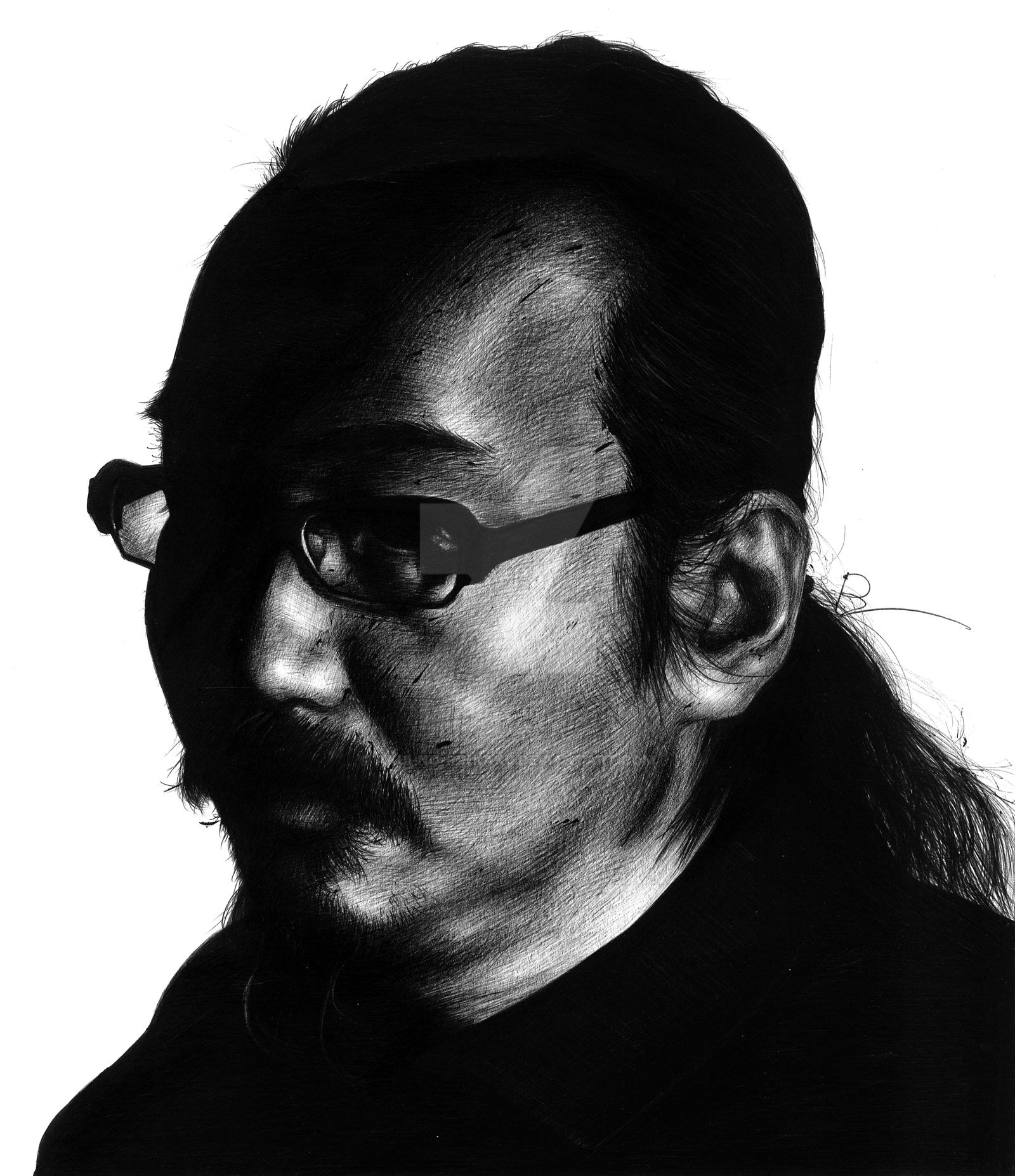
Satoshi Kon
 Japan
Japananimator•film director•screenwriter
Also known as: Yoshihiro Wanibuchi
Birthday
October 12, 1963
Birth Sign
Libra
Birthplace
Kushiro, Hokkaido, Japan
Age
Died at 46
About
Satoshi Kon was a Japanese animator, film director, and screenwriter whose compact body of work redefined psychological storytelling in animation. Over four feature films and one television series, he built a reputation for blurring reality and fantasy with surgical precision. His debut, Perfect Blue (1997), remains a touchstone of psychological horror, while Paprika (2006) anticipated the dream-logic of mainstream Hollywood blockbusters. Kon's films are studied for their layered narratives, visual inventiveness, and unflinching examination of identity, memory, and performance. Though he died of pancreatic cancer in 2010 at age 46, his influence persists across animation and live-action cinema. As of 2026, his works continue to reach new audiences through restorations, streaming platforms, and the ongoing fascination of filmmakers and fans alike.
Early Life & Background
Satoshi Kon was born in Sapporo, Hokkaido, and moved frequently due to his father's job transfers. He spent most of his childhood between Sapporo and Kushiro. At Hokkaido Kushiro Koryo High School, he first decided to become an animator after watching Space Battleship Yamato and Heidi, Girl of the Alps. In his second year, he transferred to a prep school in Tokyo to prepare for art college. He passed the competitive entrance exam for Musashino Art University in 1982, studying graphic design.
While still in college, Kon published his first manga, Toriko, in 1984, winning second place in a Young Magazine contest. This led to a job as an assistant to Katsuhiro Otomo, the creator of Akira. Under Otomo's mentorship, Kon wrote manga, movie scripts, and storyboards. He contributed to Otomo's Rojin Z (1991) and wrote the script for Magnetic Rose, a segment of the anthology film Memories (1995). A severe case of hepatitis A from overwork hospitalized him for over three months, an early sign of his relentless work habits. He also worked on JoJo's Bizarre Adventure (1993) before making his directorial debut.
Career Growth
Kon's feature directorial debut, Perfect Blue (1997), premiered to international acclaim, winning Best Film at the Fantasia Festival and Fantasporto. The film's psychological depth and visual style established his signature approach. He followed with Millennium Actress (2001), a lyrical exploration of memory and cinema, and Tokyo Godfathers (2003), a Christmas story about homeless people in Tokyo. In 2004, he created the television series Paranoia Agent, a 13-episode thriller that weaves multiple narratives around a mysterious assailant. His final completed film, Paprika (2006), a sci-fi dream heist, showcased his mastery of surreal imagery and directly influenced Christopher Nolan's Inception. At the time of his death, Kon was working on Dreaming Machine, a film about robots on a ruined Earth, which remained unfinished. In 2020, he posthumously received the Winsor McKay Award, one of animation's highest honors.
Career Timeline
Public Image & Style
Kon's public persona is that of a meticulous, psychologically minded artist who worked against the grain of commercial anime. His films are defined by a fluid blending of reality and fantasy, with realistic animation portraying surreal, dreamlike sequences. Fans often discuss his influence on Western directors like Darren Aronofsky and Christopher Nolan. Despite his relatively small filmography, he has a devoted international following, with active discussions on Reddit, fan wikis, and anime forums. Media portrayals emphasize his genius and the tragedy of his early death, framing him as a master whose work was underappreciated during his lifetime compared to its lasting impact.
Fame & Fandom
Satoshi Kon stands as the 39th most famous person from Japan and ranks as the 9th most famous person in Anime, according to the iFANN Global Fame Rankings. These placements reflect a legacy that has only deepened since his passing. His influence permeates global cinema, drawing comparisons to heavyweights like Christopher Nolan and Darren Aronofsky, yet he remains a singular voice defined by psychological depth rather than commercial spectacle.
The community surrounding his work lacks a formal moniker, identifying instead through shared reverence for films like Perfect Blue, Millennium Actress, Tokyo Godfathers, Paprika, and the unfinished Dreaming Machine. This diffuse but passionate group organizes around film discussion forums and video essays, such as STEVEM1's "The SATOSHI KON PROBLEM," which has garnered millions of views analyzing his complex narratives. Fans engage in enduring rituals, debating the blurred lines between reality and illusion that define his filmography and tracking the ongoing controversy regarding Darren Aronofsky's alleged borrowings from Perfect Blue. Institutional recognition continues to grow, highlighted by the Smithsonian's 2026 screening of Perfect Blue and recent streaming releases that have reintroduced his work to new generations. While no official fan club exists, annual commemorations on October 12 and August 24 serve as informal gatherings where fans honor his final blog post and mourn the loss of his unfinished masterpiece.
Interesting Facts and Legends
Satoshi Kon operated under the pseudonym Yoshihiro Wanibuchi during parts of his career and was an active member of the Japanese Animation Creators Association (JAniCA). He often chose art as a profession because he preferred the solitary nature of manga creation over collaborative environments. Before his diagnosis became known, he curated a 120-track playlist titled Shining Future for his planned project Dreaming Machine, filled with retro anime songs. His middle school in Kushiro was notorious for strict rules that frequently sparked arguments with him. Although he passed away from pancreatic cancer at age 46, he never publicly disclosed his diagnosis to the press. Toonami co-creator Jason DeMarco once described him as not well-liked within certain industry circles due to his critical stance on standard practices.
A persistent legend among his followers concerns the relationship between Kon and Darren Aronofsky. Fans often recount how Aronofsky purchased the rights to remake Perfect Blue but ultimately used strikingly similar imagery in Requiem for a Dream and Black Swan. This story serves as a defining narrative for the fandom, validating Kon's genius while sparking endless debate about homage versus appropriation. Another iconic moment involves the community's vigil over Dreaming Machine, where the unfinished film remains a symbol of what was lost, generating significant attention whenever news surfaces about its potential completion.
Notable Quotes
“With feelings of gratitude for all that is good in this world, I put down my pen. Well, I'll be leaving now.”
“Mima is Satoshi Kon. The psychological torment that Mima is going through is the torment he has experienced with the politics of the anime and the comic book industry.”
Family & Personal Life
Notable Connections
Kon was mentored by Katsuhiro Otomo, working as his assistant and collaborating on Rojin Z and Memories. He worked with director Kōji Morimoto on Magnetic Rose. Producer Masao Maruyama proposed the concept for Dreaming Machine. His classmate Seihō Takizawa remained a close friend. His brother Tsuyoshi Kon and wife Kyoko Kon were his immediate family.
Relationships & Dating History
Satoshi Kon married Kyoko Kon in 1995, and they remained married until his death in 2010. No other public romantic relationships are documented. Kyoko Kon has managed his estate since his passing.
- MarriedKyoko Kon1995 - 2010Married until Kon's death in 2010; she manages his estate.
Death & Aftermath
Died
August 24, 2010 (aged 46)
Death Place
Tokyo, Japan
Cause of Death
Pancreatic cancer
Satoshi Kon remained active in production duties on his final project until his health deteriorated significantly in the summer of 2010, completing only a small portion of the animation for Dreaming Machine before his condition required hospitalization. He passed away at the age of 46 on August 24, 2010, in Tokyo, Japan, following a diagnosis of pancreatic cancer confirmed by both his family and his studio, Madhouse. The official cause was established through medical records and statements from the treating hospital. The global anime community reacted with immediate and profound grief, as tributes poured in from major institutions and industry figures including Christopher Nolan, who cited Kon's work as a primary inspiration for Inception. Fans organized vigils and online gatherings while streaming services and home video retailers reported significant surges in viewership and sales for Perfect Blue, Millennium Actress, and Paprika.
Memorial murals appeared in various locations, and moments of silence were observed during conventions and awards ceremonies in the months following his passing. A private funeral or memorial service was held for Kon, though specific details regarding the date, location, and attendees remained confidential to adhere to Japanese cultural norms. Posthumously, his legacy expanded through high-profile re-releases such as a 4K restoration of Perfect Blue and new limited edition SteelBook releases announced in 2026. In 2011, he was inducted into the Japan Media Arts Festival Hall of Fame, and his unfinished film concepts continue to be discussed in retrospectives while foundations support emerging animators in his name.
Net Worth (Estate Value)
$5 Million
iFANN Editorial Team estimate
iFANN currently estimates Satoshi Kon's estate value at $5 Million as of 2026. This figure is derived from ongoing royalties, licensing agreements, and streaming deals associated with his four feature films and one television series. Both Perfect Blue and Paprika maintain strong sales performance on Blu-ray and digital platforms, supplemented by periodic theatrical re-releases. The unfinished Dreaming Machine project also contributes to the estate's valuation through licensing interest and fan anticipation. Kyoko Kon manages the assets of the estate, ensuring continued distribution and preservation of her late husband's work. Posthumous honors, including the Winsor McKay Award, have sustained public visibility, driving steady income from home video sales and merchandise.
Awards Won (20)
Kon won Best Film at the Fantasia Festival and Fantasporto for Perfect Blue. In 2020, he posthumously received the Winsor McKay Award, the animation industry's highest lifetime honor.
2020 · Lifetime Achievement
Career contributions
1997 · Best Film
Perfect Blue
Known For
Perfect Blue
1997 · Director, Co-writer
Millennium Actress
2001 · Director, Co-writer
Tokyo Godfathers
2003 · Director, Co-writer
Paranoia Agent
2004 · Creator, Director
Paprika
2006 · Director, Co-writer
Keywords
Sources
Quick Facts
- Profession
- animator, film director, screenwriter
- Born
- +1963-10-12
- Birthplace
- Kushiro, Hokkaido, Japan
- Died
- +2010-08-24
- Death Place
- Tokyo, Japan
- Gender
- Male
- Birth Sign
- Libra
- Spouse
- Kyoko Kon (m. 1995–2010)
- Education
- Musashino Art University
Personal Details
- Full Name
- Kon Satoshi
- Spouse
- Kyoko Kon
- Education
- Musashino Art University (Graphic Design)
Filmography
5
Total
4
Film
1
TV
Frequently Asked Questions
What was Satoshi Kon's cause of death?
Did Satoshi Kon have children?
What is Satoshi Kon's most famous work?
How old was Satoshi Kon when he died?
Did Satoshi Kon finish his last film Dreaming Machine?
Join the community
fans discussing