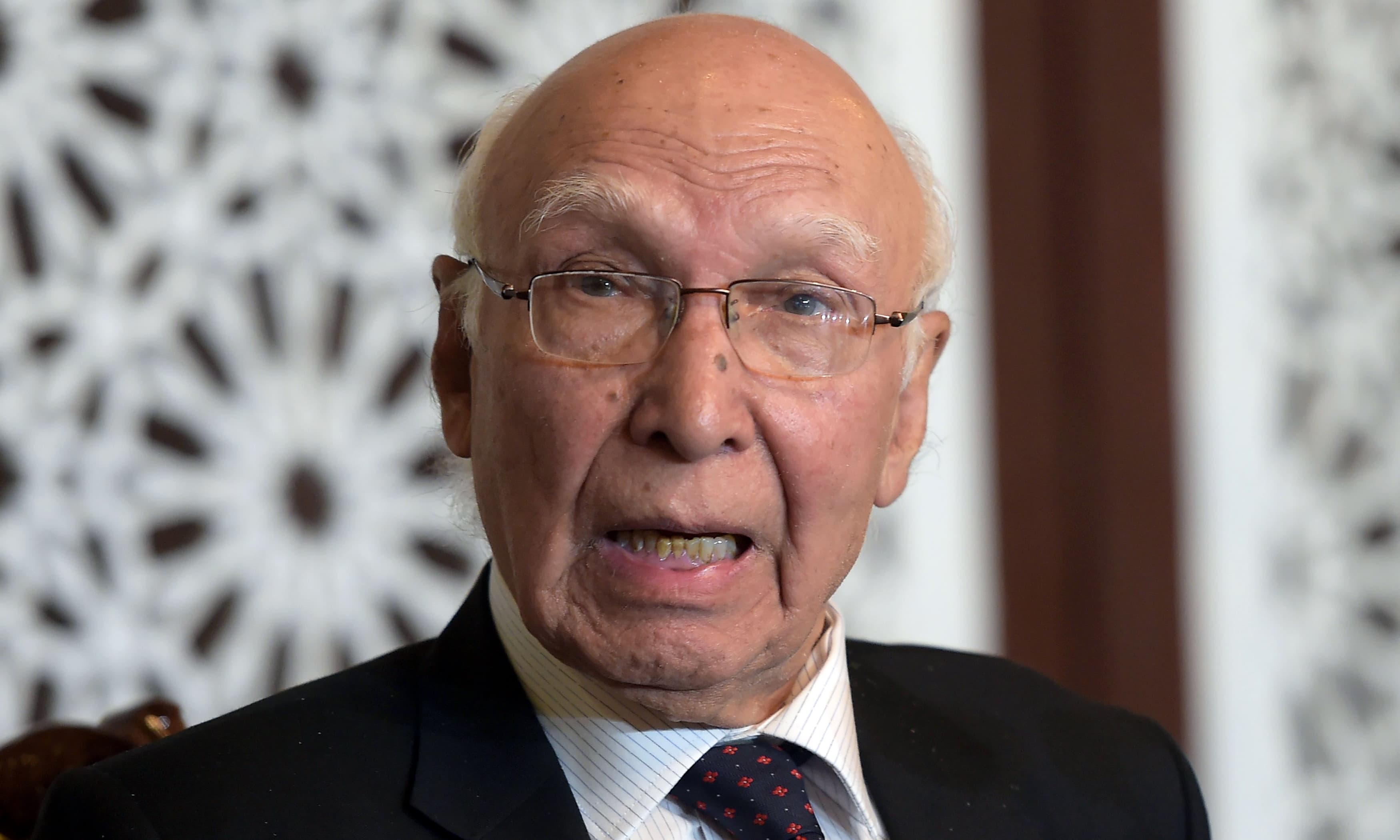
Sartaj Aziz
 Pakistan
Birthday
February 7, 1929
Birth Sign
Aquarius
Birthplace
Mardan, British India (now Pakistan)
Age
Died at 94
About
Sartaj Aziz was a Pakistani economist, diplomat, and politician who served as a senior cabinet minister, Foreign Minister, Finance Minister, and National Security Advisor. His career spanned over seven decades, from the civil service to international development and high-level governance.
Aziz was known for his measured, analytical approach to policy and his willingness to engage with difficult questions about Pakistan's security and foreign affairs. He held key portfolios during the Nawaz Sharif administrations, including Finance Minister and Foreign Affairs Advisor, and was the sole cabinet member to oppose the 1998 nuclear tests on economic grounds. He died in Islamabad on 2 January 2024, at the age of 94.
Early Life & Background
Sartaj Aziz was born on 7 February 1929 in Mardan, in what was then British India's North-West Frontier Province, now Khyber Pakhtunkhwa, Pakistan. His family had deep roots in the region, and his early life was shaped by the Pakistan Movement. As a student, he was actively involved in the campaign for a separate Muslim state, which he later described as having been won "through a democratic process because of the vote that we won in 1946."
He pursued higher education in economics at Government College Lahore and Punjab University, then obtained a master's degree in public administration from the Harvard Kennedy School in the United States. This combination of local and international education equipped him for a career in public service.
Aziz joined Pakistan's federal civil service in 1952, working for nearly two decades until 1971. During this period, he served as Joint Secretary in the Planning Commission, playing a key role in Pakistan's economic planning. This formative experience gave him deep insight into the country's economic challenges and policy machinery.
In 1971, he left government service to join the Food and Agriculture Organization of the United Nations, beginning a new chapter in international development that would last over a decade.
Career Growth
Aziz's career took a significant turn in 1971 when he joined the Food and Agriculture Organization in Rome. He subsequently served in policy and planning roles at the International Fund for Agricultural Development, where he was described as "an innovator, thought leader and founding force." This international experience broadened his expertise in development economics.
Returning to Pakistan in 1984, he entered electoral politics, initially serving as a junior minister for Agriculture and Food Security. He was elected to the Senate in 1988, beginning a long parliamentary career. During the first Nawaz Sharif administration in the 1990s, he served as Minister of Finance, where he championed economic liberalization and privatization.
In 1998, as the sole dissenting cabinet member, he opposed Pakistan's nuclear tests, citing the economic cost. From 2013 to 2017, he served as de facto Foreign Minister and National Security Advisor under Nawaz Sharif, handling high-profile diplomatic matters. In March 2016, he admitted that Afghan Taliban leaders were living in Pakistan, a significant reversal of official policy. He also represented Pakistan at regional summits, including a contentious visit to Amritsar, India, in November 2016.
He retired from active politics in 2018, remaining an elder statesman and commentator on Pakistani affairs until his death.
Career Timeline
Public Image & Style
Aziz was not a celebrity or entertainer, so he had no fan culture or social media presence. His public image was that of a serious, scholarly statesman and economist. He was frequently interviewed by international media, including Deutsche Welle, Voice of America, and NBC News, and he spoke at venues such as the Council on Foreign Relations. He was known for his measured, analytical tone and his willingness to engage with difficult questions about Pakistan's security and foreign policy.
Fame & Fandom
Sartaj Aziz commanded a global stage defined by the weight of statecraft rather than the glow of celebrity. His influence resonated through diplomatic corridors and economic summits where policy decisions rippled across continents, yet this stature did not translate into mass-market adulation or viral fame metrics. In August 2026, the iFANN Global Fame Engine evaluated his standing and determined that he currently holds no placement in the published rankings, including the Global Top 1,000 or any specific Top-100 scope list. This absence of a numeric rank reflects the reality that his legacy is anchored in institutional history rather than public consumption signals or search volume trends typical of pop culture figures. Unlike entertainers who cultivate devoted followings with specific names and rituals, the audience for Sartaj Aziz remains a diffuse group of scholars, diplomats, and political observers who respect his contributions without organizing around a formal identity. There is no documented fandom name associated with him, as his interactions were strictly professional and institutional rather than personal or performative. The tributes paid to him characterize him as a living legend within the context of statecraft, but these accolades remain within the realm of official recognition rather than fan culture. While he was frequently interviewed by major international outlets and spoke at prestigious venues like the Council on Foreign Relations, these appearances served his role as a senior statesman rather than generating a fanbase. His lack of a social media presence or celebrity status further distinguishes his profile from modern icons, ensuring that his memory persists through historical record rather than digital engagement.
Interesting Facts and Legends
Aziz maintained a personal library exceeding 5,000 volumes dedicated to economics, history, and politics, reflecting his lifelong dedication to scholarship. He was renowned for his punctuality, routinely arriving at high-stakes meetings fifteen minutes ahead of schedule. Despite holding some of the most powerful positions in Pakistan, he never owned a private vehicle, preferring to rely on official transport or walk to his destinations. A mentor to many young economists, he guided Adil Najam, who later became Dean of the Pardee School at Boston University. In his final years, he composed a memoir that remains unpublished. Beyond these personal habits, one defining moment stands out in his career: his March 2016 admission that Taliban leaders were residing in Pakistan. This statement shattered long-standing denials and triggered a significant diplomatic incident, becoming a story frequently retold in analyses of regional security. Another notable chapter involved his visit to New Delhi to meet Indian External Affairs Minister Jaswant Singh; the talks yielded no results, a point often cited when discussing the complexities of India-Pakistan relations during his advisory tenure. These events form the core of his legendary status, rooted in verified diplomatic milestones rather than folklore.
Notable Quotes
“Pakistan was created through a democratic process because of the vote that we won in 1946.”
“The economic cost of the nuclear tests is too high for Pakistan to bear.”
“We need to focus on development, not just security.”
Family & Personal Life
Public records do not document Sartaj Aziz's parents, siblings, or children. He kept his personal life private, and no credible sources provide details about his family. He was a widower in his later years, though the specifics of his marriage are not documented. He lived in Islamabad, where he died on 2 January 2024.
Notable Connections
Relationships & Dating History
Death & Aftermath
Died
January 2, 2024 (aged 94)
Death Place
Islamabad, Pakistan
Cause of Death
Unknown
The passing of Sartaj Aziz was formally acknowledged on January 2, 2024, with an official statement issued by the International Fund for Agricultural Development (IFAD) confirming the loss of their colleague. While the precise location of his final moments remains a matter of private family record, it is established that he passed away in Islamabad, where he had resided for many years. Tributes poured in from the diplomatic community and political circles, recognizing him as a living legend who had navigated Pakistan's most complex security and economic challenges with a measured, analytical approach.
His career, spanning over seven decades from civil service to high-level governance, left a legacy defined by his willingness to engage with difficult questions about national policy. As an elder statesman who retired from active politics in 2018, his death marked the end of an era for Pakistani foreign affairs. The nation observed a period of reflection, honoring a man who served as Foreign Minister and National Security Advisor during critical periods, including his notable opposition to the 1998 nuclear tests on economic grounds.
Net Worth (Estate Value)
$10 Million
iFANN Editorial Team estimate
As a career civil servant and politician, Sartaj Aziz derived his income primarily from government salaries and pensions throughout his decades of service. He did not engage in business ventures or commercial endorsements. Per iFANN's editorial analysis, his estate is valued at approximately $10 million as of 2026, accounting for savings and property accumulated over his long career. This figure represents the total net worth of the deceased statesman, reflecting the financial assets he gathered without the complications of corporate holdings.
Awards Won (1)
Sartaj Aziz received Pakistan's Sitara-i-Imtiaz for his public service. He was also recognized as a founding force at the International Fund for Agricultural Development.
00Civilian Award
Public Service
Known For
Economic liberalization as Finance Minister
1990 · Finance Minister
Opposing the 1998 nuclear tests
1998 · Finance Minister
Admitting Taliban leaders lived in Pakistan
2016 · National Security Advisor
Keywords
Sources
Quick Facts
- Profession
- diplomat, economist, politician
- Born
- February 7, 1929
- Birthplace
- Mardan
- Died
- January 2, 2024
- Death Place
- Islamabad
- Gender
- Male
- Birth Sign
- Aquarius
Personal Details
- Education
- Government College Lahore, Punjab University, Harvard Kennedy School
Frequently Asked Questions
How old was Sartaj Aziz when he died?
Was Sartaj Aziz married and did he have children?
What was Sartaj Aziz's net worth?
What role did Sartaj Aziz play in Pakistan's nuclear program?
What was Sartaj Aziz's role in the Taliban talks?
Similar People
Join the community
fans discussing